
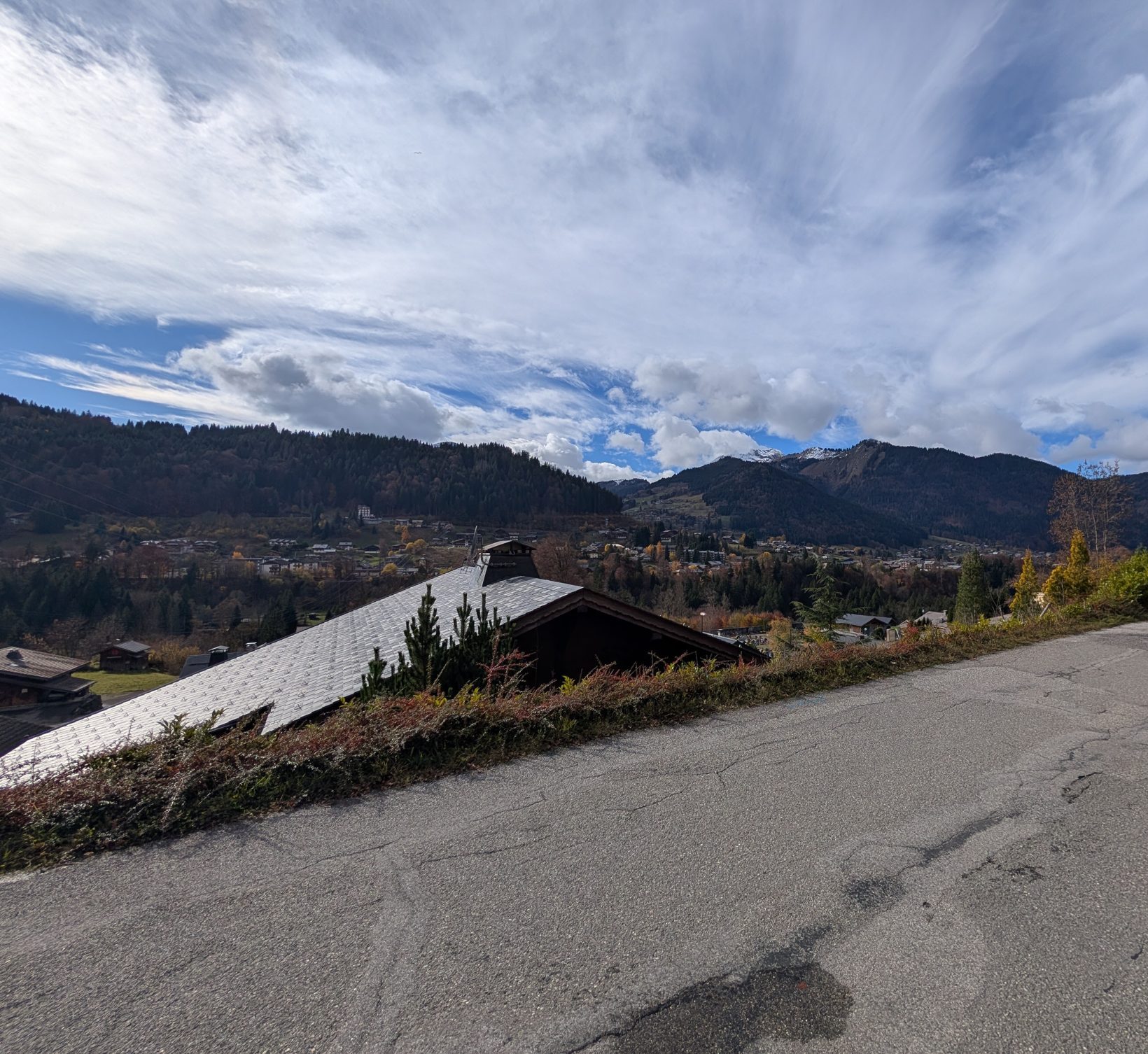

Chalet Wifi and Network Installation in the Alps
Reliable Connectivity for Owners and Guests
A chalet is one of the hardest buildings in which to deliver good wifi, and one of the least forgiving. Owners expect it to work the moment they arrive, rental guests judge the whole stay by it, and for much of the year nobody is there to notice when it fails. We design and install chalet networks that work in every room, keep the owner’s systems separate from the guests’, stay online when a connection drops, and are watched remotely when the chalet is empty.
We work across Morzine, Les Gets, Avoriaz, Montriond, the Vallée d’Aulps, Val d’Abondance, Châtel and Megève, from our Alpine office, with the same engineering standards we apply to our projects in London, Cheshire and Dubai. Our wifi installation guide for Morzine and Les Gets shows the coverage maps we produce.
Why Chalets Defeat Ordinary Wifi
Thick stone walls, reinforced concrete floors, large timber sections, underfloor heating and highly insulated glazing all weaken wireless signal. A chalet also spreads over several levels, with a ski room, garage and spa below ground, bedrooms above and terraces and a hot tub outside. A provider’s router in the hallway, even with consumer extenders added, rarely covers all of it: the phone shows signal, but video calls drop, films stall and smart devices lose their connection. We treat the chalet as the engineering problem it is, with a survey, a coverage map and wired access points placed to suit the building.
Alpine conditions add their own problems. Equipment in unheated spaces such as ski rooms and garages has to tolerate cold and condensation, snow can bury outdoor access points and cables, and power in remote locations is more prone to interruption than in a town. A network designed for a chalet allows for these from the start, with equipment housed where it is protected, outdoor devices specified for the conditions and the network core protected against surges and power loss.
Separate Networks for Owners and Guests
A rental chalet carries two very different populations. The owner’s systems, including heating, lighting, cameras, door entry and the control system, must be private and protected. Guests need simple, fast wifi that does not give them any view of the owner’s equipment. We segment the network so that owner, guest, building systems and cameras each have their own network, with guest access isolated from everything else and a password that can be changed between stays. Cameras and controllers stay online whoever is staying, and a guest’s devices can never reach them.
In practice the owner and guests see different things. Guests join a simple network by name and password, can stream, call and browse, and in the guest areas can use features such as a music streamer or a television, without reaching the control system, the cameras or the owner’s files. The owner’s network stays private, and building systems and cameras sit on their own isolated networks, each reachable only by the devices that need it. Because the separation is done in the network equipment rather than by trusting devices, a new guest device does not change the picture, and the same design lets a management company make routine guest changes without access to the owner’s networks.
Internet That Survives a Failure
Connectivity in the mountains is uneven. Some chalets have fibre, some are still on copper lines that are being phased out, and some have little choice at all. We design around what the location offers: fibre where available, 4G or 5G, and satellite such as Starlink where nothing else will do. Where a chalet matters enough, we combine two connections, for example fibre with a 5G backup, so that the network switches over automatically if one fails and we are alerted. The network belongs to the chalet, not to the provider’s router, which simply brings the internet in.
Failover needs to be designed as well as bought. A second connection that is never tested often fails when it is needed, so we configure the network to check each connection continuously, switch automatically and tell us when it has done so. The owner, guest and camera networks are all carried through the switch-over, and where continuous connection matters we advise on battery backup for the core equipment so that a short power cut does not take the chalet offline.
Remote Monitoring for an Empty Chalet
Most of the year a chalet is empty, and a fault that appears in October may not be found until Christmas. Every network we install can be monitored remotely by our team: we see when an access point or switch goes offline, when the internet connection fails over to the backup, and when a camera drops out, and we can usually fix the problem remotely, restarting a PoE port, correcting a setting or applying an update, before a guest or owner arrives. Firmware and security updates are applied outside guest hours. See our managed home network service for how this works.
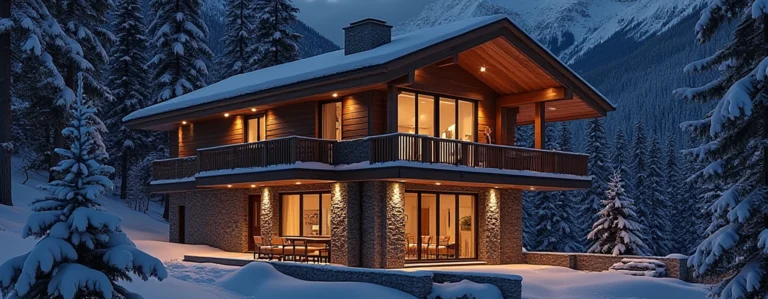 Alpine ChaletsSmart home, cinema, audio and networks for chalets in the Alps.
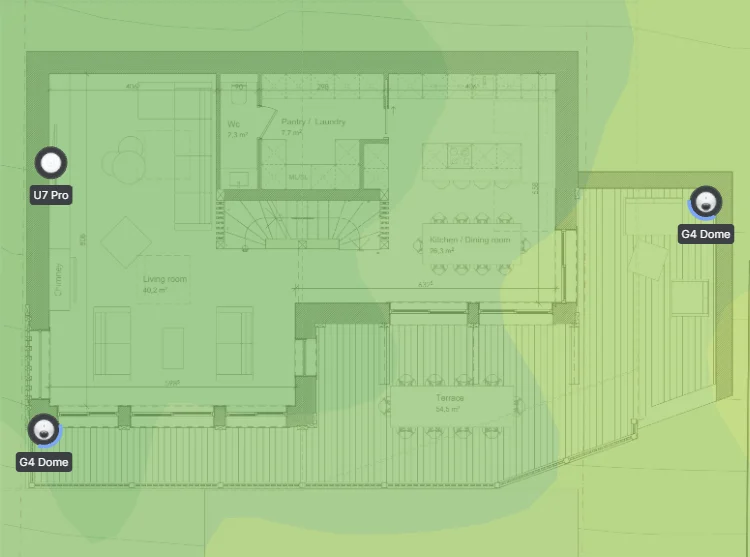 Home Wi-Fi and NetworkingEnterprise-grade networks for every room, terrace and the grounds.
 Managed Home NetworkRemote monitoring, updates and support for large homes and estates.
 Wifi in Morzine and Les GetsCoverage maps and approaches for chalets in the Vallée d'Aulps.
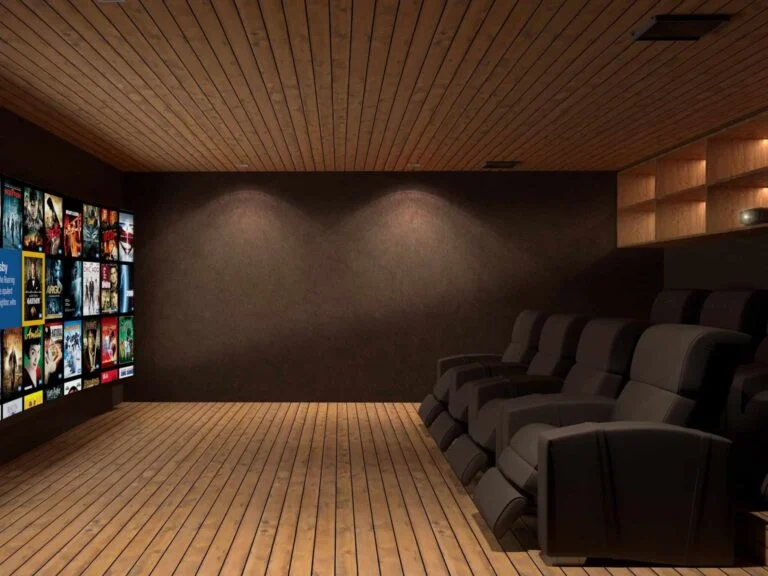 Megève Chalet Home Cinema Install600m² Chalet, 4m Screen
New Builds and Renovations
The best chalet networks are planned with the building. During construction we work with the architect and main contractor to agree equipment room position, cable routes, ducts to the garage, annexe or spa building and access point positions, before the walls are closed. Category 6A cabling with a PoE core is the most reliable and durable solution, and it also powers cameras, door stations and touch screens. Our network design for new builds page sets out the process.
A chalet build has its own constraints. The equipment room is often in a ski room or technical space that can be cold or humid, structural timber and concrete limit the routes available once the walls are closed, and the garage, annexe or spa often needs a connection that has to be planned underground before landscaping begins. Early agreement on the cabling and the cabinet lets the wiring go in at first fix, tested, labelled and ready for the equipment that follows.
Existing Chalets Without Cables
Many older chalets have little or no network cabling, and tearing out timber linings or stone is not an option. We reuse existing cabling where it is suitable, and where there is none we design a professional wireless network with proper access points and a managed controller, not the consumer mesh kits sold in electrical shops. We explain the limits of each approach and recommend the one that suits your chalet, using a coverage map to show what to expect before any work starts.
Whatever the approach, the first step is a survey to understand where signal is lost. We test in the rooms that matter, identify where a wired link is possible, even if only to a single access point on a landing or in a ski room, and use it as the backbone for wireless coverage. A small number of well-placed, wired access points usually serves a chalet better than a larger number of repeating nodes, and the same equipment can be extended with cabling later as the opportunity arises, for instance during a renovation.
Annexes, Garages and Spa Buildings
A studio, garage, spa or annexe away from the main chalet gets its own access point, linked by outdoor cable or buried fibre where it can be laid, or by a point-to-point wireless bridge where trenching is not possible. Equipment outside is protected against cold, snow and surges, and each building is a managed part of the same network.
Outbuildings are often where a network is weakest and where failure matters most: a spa with its own controls, a garage with cameras and gates, or a studio that is let separately. Each is given the right connection for what it carries, with power protection and, where the building is let, its own guest segment so that occupants of the annexe are separate from those in the main chalet. Cable routes are chosen with winter in mind, including ducts protected from frost and snow loads, and equipment is mounted where it can be reached when the ground is covered.
One Network for the Whole Chalet
Where a chalet is managed remotely, this is what makes the arrangement workable: one set of records, one team and one view of the whole network, whether the chalet is full, empty or being prepared for an arrival. Changes are made once, in one place: a new guest network, an extra camera or a replaced controller is added to the same documented design rather than to a patchwork of separate installations. Our managed home network service provides the remote monitoring and support behind it.
The network carries everything: Crestron control, Lutron lighting and shading, heating that prepares the chalet before arrival, audio, cinema and cameras. Because we design and support all of these, a network fault is diagnosed once, by the team that understands how each system depends on it. Our Alpine chalet smart home service explains the wider installation. To discuss your chalet, get in touch.
Alpine Chalets → · Home Wi-Fi and Networking → · Arrange a survey →
Chalet Network FAQs
- Can you improve the wifi in an existing chalet without rewiring?
Yes. We reuse existing cabling where it is suitable and, where there is none, design a professional wireless network with managed access points, positioned from a coverage map so that you know what to expect. Where some cabling is possible, a hybrid of wired and wireless access points gives better results than wireless alone. - Can guests be kept separate from the owner’s systems?
Yes. We segment the network so that owner devices, guests, building systems and cameras each sit on their own network. Guests get simple, isolated wifi with a password that can be changed between stays, and cannot see the owner’s equipment. - What if the chalet has poor or no fibre?
We design around the connections available, including 4G, 5G and satellite such as Starlink, and can combine two connections with automatic failover so that the chalet stays online if one fails. - Can you monitor the network when the chalet is empty?
Yes. We monitor remotely, are alerted when equipment goes offline or the connection fails over, and can usually resolve faults without travelling, so that problems are corrected before anyone arrives. - Do you work with architects and builders on new chalets?
Yes. We agree equipment room positions, cable routes, ducts and access point positions with the architect and main contractor before the walls close, and carry out and test the cabling ourselves. - Can you cover a garage, spa or annexe separate from the chalet?
Yes. We link outbuildings by outdoor cable or buried fibre where possible, or by point-to-point wireless bridge, and make each building a managed part of the same network. - Do you work for rental management companies as well as owners?
We work with owners and with the agents and management companies who look after chalets, and can agree who holds administrative access so that day-to-day guest changes are straightforward while the owner keeps control.