Dolby Atmos, THX, and IMAX Enhanced: Home Cinema Audio Formats Compared
Three approaches to immersive cinema sound — choosing the right format for your room
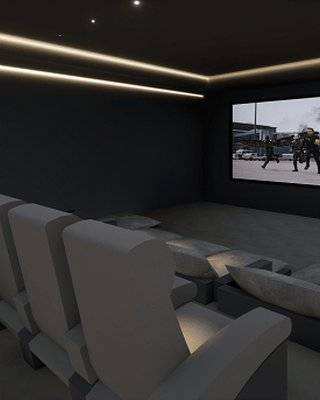
If you are designing a serious home cinema, you will encounter three terms repeatedly: Dolby Atmos, THX, and IMAX Enhanced. Each represents a different philosophy about how film sound should reach the listener. Understanding the differences between them — and what each demands from your room, your speakers, and your processor — is essential to building a cinema that performs at its best.
This article explains what these formats are, how they differ technically and philosophically, and how to choose between them or build a system that accommodates all three.





What Is an Immersive Audio Format?
Before exploring the differences, it is worth understanding what the term “immersive audio format” actually means. For decades, cinema sound used a simple model: left, centre and right channels in front of the screen, surround channels on the sides, and a subwoofer for bass. This is 5.1 surround sound, and it works well. But it has a fundamental limitation: all audio information is contained in discrete channels, each driving a specific speaker or group of speakers in a predetermined location. If a director wants to place a sound object in space — say, a helicopter moving from screen-left to directly overhead — they have to create separate recordings for each potential speaker configuration.
Immersive audio formats change this by introducing the concept of sound objects. Instead of mixing a soundtrack into fixed channels, the mix engineer places individual sounds as three-dimensional objects in space: at a specific position (left-right, front-back, height) and at a specific distance from the listener. The processor receiving this object-based mix then routes each sound to whichever speakers make sense for that room. A helicopter moving overhead in a room with four height speakers might be rendered across all four; the same mix in a room with six height speakers might use all six, creating smoother motion. The mix is the same; the reproduction adapts to the room.
This flexibility is what separates true immersive audio from channel-based surround sound. And this is where the three formats — Dolby Atmos, THX and IMAX Enhanced — depart from each other philosophically.
Dolby Atmos: The Market Leader
Overview
Dolby Atmos launched in 2014 and is now the dominant immersive audio format globally. It is the sound standard in thousands of commercial cinemas. It is embedded in streaming services (Netflix, Amazon Prime Video, Apple Music, Tidal), built into consumer devices (soundbars, smart speakers, gaming consoles), and widely available on Blu-ray. More film and television content is mixed in Dolby Atmos than any other immersive format.
In a residential setting, Dolby Atmos supports up to 34.1 individually rendered channels — the highest channel count of any format discussed in this article. This theoretical maximum includes front, surround, side, rear, and overhead channels, all contributing to a three-dimensional sound field.
How Dolby Atmos Works
Dolby Atmos is an object-based format. Each sound in a film mix is treated as an independent object with metadata specifying its three-dimensional position, duration and distance from the listener. The Dolby Atmos processor decodes this metadata and routes each object to the appropriate speakers in your room based on your installed configuration.
This flexibility is Atmos’s great strength. A Dolby Atmos mix can work in a small bedroom (with 5.1.2 — five speakers plus two height speakers) and in a reference cinema (with 24.10.10 or more). The same mix adapts.
However, this flexibility creates a design challenge for residential installations. Dolby’s official speaker placement recommendations show a range of valid configurations, but they do not all work together coherently in the same room. Two recommended layouts might disagree on where the height speakers should sit, or how surrounds should be positioned. Integrating multiple Dolby configurations into a single, elegant whole requires careful design work from an experienced installer.
Dolby Atmos in the Home Cinema
For most luxury home cinema installations, Dolby Atmos is the foundation. It is widely understood, extensively supported (every major processor brand decodes it), and available in an enormous library of content. A cinema that accommodates Dolby Atmos accommodates the majority of modern film and music releases.
At the speaker level, Dolby Atmos works with any quality loudspeaker. We routinely specify Dolby Atmos in cinemas built around Artcoustic speakers (a more accessible option for rooms with budget or space constraints), Meyer Sound reference systems (for high-end reference installations), and Steinway Lyngdorf (for the absolute pinnacle of fidelity).
Room calibration is essential. A Dolby Atmos system that is not properly calibrated — with speakers time-aligned, frequency response flattened, and height placement optimised — will not perform to its potential. This is where room correction processors like the Trinnov Altitude make a critical difference. Trinnov’s WaveForming technology, in particular, solves the standing-wave and room-mode problems that plague bass distribution in residential cinemas.
Our most ambitious project, the Dream Specification Home Cinema, uses Dolby Atmos as its immersive audio foundation — a 14.8.6 configuration (14 main channels, 8 surround, 6 height) driven by a Trinnov Altitude32 processor and Meyer Sound reference speakers throughout.
THX: Engineering Excellence and Standards
Overview
THX is often confused with an audio format, but it is actually something different: a set of engineering standards that guarantee a room has been designed and calibrated to meet rigorous performance specifications. THX-certification applies to the entire system — the room construction, the loudspeakers, the processors, the screen, the projection equipment, and the calibration process itself.
Founded by Lucasfilm in 1983, THX emerged from a single frustration: Lucasfilm’s films sounded spectacular in some cinemas and disappointing in others. The company developed a comprehensive technical standard that, if followed, would ensure every cinema — regardless of size, budget or location — could deliver consistent, predictable performance. That standard has evolved and now encompasses everything from commercial cinema through to home theatre.
What THX Actually Measures
THX certification is based on measurable, objective criteria. For home theatres, these include:
Acoustic Volume Categories. THX defines room sizes in terms of volume (in cubic metres) and specifies minimum speaker quality and amplification for each category. A smaller room (Category 1, under 300 m³) requires less speaker power than a larger space. This ensures that the acoustic output is appropriate to the room — preventing either undersized systems that cannot fill the space or overkill that pressurises small rooms.
Speaker Frequency Response. All speakers must deliver flat frequency response within specified tolerances (THX typically requires ±3dB across the audible spectrum). This removes colouration — what you hear is what the film mixer intended, not what the speaker wants to emphasize.
Bass Extension. THX specifies minimum bass extension: typically 20Hz, ensuring that the lowest frequencies in film soundtracks are present. This matters more than many realize; modern cinema uses extremely low frequencies for impact effects, and a system that stops at 40Hz or 50Hz is missing a critical part of the intended soundtrack.
Calibration and Measurement. THX-certified installers are trained to measure the room acoustically and verify that the system meets specifications. This is not casual calibration; it is measured verification that the system performs as promised.
Room Acoustics. THX specifies acoustic treatment requirements to minimize reflections and standing waves — the causes of coloured, inaccurate sound. A THX room is acoustically controlled, not just electrically amplified.
THX and Immersive Audio
Here is where THX and the Dolby Atmos / DTS:X / IMAX formats intersect: THX is not itself an immersive audio format. Rather, THX is a set of engineering standards that can be applied to rooms using any immersive format. You can have a THX-certified room using Dolby Atmos, or THX-certified speakers powered by DTS:X processing.
What THX brings to the table is a guarantee that your room, regardless of which immersive format it uses, meets professional performance standards. A THX-certified home cinema will deliver accurate bass, balanced frequency response across the room, proper acoustic treatment, and professional calibration. These are the fundamentals that allow any immersive format to perform well.
THX in Home Cinema Design
For luxury home cinemas at the level we typically specify, THX certification is the baseline standard we work toward. Our room designs incorporate THX acoustic principles: proper volume categorization, bass extension to 20Hz minimum, acoustic treatment for reflection control, and professional calibration using reference-grade measurement tools.
Whether the final system uses Dolby Atmos, IMAX Enhanced, or both, THX principles inform every decision about room construction, speaker placement, and calibration methodology.
IMAX Enhanced: The Theatrical Experience at Home
Overview
IMAX Enhanced is the newest of the three formats, launched in 2018 as DTS’s answer to the combination of Dolby Vision (visual) and Dolby Atmos (audio). IMAX Enhanced pairs a proprietary audio mix — IMAX Signature Sound — with Dolby Vision or HDR video to recreate the theatrical IMAX experience in the home.
IMAX Enhanced is built on DTS:X technology and includes a library of theatrical releases mixed specifically for the home IMAX Enhanced format. Sony has committed to releasing over 100 IMAX Enhanced titles on 4K Blu-ray, making the format increasingly available to home cinema owners.
How IMAX Signature Sound Works
IMAX mixes films differently than standard theatrical mixes. IMAX cinemas use different speaker configurations, often different room geometries, and most importantly, a different aesthetic philosophy: maximum impact and immersion. An IMAX mix emphasizes dynamics, spatial width, and bass impact more aggressively than a standard Dolby Atmos mix of the same film.
IMAX Signature Sound is the soundtrack mix created specifically to replicate this theatrical IMAX mix at home. It uses higher dynamic range, wider spatial panning, and deeper bass emphasis than the standard soundtrack. A compatible IMAX Enhanced processor — such as the Trinnov Altitude16 or Altitude32 — auto-detects IMAX Enhanced content and applies specific bass management and processing to accommodate these more aggressive soundtracks.
Technical Implementation
IMAX Enhanced relies on DTS:X rendering and DTS Neural:X upmixing. The Neural:X engine is one of the most sophisticated upmixing algorithms available; it can take a standard 5.1 or 7.1 mix and intelligently upmix it across 30 or more speaker channels, creating a vastly wider soundstage from legacy content.
This means IMAX Enhanced is not limited to IMAX-branded content. A processor that supports IMAX Enhanced can apply the IMAX Signature Sound processing and Neural:X upmixing to any DTS content — theatrical releases, music, streaming content.
IMAX Enhanced in the Home Cinema
IMAX Enhanced is ideal for cinema owners who prioritize impact and spectacle. If you are building a cinema specifically for blockbuster films — action films, science fiction, animated features — and you want the theatrical IMAX experience replicated in your room, IMAX Enhanced is the right choice.
It is less ideal for dialogue-heavy films (dramas, period pieces) or music-focused content, where the aggressive bass emphasis and dynamic range of IMAX Signature Sound can become fatiguing. IMAX Enhanced is best used as one tool in a broader toolkit that also includes standard Dolby Atmos and music-optimized upmixing.
Our installation in Dubai, the 18-seat private cinema with 6.4-metre IMAX Enhanced laser projection, is one of the largest IMAX Enhanced home installations in the world, and demonstrates that the format works beautifully in residential settings when properly implemented.
Technical Comparison: Format Specifications at a Glance
Dolby Atmos
- Max channel count: 34.1 (highest)
- Audio codec: Object-based (flexible channel routing)
- Height speakers: Overhead, typically at ceiling level
- Content availability: Extensive (streaming, Blu-ray, theatrical)
- Processing requirement: Dolby-licensed processor or compatible AV receiver
- Best suited to: All film genres and music content
THX Standards
- Scope: Not a format, but a certification standard for room and system design
- Key metrics: Speaker frequency response (±3dB), bass extension (20Hz), acoustic treatment, calibration methodology
- Audio format compatibility: Works with Dolby Atmos, DTS:X, or any channel-based format
- Certification process: Installer training, acoustic measurement, performance verification
- Best suited to: Ensuring consistent performance regardless of format choice
IMAX Enhanced
- Max channel count: 30+ (through DTS:X Pro renderer)
- Audio codec: DTS:X (object-based)
- Signature Sound philosophy: Increased dynamics, spatial width and bass emphasis vs standard mix
- Content availability: Growing (100+ Sony titles committed)
- Processing requirement: IMAX Enhanced-compatible processor (Altitude16/32, some AV receivers)
- Best suited to: Blockbuster films, action cinema, spectacle-focused entertainment
Processor Choice: The Gateway to All Formats
The processor at the centre of your cinema system determines which formats you can access. For a room built to accommodate multiple immersive formats — the approach we recommend — processor selection is critical.
Trinnov Altitude Range
The Trinnov Altitude processors (Altitude16 and Altitude32) decode all major immersive formats: Dolby Atmos, DTS:X Pro, and Auro-3D, plus full IMAX Enhanced support. More importantly, Trinnov applies its proprietary WaveForming bass management to all formats, solving the room-mode and standing-wave problems that plague residential cinema bass. Trinnov’s 3D Remapping technology also allows the processor to correct for non-ideal speaker placements — if a surround speaker is constrained to a non-perfect position, Trinnov recalculates the signal so it behaves as if in the ideal location.
For serious home cinema installations, Trinnov is the closest thing to a universal solution for multi-format support at reference quality.
Steinway Lyngdorf Model P300
The Steinway Lyngdorf Model P300 processor includes Dolby Atmos, DTS:X, and Auro-3D decoding alongside Steinway’s proprietary RoomPerfect calibration technology. RoomPerfect takes multiple acoustic measurements throughout the room and applies corrections optimized for every listening position — not just the primary seat.
Steinway Lyngdorf is particularly effective in situations where the room is already acoustically challenging; RoomPerfect can often correct problems that acoustic treatment cannot solve.
Reconciling Multiple Format Speaker Placements
This brings us to the core technical challenge: Dolby Atmos, DTS:X, and Auro-3D do not all recommend the same speaker positions. Dolby places height speakers overhead at the ceiling. Auro recommends height speakers at a 30° elevation angle — meaning they sit on the wall, not the ceiling. DTS:X Pro adds above-and-below-screen channels for greater vertical resolution.
A room built to accommodate all three formats requires careful design. Our approach: use Trinnov’s loudspeaker positioning guide, which documents the smallest unified speaker layout that accommodates all three formats simultaneously, with minimal compromise. The result is a system that performs well with Dolby Atmos, DTS:X, and Auro-3D without needing to rebuild the room for each format.
Speaker Brands Across Price Tiers
Artcoustic: Professional Performance at Accessible Investment
Artcoustic loudspeakers are professional-grade cinema speakers at a price point accessible to more projects. The brand is widely used in commercial cinema installations across the UK and Europe. For residential home cinema, Artcoustic delivers the accuracy and output needed for rooms up to approximately 300 m³ (typical for a dedicated cinema room), with clean frequency response and precise sound-staging.
A cinema using Artcoustic speakers and Dolby Atmos or IMAX Enhanced processing will deliver excellent performance, particularly when paired with proper room calibration (using Trinnov or Steinway Lyngdorf correction).
Meyer Sound: Reference Standard in Luxury Cinema
Meyer Sound loudspeakers are the choice for the most demanding cinema installations. The brand is used in professional facilities including Skywalker Sound screening rooms and Dolby’s official demo cinemas. Meyer’s design philosophy prioritizes linear frequency response — flat response across the audible spectrum with no artificial presence peaks.
Meyer speakers initially sound less impressive than consumer-oriented designs, which often boost presence frequencies. But after a few minutes, the ear adjusts — and the absence of colouration becomes apparent. You hear the film, not the speakers.
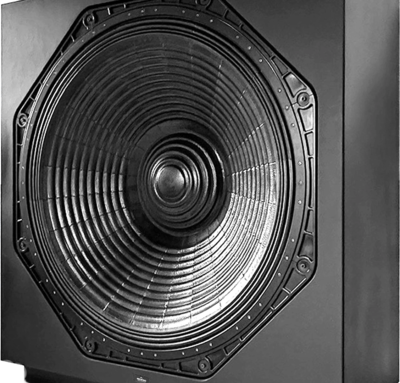
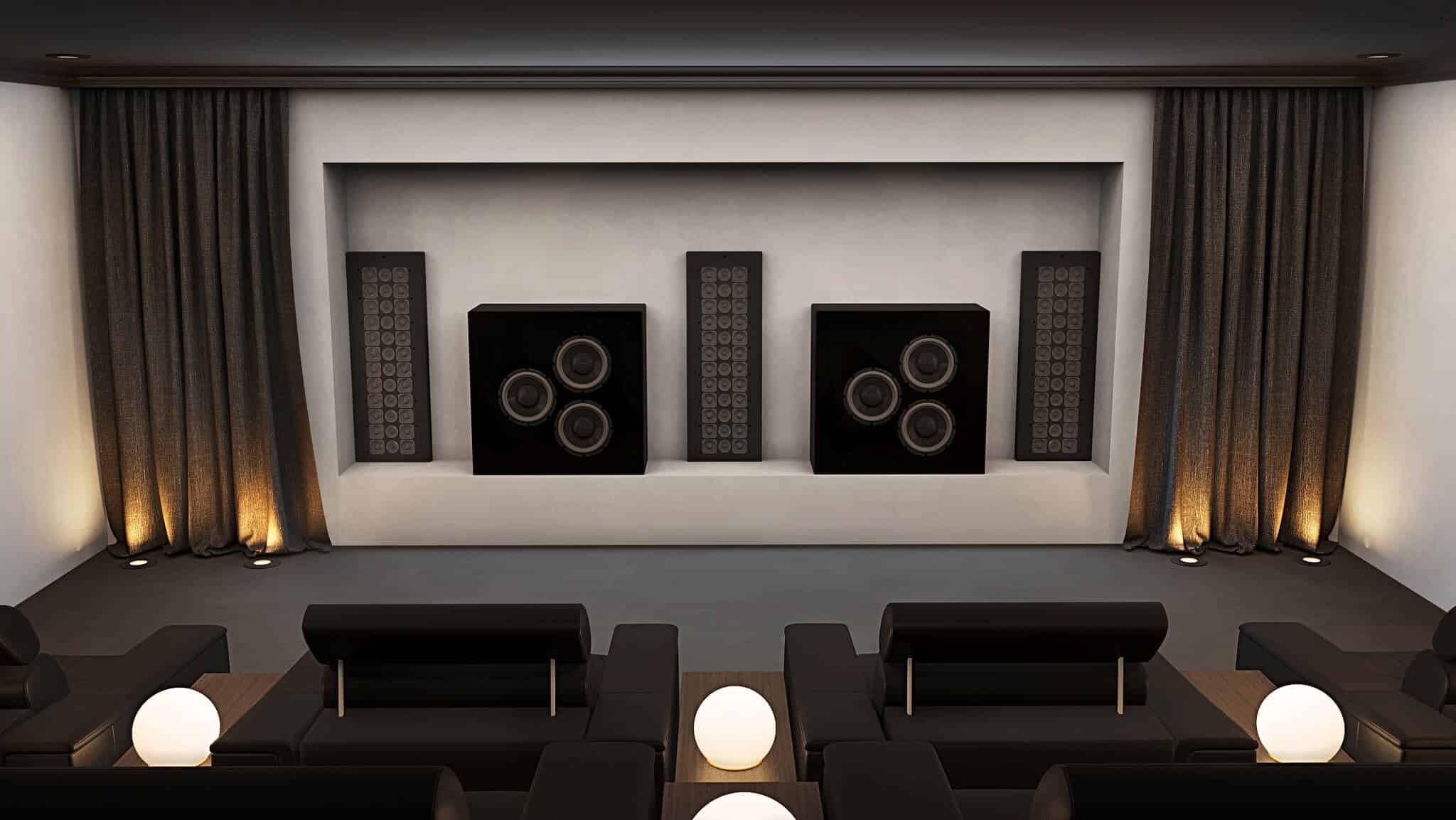
Our Dream Specification Cinema uses Meyer Sound Bluehorn reference systems (LCR channels), HMS-15 cinema surrounds, HMS-10 height speakers, and X-800C distributed subwoofer arrays — the same loudspeaker types used in professional cinemas.
Steinway Lyngdorf: The Absolute Pinnacle
Steinway Lyngdorf represents the culmination of audio engineering philosophy. Every element is designed from first principles: speaker drivers are optimized in-house, amplification is fully digital with no analogue stage, and room correction (RoomPerfect) uses multi-point measurement for whole-room optimization rather than single-point tuning.
Steinway Lyngdorf cinema systems are available in any finish that Steinway pianos offer, allowing the audio system to integrate seamlessly with interior design. The investment is substantial, but for clients for whom cost is not the primary constraint, Steinway Lyngdorf delivers sonic performance that rivals professional cinemas.
Room Calibration: Making Format Performance Real
No immersive format performs at its best in an uncalibrated room. The processor can decode the mix perfectly, but if speakers are not time-aligned, if frequency response is coloured by room modes, or if bass is reinforced at some seats and deficient at others, the format’s benefits are lost.
Trinnov Optimizer Calibration
Trinnov’s Optimizer uses a tetrahedral 3D microphone that maps the spatial position of every speaker to within a centimetre and a degree of arc. The algorithm then calculates time and level corrections that are coherent across three-dimensional space. After calibration, bass arrives at every seat uniformly, all speakers are perfectly time-aligned, and frequency response is flat throughout the listening area.
WaveForming — Trinnov’s bass management innovation — takes this further, using multiple subwoofers as active absorbers to eliminate standing waves entirely. The result is bass that behaves as if the room were infinitely large, with no room modes.
Steinway Lyngdorf RoomPerfect Calibration
Steinway Lyngdorf’s RoomPerfect takes measurements from multiple positions distributed throughout the room — not just the primary listening seat. The algorithm builds a comprehensive model of the room’s acoustic behaviour and applies corrections optimized for the whole space. We are RoomPerfect Certified Professionals — one of the few UK installers with formal Steinway Lyngdorf training in this proprietary technology.
RoomPerfect preserves the natural character of the loudspeakers while correcting for room anomalies. A properly calibrated RoomPerfect system sounds acoustically natural, not artificially corrected.
Choosing Your Format: Practical Guidance
If cinema is your primary use case: Dolby Atmos with THX design principles, supported by either Trinnov or Steinway Lyngdorf calibration. The vast majority of modern film releases are mastered in Dolby Atmos. This setup accommodates everything.
If you prioritize blockbuster/action content: IMAX Enhanced support, alongside Dolby Atmos. This gives you the aggressive impact and spatial width that IMAX Signature Sound delivers, while retaining the flexibility of standard Atmos for other content.
If music is equally important: Auro-3D support alongside Dolby Atmos. Auro-3D has been optimized for music mixing and includes a sophisticated Auromatic upmixer specifically for musical content. If your cinema doubles as a music listening room, Auro capability is worth the additional design effort.
If budget and space are constraints: Focus on Dolby Atmos in a room that meets THX standards. The fundamentals — proper room volume, acoustic treatment, flat frequency response, professional calibration — matter more than format breadth.
Building a Future-Proof System
One final consideration: choose processors and systems that evolve over time. The Trinnov Altitude platform, for example, receives free software updates that add new features and formats. WaveForming was delivered as a free update to existing owners. This is the opposite of consumer electronics, where older models become obsolete.
Similarly, Steinway Lyngdorf’s RoomPerfect technology has been refined continuously since its introduction and continues to improve. A system built around Trinnov or Steinway Lyngdorf today will be capable of supporting new formats and technologies five years from now.
→ Read our complete guide to home cinema design and installation
→ Learn more about Trinnov Altitude processors and WaveForming bass management
→ Explore Steinway Lyngdorf systems and RoomPerfect calibration
→ See the complete specification for our reference cinema installation