Home Theater Renovation Ideas: The Complete Guide
A home theater renovation almost always starts with the same question: turn an existing room into something purpose-built, or upgrade a space that still needs to work for everyday life? Both are genuinely good options, and the right answer depends entirely on the room you’re starting with and how you actually want to use it. We’ve spent 25 years renovating basements, garages, spare rooms and living rooms into everything from full acoustically-treated theaters to living spaces that hide a complete surround system behind a Chesterfield sofa — and the ideas that actually work tend to be the same handful, applied thoughtfully to whatever room you’ve got.
This guide walks through both paths properly — what changes structurally, what doesn’t, and where the money and effort are best spent — with two real projects from our own portfolio as concrete reference points rather than stock inspiration photos.

Installation

Design

Treatments

Seating
Media Rooms
Two Renovation Paths: Dedicated Theater or Multi-Use Media Room
The single biggest decision in any renovation is which of these two rooms you’re actually building — and it’s worth being honest with yourself about it before a single wall comes down.
A dedicated home theater gives up the room entirely to film and sound. Full acoustic treatment, tiered or fixed cinema seating, a large acoustically transparent screen, and lighting designed purely around viewing. It’s the right renovation for a basement, a garage conversion, or any space that isn’t pulling double duty as a living area. Read our full guide to dedicated home cinema installation →
A media room renovation keeps the space multi-purpose — a living room, a snug, an open-plan family area — while bringing genuine cinema-quality picture and sound into it. The brief here is different and, in some ways, harder: everything has to disappear when the system isn’t in use. No visible speaker boxes, no black rectangle dominating the wall when the TV’s off, nothing that reads as “home theater” until you actually want it to. Read our full guide to media room design and installation →
Renovating a Room Into a Dedicated Home Theater
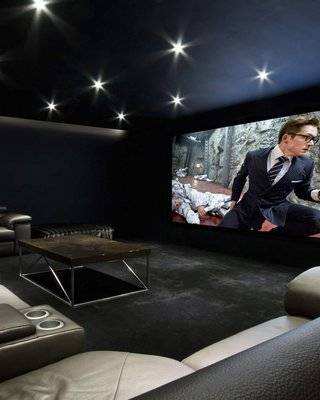
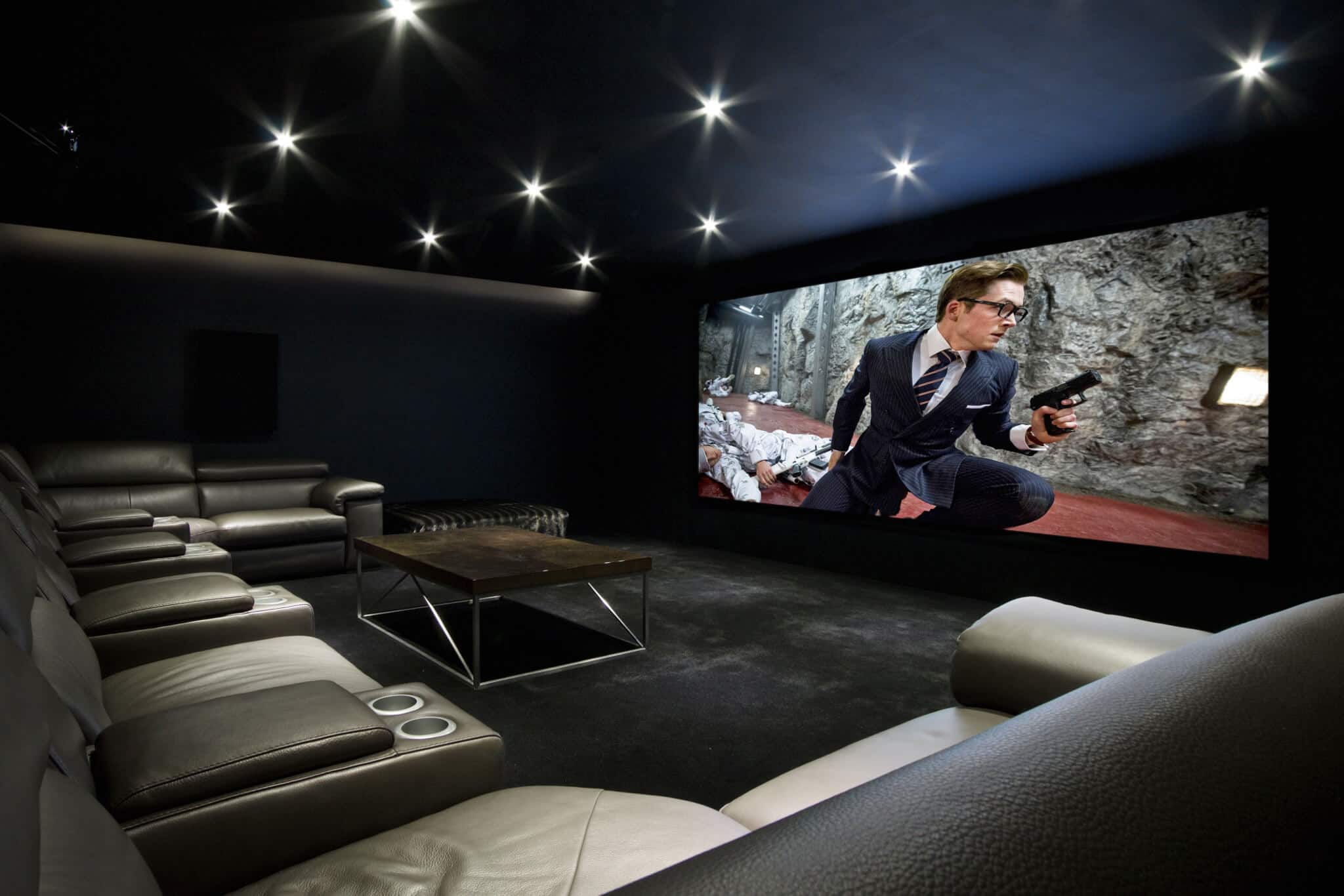
Converting a spare room, basement or garage into a proper dedicated theater is the more structurally involved of the two renovations, but it’s also the one that delivers the most dramatic result. The work generally covers four things done together rather than in isolation: acoustic treatment to control reflections and bass build-up, a large acoustically transparent screen with front speakers positioned directly behind it, tiered or properly spaced seating with real sightlines, and a lighting and control system that turns the whole room on and off with a single button press.
The acoustic work is where most DIY theater renovations fall short. A room that hasn’t been acoustically modelled — even one with expensive equipment in it — will suffer from standing waves, muddy bass and poor dialogue clarity that no amount of speaker upgrading fixes. Getting this right at renovation stage, before the fabric walls and ceiling go in, is far more effective than trying to correct it afterwards.
Renovating a Living Space Into a Media Room
The more common renovation brief we see, particularly in London townhouses and family homes, isn’t “build us a cinema” — it’s “make our living room genuinely brilliant for films, but it still has to look and work like a living room every other day.” This is a fundamentally different design problem from a dedicated theater, and it comes down to one word: concealment.
Every speaker has to earn its place in the room twice — once acoustically, once visually. Colour-matched, flush-mounted architectural speakers that disappear into the wall finish. A soundbar or in-cabinet centre channel rather than a floor-standing tower. A subwoofer built into existing joinery rather than sitting in a corner. Done well, a visitor sitting on the sofa has no idea a full surround system is in the room until the film starts.
Media Room Renovation Ideas — Room by Room
Whichever path you’re on, the individual decisions within a renovation tend to be the same. Here’s where we’d focus attention and budget.
Screen and Display
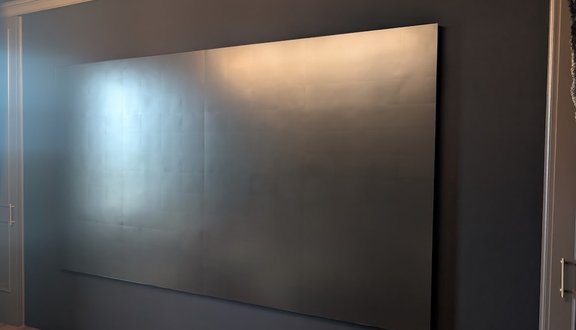
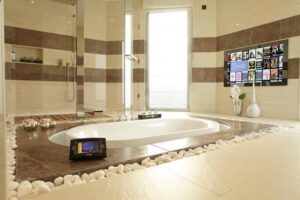
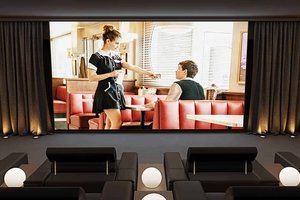
For a dedicated theater with controllable ambient light, a large acoustically transparent projector screen — as used in the Surrey renovation above — gives the biggest, most cinematic image available, with front speakers hidden directly behind it. For a media room with more daylight to contend with, a large-format OLED or Mini-LED panel, as used in the Kensington project, typically performs better: brighter, better black levels in ambient light, and no need to manage a drop-down screen. Samsung’s The Frame is worth considering specifically for renovations where the display needs to look like art when it’s off rather than a black rectangle.
Seating
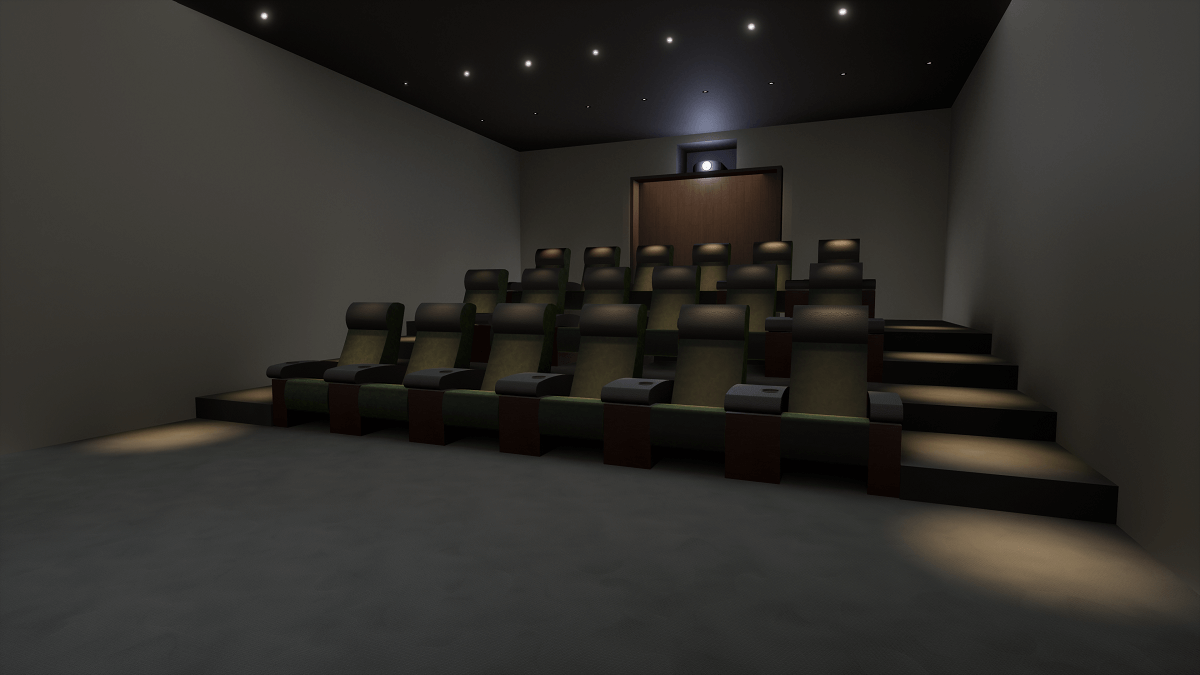
A dedicated theater renovation can take proper tiered cinema seating — individual recliners, real sightlines, genuine cinema geometry. A media room renovation needs seating that reads as furniture first: a sofa that happens to recline, rather than a recliner that happens to look like a sofa. Read our full guide to home cinema and media room seating →
Lighting
Every renovation we do includes a proper lighting scene system, not an afterthought dimmer. A “cinema” scene should bring the room to precisely the right level for viewing — not black, not bright, just correctly dim — recalled at the same button press that starts the film. Read our complete guide to home cinema lighting design →
Acoustic Treatment Without Full Structural Work
Not every renovation can accommodate a fully isolated, decoupled room build — and for a media room renovation specifically, it usually shouldn’t need to. In-room acoustic treatment — rugs on hard floors, upholstered seating, heavy curtains or blinds, and a handful of fabric-wrapped absorption panels disguised as art — does most of the real work without any structural intervention at all. Full sound isolation (stopping bass travelling to the rest of the house) is a different, more involved job, and one worth having an honest conversation about before committing to it. Read our complete guide to acoustic treatment →
Frequently Asked Questions
Should I renovate into a dedicated theater or a multi-use media room?
It depends on the room. A basement, garage or spare room with no other daily function is well suited to a dedicated theater, since nothing needs to be concealed. A living room, family room or any space that still needs to function as a living space day-to-day is better renovated as a media room, with every speaker and piece of equipment built into the architecture.
Do I need to fully rebuild a room to renovate it into a home theater?
Not necessarily. Full structural acoustic isolation — decoupled walls, floating floors — is only needed where sound genuinely can’t be allowed to travel to the rest of the house. Most media room renovations achieve excellent results through in-room acoustic treatment and careful speaker placement alone, without any structural work.
Can existing living room furniture and speakers stay as part of the renovation?
Existing furniture, yes, where it suits the acoustic and design brief. Existing speakers are rarely worth keeping in a proper renovation — architectural, colour-matched speakers built into the room during the renovation itself consistently outperform freestanding units and disappear visually in a way retrofitted speakers can’t.
How long does a home theater or media room renovation take?
It varies significantly with scope — a media room renovation using existing joinery and structure can be considerably faster than a full dedicated theater build involving acoustic treatment and construction work. We’ll give you an honest timeline specific to your room during a consultation.
Start Your Renovation
Whether you’re converting a basement into a full dedicated theater or renovating a living room into a media space that hides everything until you want it, we design and build the whole project — acoustic treatment, screen and display, seating, lighting and control — as one coordinated renovation rather than a collection of separate purchases. Read more about dedicated home cinema installation → or read more about media room design and installation →, or get in touch to discuss your renovation.