Home Cinema Lighting Design
How to Design the Perfect Home Cinema Lighting
Home cinema lighting design is crucial to creating an enjoyable home cinema room. Lighting levels need to be exactly right to create the right environment — bright enough to navigate the room comfortably, and dim enough to properly enjoy the picture from a projector. We even account for the reflection of light fittings when designing a room, since an unwanted reflection can be genuinely distracting during a long viewing session. Task lighting matters too — far too many cinema rooms are only capable of being completely dark spaces, when proper lighting for cleaning and everyday access is just as important to get right. Home cinema lighting should be central to any cinema or theatre room design, not an afterthought once the equipment is chosen.
Different Types of Cinema Lighting
Home cinema lighting tends to have specific requirements, and a number of distinct lighting styles suit cinema rooms particularly well. This isn’t an exhaustive list, but these are the lamp types we always consider when designing a cinema room.

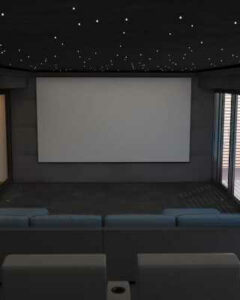
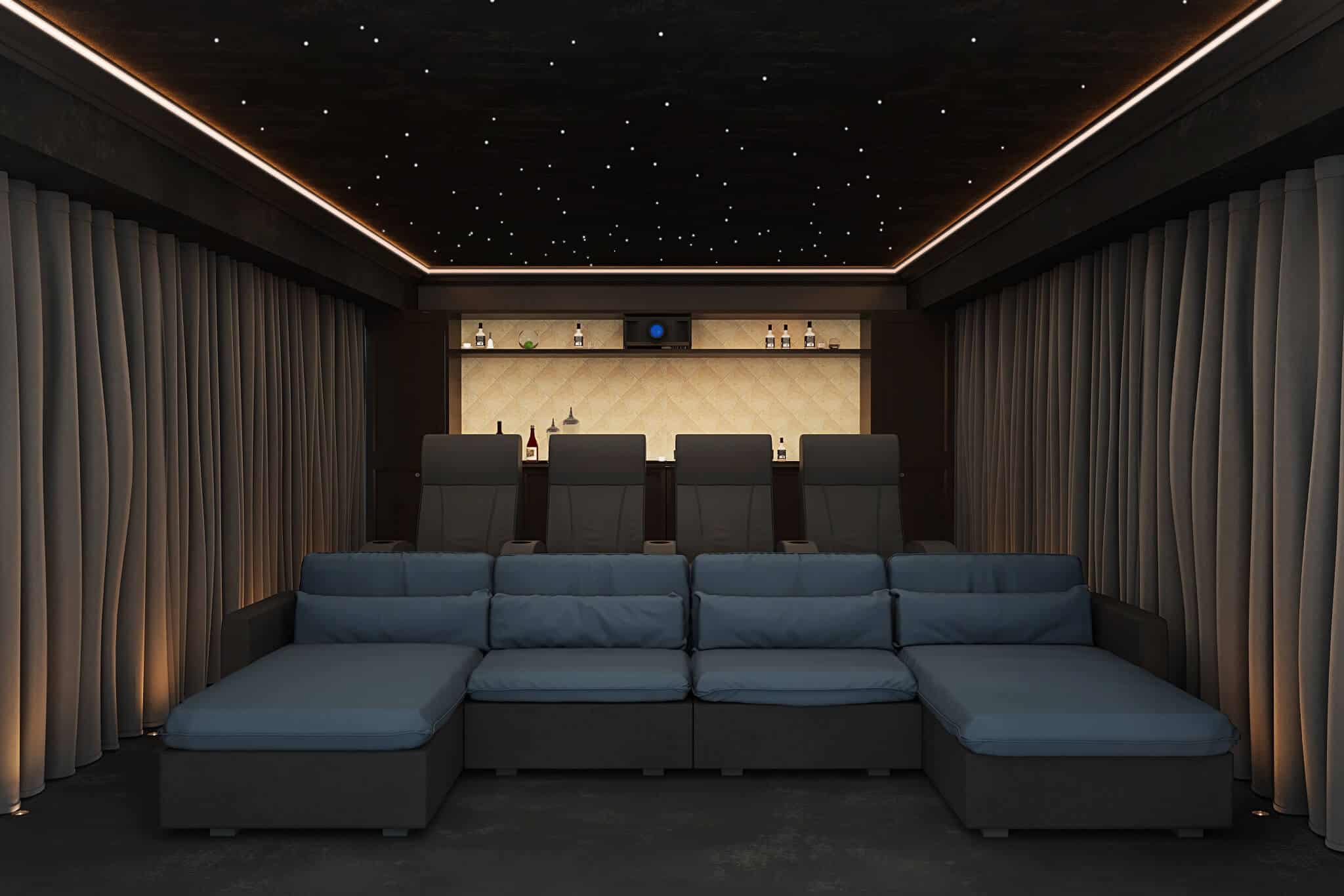
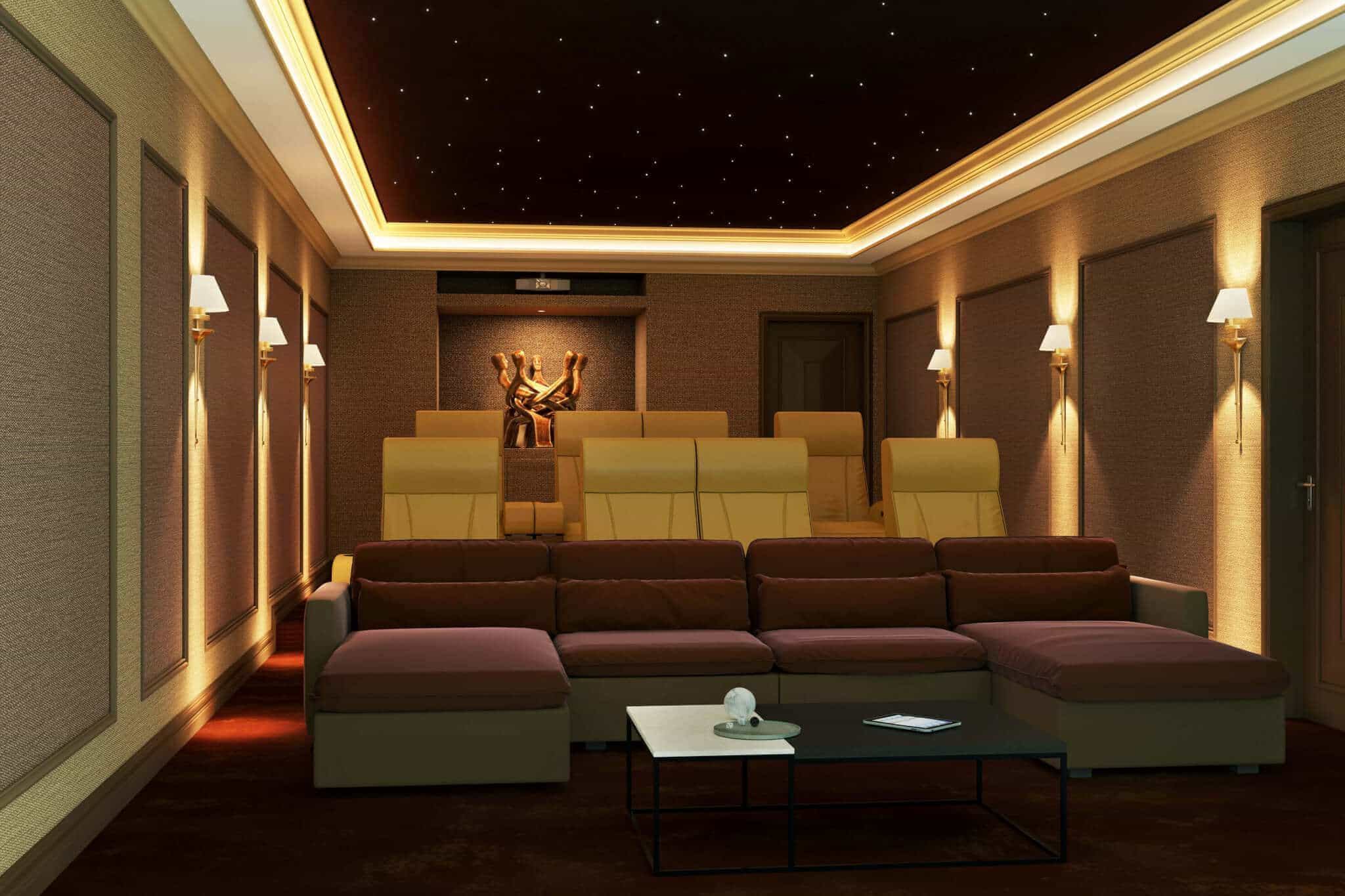
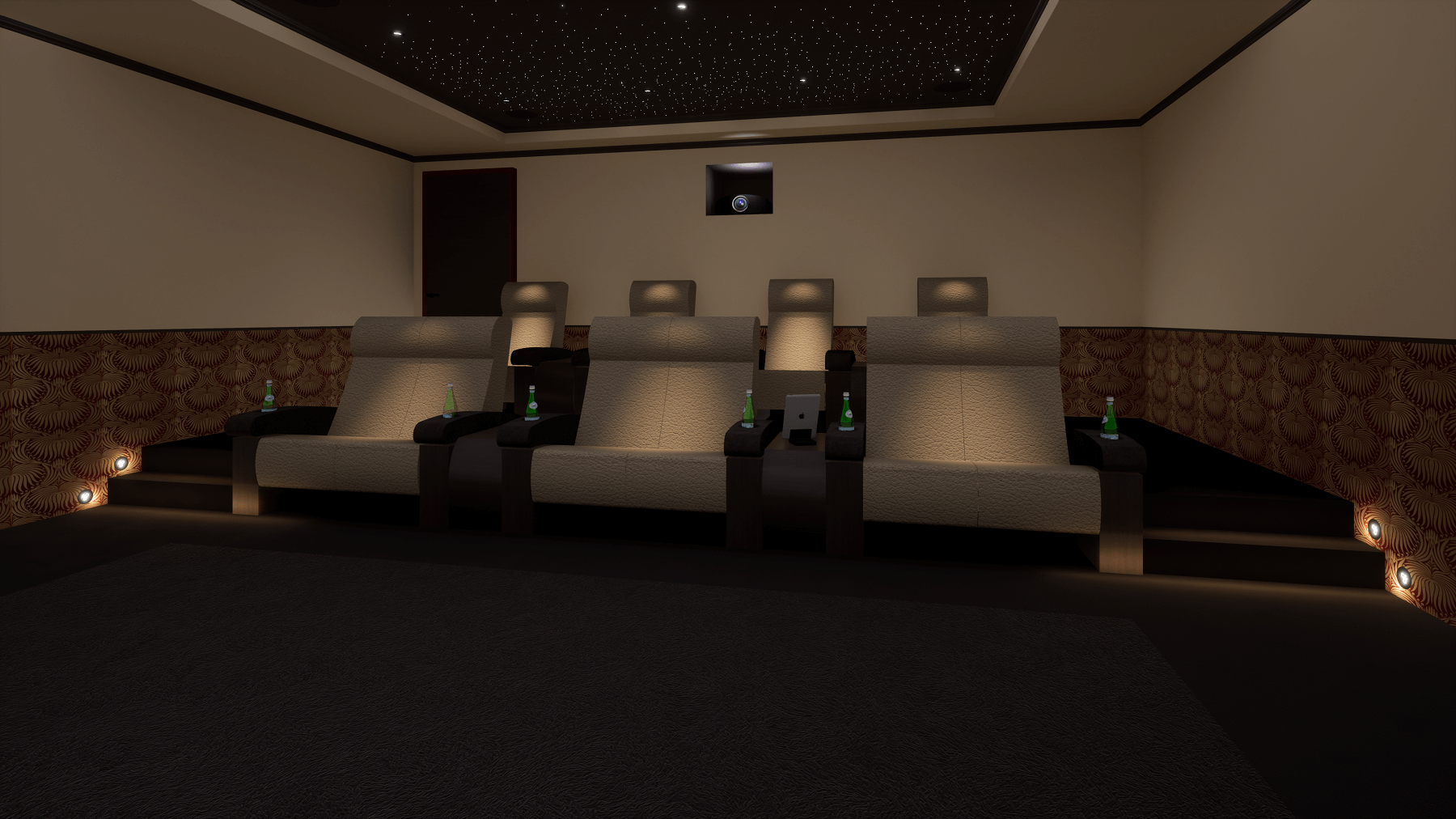
- Star light ceilings. Genuinely popular across our installations — this lighting can stay on throughout a film, providing a magical night-sky effect that adds real drama to a room. We can even lay out the fibre optics to reflect the actual sky at a specific point in time — a birthday or wedding date, for instance. It’s genuinely time-consuming to do properly, but adds a real personal touch. We’re in good company here — even Rolls-Royce offer a “Starlight Headliner” on their cars.
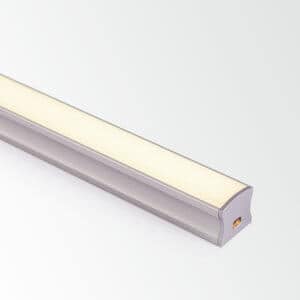
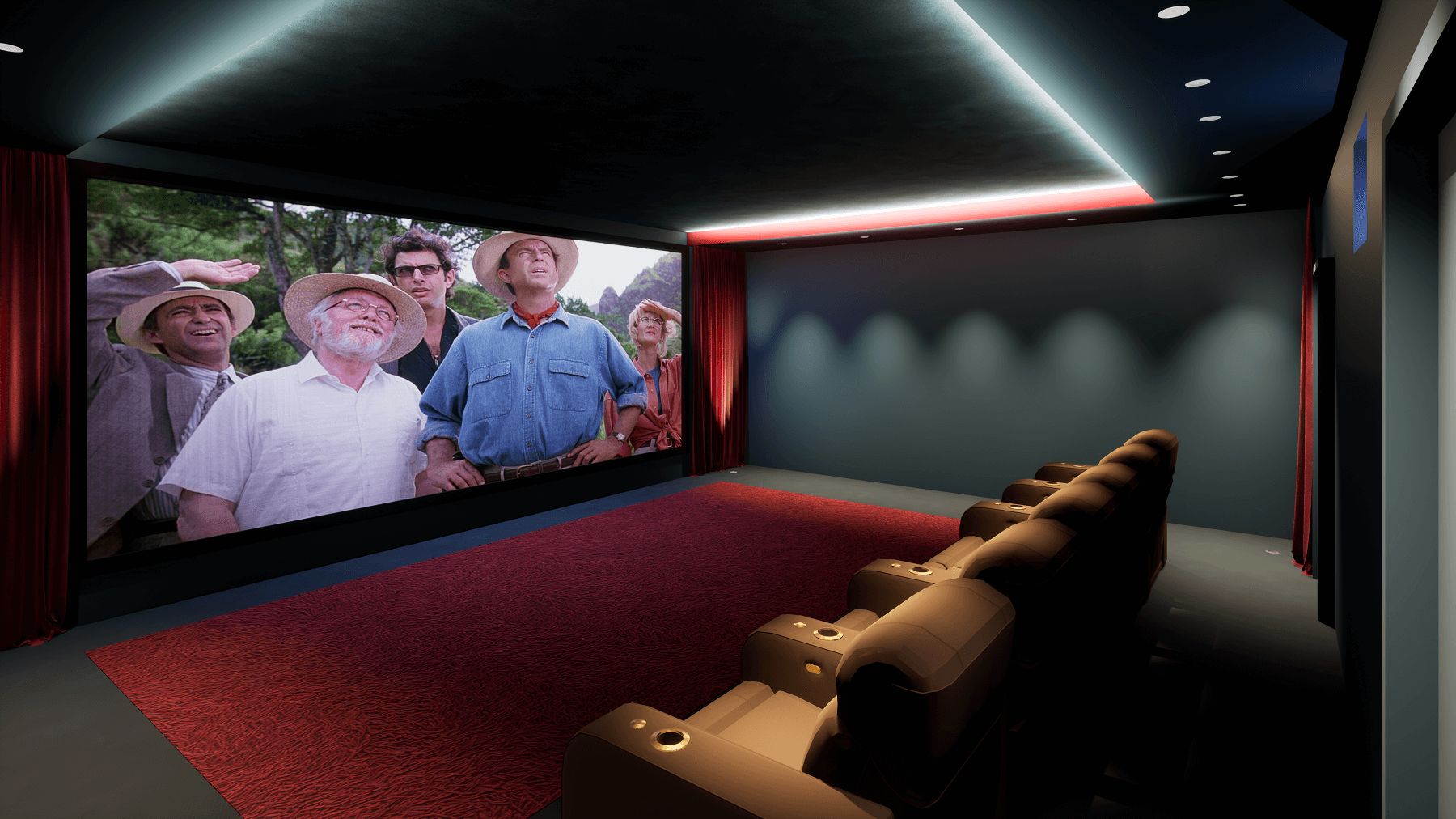
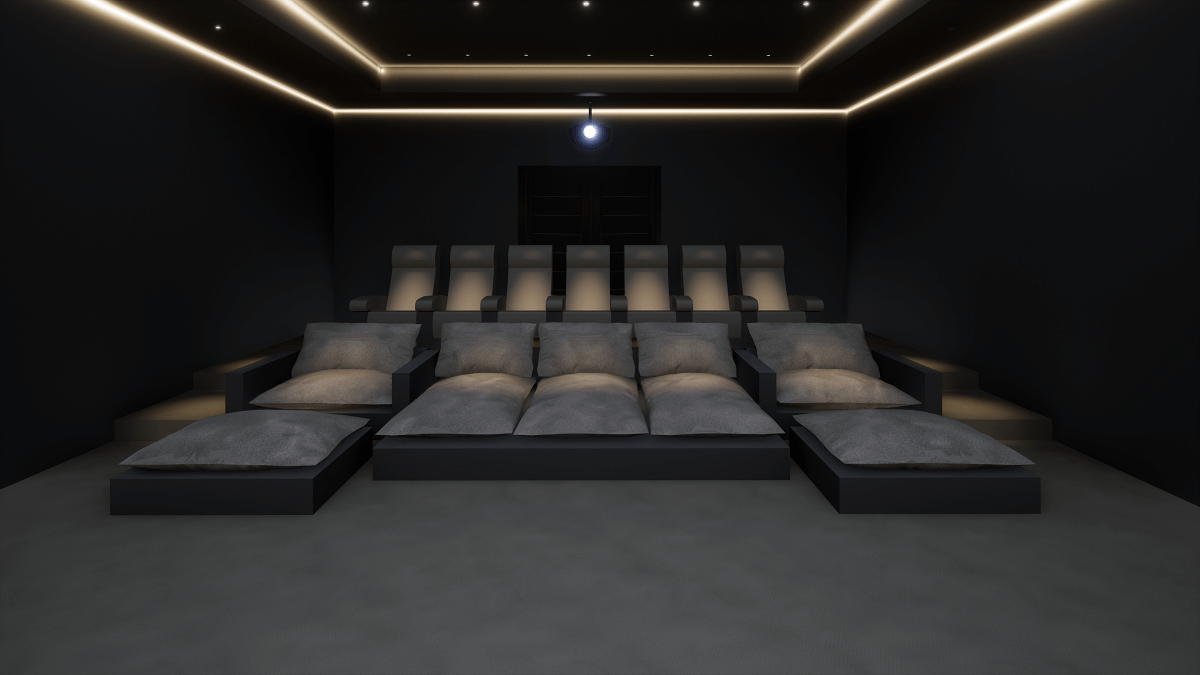
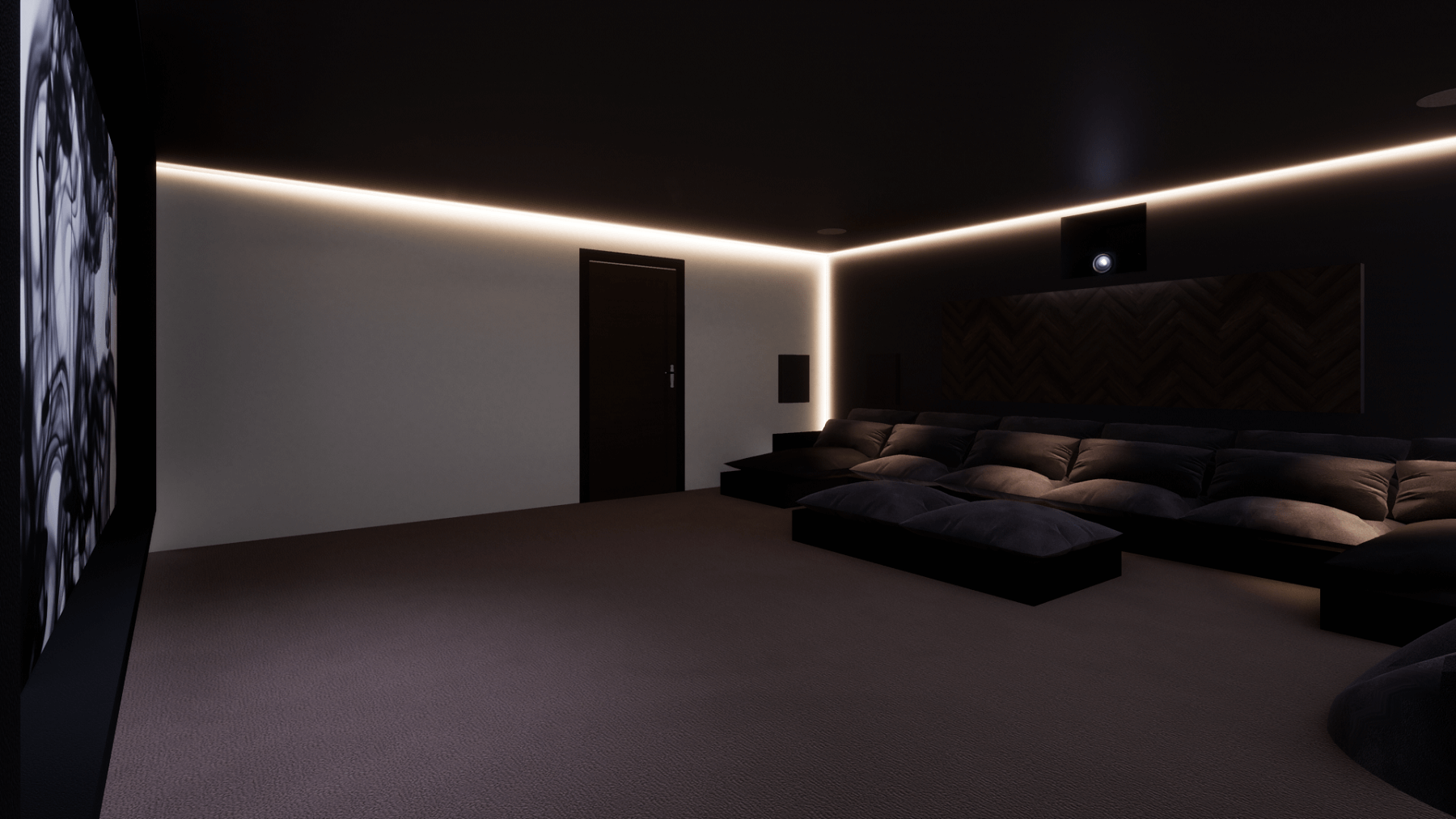
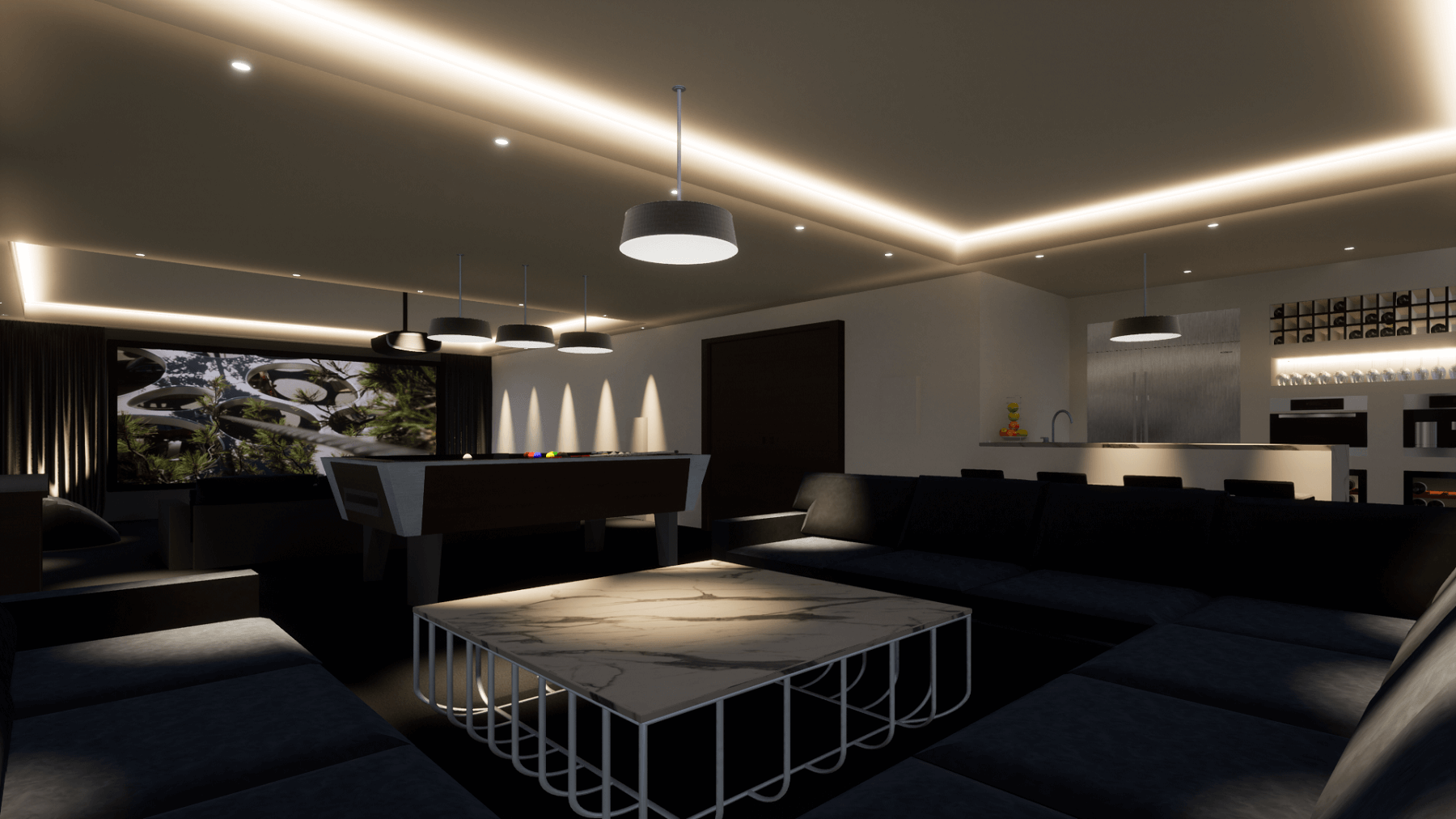
- Cove lighting. LED strip around the cove or top edge of a room provides excellent indirect light while giving the impression of greater height. Fitting LED strip is straightforward during room construction, and we build a proper diffuser directly into the fabric of the wall, so the lighting reads as fully integrated rather than an applied fitting. Dimmable strip connected to a lighting control system gives clients complete control over the effect.
- Stair lighting. Our usual approach for rooms with multiple rows of seating is a raised platform, elevating the rear viewers above the row in front — much like a commercial cinema. Lighting on the steps themselves is essential to prevent trips, achieved either with LED strip set into the stair riser or spotlights recessed into the wall. Both look good and provide the pathway lighting a room genuinely needs.
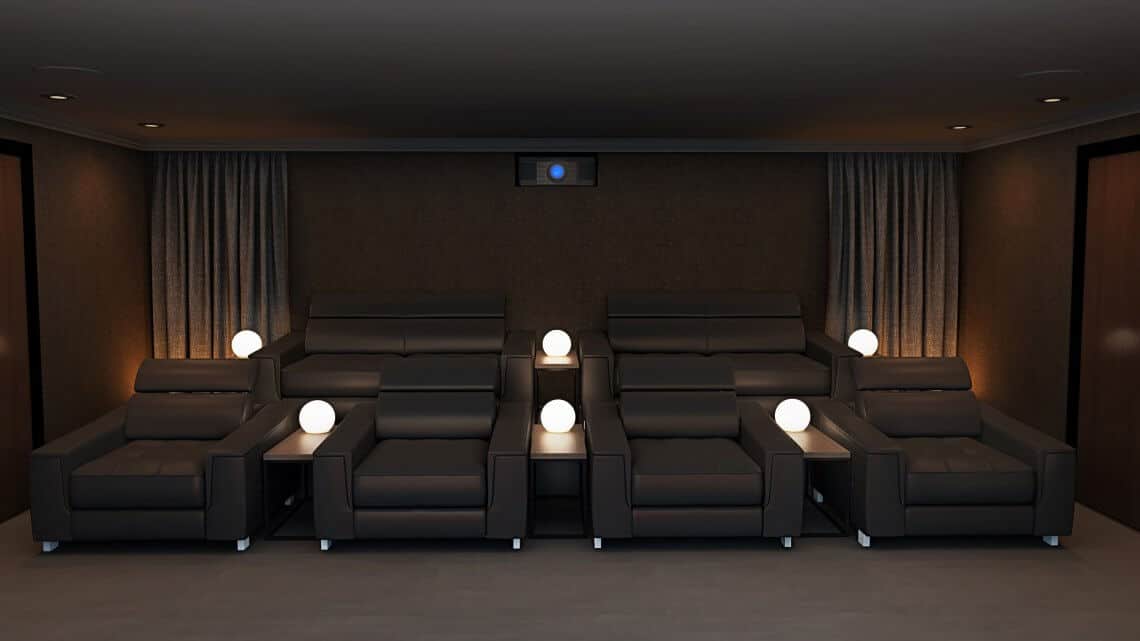
- Table lamps. An obvious but effective addition. We often install small tables between seats for drinks and snacks, and a table lamp here gently illuminates the immediate area. We favour old-fashioned filament-style bulbs plugged into a lighting-controlled socket — dimming a filament lamp gives a genuinely warm glow and a soft pocket of light. As part of our Cineak home cinema seating, we also install backlit Onyx tables — a premium solution at a premium price, but the effect is genuinely striking.
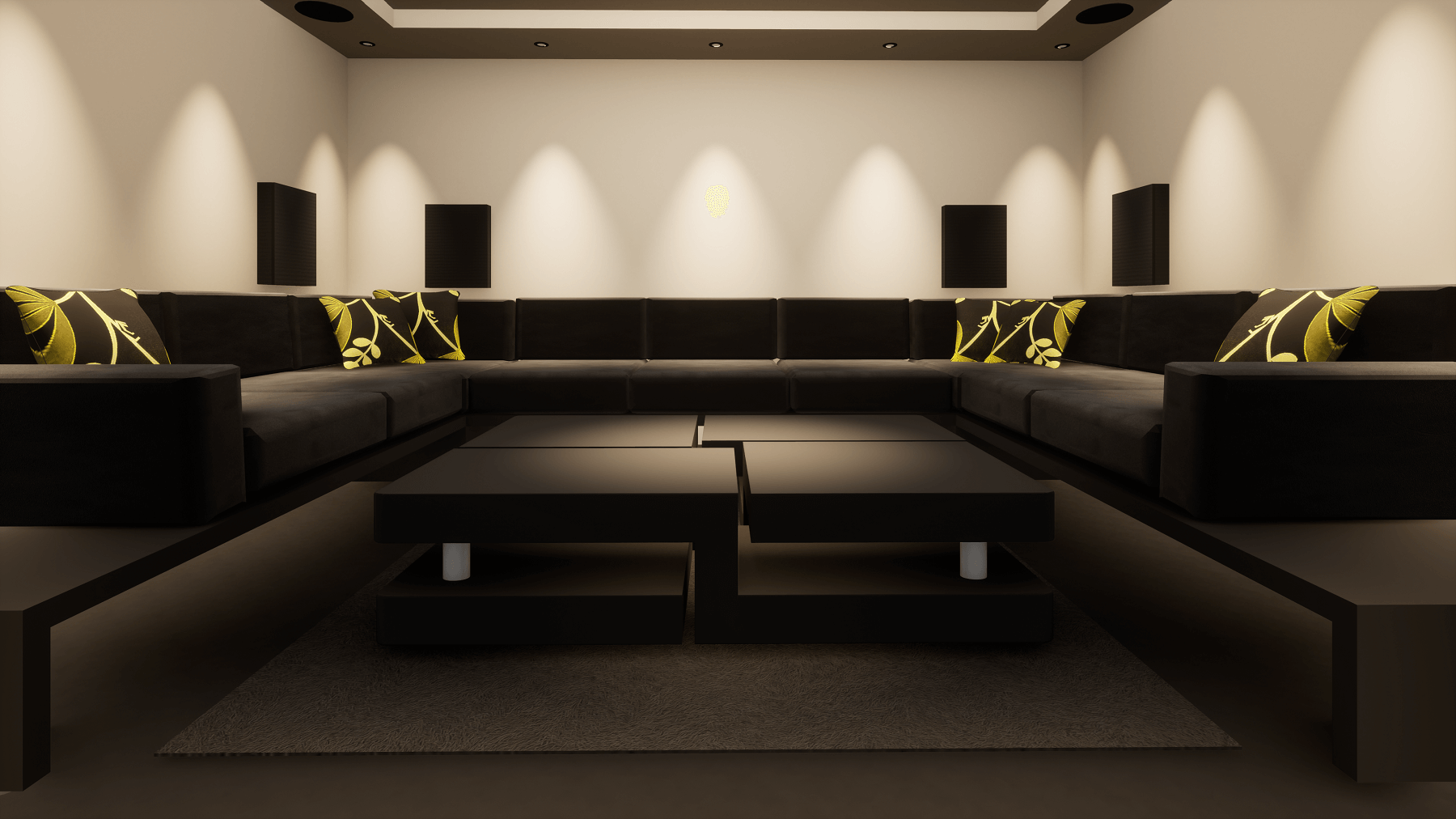
- LED downlights. The lighting types above will deliver a genuinely good-looking room for film viewing, with enough light to navigate comfortably — but if the cinema also includes a bar or games area, more light is needed. Even a fully dedicated cinema room benefits from brighter lighting for cleaning. Fabric walls and dark carpets — chosen specifically to prevent distracting reflections and glare during viewing — absorb a lot of light, so these rooms often need a reasonable number of fittings to cover properly. LED downlights run through a lighting control system let clients switch them off entirely or dim to 1%, providing a warm glow with negligible usable light during a film. A nice technique is a narrow-beam downlight positioned above each seat, creating a small pool of light that naturally draws the eye toward the seating itself.
Read more about our Home Cinema and Home Theater work:

Home Cinema

Lighting Design

Lighting Control

Crestron

Seating
Installing a Lighting Control System in a Home Cinema Room
Lighting control systems are genuinely essential in a home cinema — they let you enter the room, settle in, and then dim the lights through the same interface used to start the film, whether that’s a remote control or an iPad. It’s even possible to sit in a favourite chair, adjust every light in the room to exactly the right level, and save that as the default scene — recreating the perfect environment every single time. Our Kaleidescape movie servers even report playback state directly, so lighting can adjust automatically: pause the film and the lights rise, press play again and they dim back down.
In practice we programme a small set of scenes that cover everything the room is used for: an entry scene for arriving and settling in, a cinema scene for the film itself, an interval scene that lifts the lights slightly when the film is paused, and a bright cleaning scene. Each is recalled from a single button on a keypad, a handheld remote or the Crestron or Lutron app, and the whole room shuts down with one press when the evening is over.
Zoning the Room — Circuits, Rows and Seats
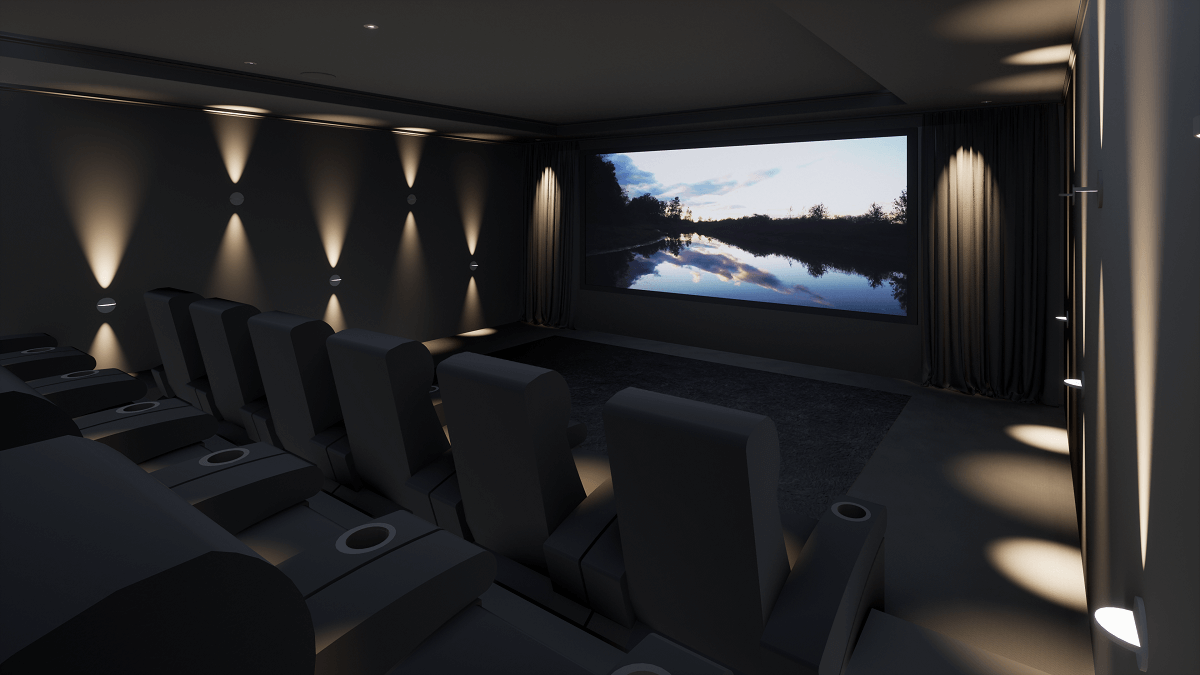
The single most important decision in cinema lighting is how the fittings are grouped onto circuits. A room wired with every downlight on one circuit can only ever be bright or dark; a room split into functional groups can be balanced precisely for every use. In our modern Cheshire cinema, the lighting is split so that the curtain spotlights, the front row and the rear row are each independently controllable. Small LED up-and-down wall lights at varying heights create pools of light around the room, the front curtains are highlighted by spotlights, and each chair has its own dedicated light — and the whole scheme dims automatically when a film starts and rises again when it is paused or stopped.
The same principle carries into smaller rooms. In the loft cinema described in our loft and attic cinema conversion guide, each seat is individually highlighted by its own pool of light, so a guest can find a drink or a remote control without the light spilling onto the screen. Stair and step lighting is best placed on its own circuit, so it can stay on at a low level throughout a film as pathway lighting while everything else is off.
Colour Temperature, CRI and Beam Angle
Colour temperature has a profound effect on how a room feels. For the main living spaces of a luxury home we almost always specify 2700K — the warm, golden quality of traditional incandescent light, flattering to skin tones and rich on natural materials like timber, leather and fabric. The same logic applies to a cinema room’s ambient lighting. At 4000K and above, light starts to feel distinctly commercial, which is rarely what a client wants in a room designed for relaxation.
Colour rendering matters as much as colour temperature. At this level of project we always specify high-CRI (90+) LED downlights, because lower-CRI fittings make materials and finishes look flat and slightly wrong — a real issue in a cinema where the fabric walls, leather seating and joinery have been chosen with such care. Beam angle is the third variable: a narrow 15–25° beam creates the tight, dramatic pool of light we use above each seat, while a wider 40–60° beam provides the gentle general illumination needed for cleaning and access.
Professional fittings also behave very differently from domestic retail LED at low output. Domestic lamps rarely dim smoothly at the bottom of their range, whereas a properly specified professional downlight will dim cleanly to 1% and hold a consistent colour temperature at every level — one of the common failures of older halogen dimming systems in cinema rooms. For concealed coves, Lutron’s Lumaris LED tape system can provide both RGB colour and tunable white within the same concealed profile, so a warm amber for relaxed evening viewing and a cooler tone for gaming or daytime use come from the same hidden source.
Controlling Reflections and Glare
A cinema is the one room in the house where light in the wrong place actively damages the experience. Any light that falls on the screen reduces the projector’s perceived contrast, and any bright fitting or reflective surface in the viewer’s peripheral vision pulls the eye away from the image. This is why we plan fitting positions against the sightlines from every seat, keep downlights narrow and aimed at the seating rather than the walls, and favour indirect sources — coves, risers and backlit tables — for the lighting that stays on during a film.
The room’s finishes do much of the work. Dark fabric walls and carpets absorb light rather than bouncing it back towards the screen, and our fabric walling system conceals every speaker, cable and light fitting behind a seamless, drum-tight finish. Individual vertical panels can even be built out slightly further than their neighbours specifically to conceal LED strip run down their edge — a detail that reads as considered architectural lighting rather than an applied fitting.
Planning Lighting at First Fix
Great cinema lighting is decided early. Fitting types, positions, beam angles, colour temperatures and lux levels all need to be settled before a ceiling is plastered, because that is the point at which the cable routes, back boxes and fitting cut-outs are fixed. Linear LED tape performs best in purpose-made aluminium extrusions with diffuser covers, and those profiles have to be installed at the right stage of construction if coves, reveals and stair risers are to be lit from within.
Star ceilings need the same forward planning. A fibre optic system uses a single light engine positioned in the ceiling void, with hundreds or thousands of individual fibres terminating flush with a fabric ceiling; the only visible element is the fibres themselves. We specify star ceiling systems from Fiber Optics Technologies, with fibre count, colour temperature and twinkle speed all specified to suit the room. Access above the ceiling is essential — straightforward with a suspended acoustic ceiling, achievable but more involved in a plastered one — so the light engine position and its access route are agreed at the design stage. Our home cinema design service covers all of this in the construction documentation, alongside the acoustic design of the room.
Upgrading the Lighting in an Existing Cinema
Many existing cinema rooms have lighting that was installed as an afterthought or has never been properly programmed, and a lighting upgrade is one of the most visible improvements available. Lutron’s RadioRA 3 system replaces existing light switches with wireless keypads — no rewiring required — and provides scene recall from keypads, remote control or the Lutron app, so a properly scened cinema is possible without opening up finished walls. For clients with Kaleidescape, the playback integration means the room transitions automatically: play a film and the cinema scene activates without anyone touching a keypad. Our home cinema renovation guide covers lighting alongside every other upgrade, and our guide to home cinema control systems explains how the lighting fits into the wider control platform.
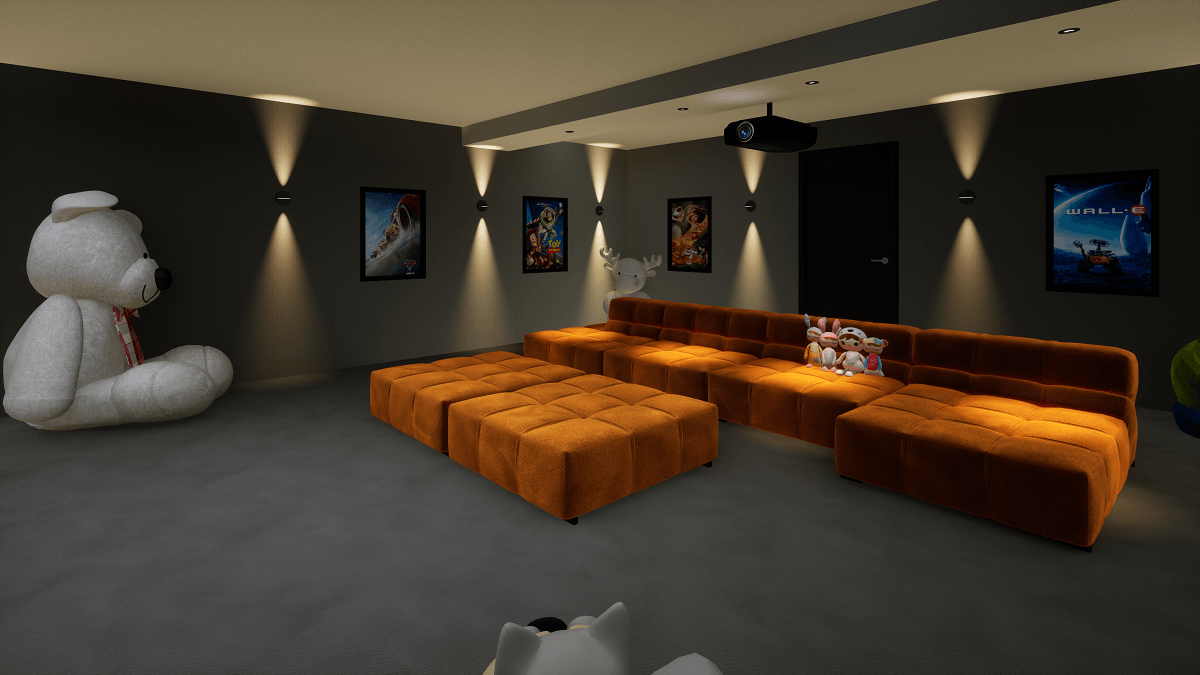
Some Examples of Our Work
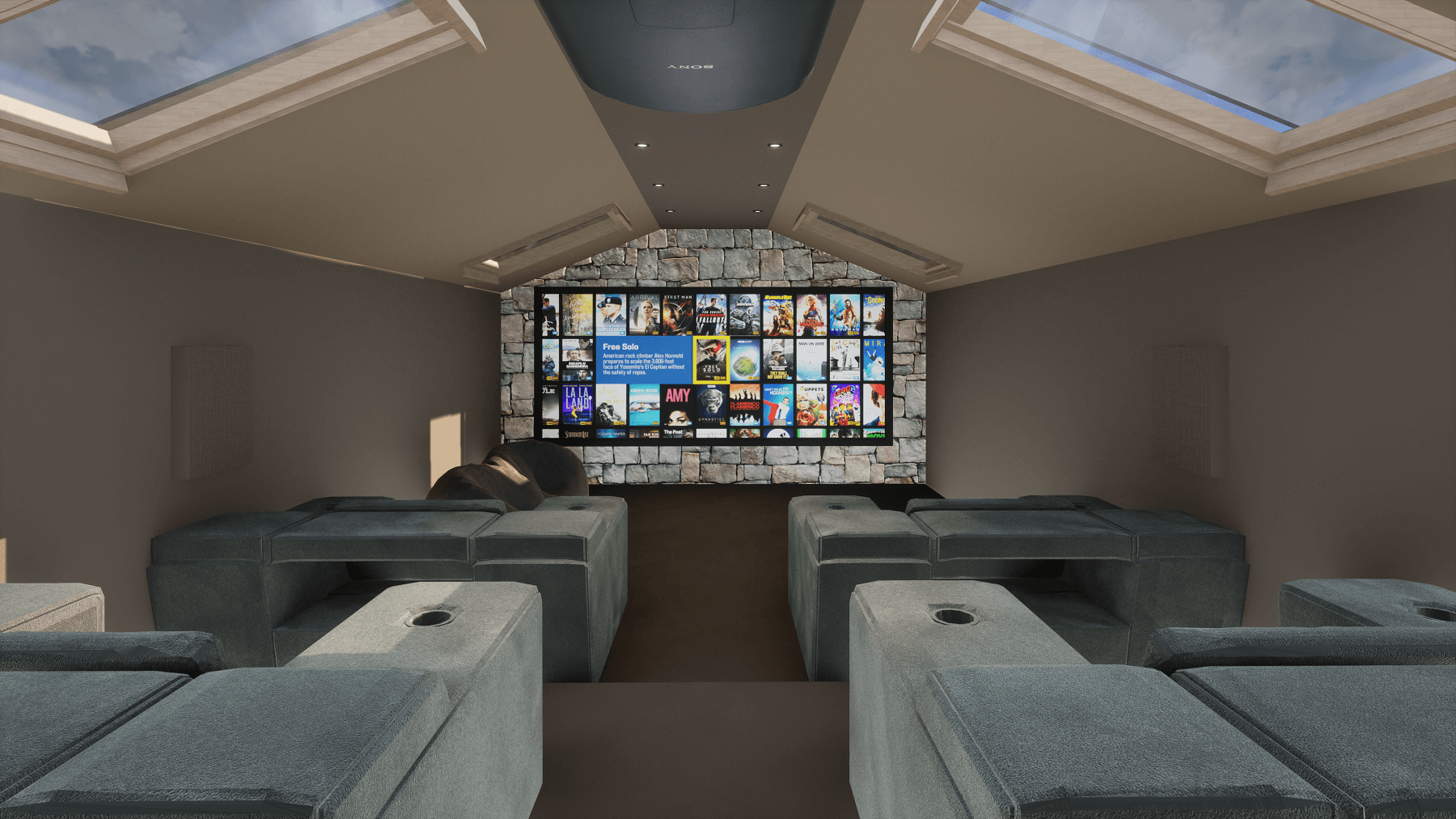
Frequently Asked Questions — Home Cinema Lighting Design
Why does a home cinema need task lighting as well as ambient lighting?
A cinema room that can only go fully dark is impractical for cleaning and everyday access. Dimmable LED downlights, switchable to full brightness when needed, solve this without compromising the viewing experience.
Can cinema lighting respond automatically to what’s playing?
Yes. Kaleidescape movie servers report playback state directly to the lighting control system, so lights dim automatically when a film starts and rise again when it’s paused.
What is a star effect ceiling and how does it work?
Fibre optic strands set into the ceiling, backlit to create a night-sky effect that can stay on throughout a film without affecting the screen. Layouts can even be set to reflect the actual sky on a specific, meaningful date.
What colour temperature should cinema lighting be?
We almost always specify 2700K for the ambient lighting, using high-CRI (90+) LED fittings that dim cleanly to 1% while holding their colour temperature. Anything at 4000K or above starts to feel commercial rather than residential.
Can lighting control be added to an existing cinema room without rewiring?
Yes. Lutron RadioRA 3 replaces existing light switches with wireless keypads, with no rewiring required, and provides scene recall from keypads, a remote control or the Lutron app.
Custom Controls design home cinema rooms from the acoustic ground up — room shape, speaker layout, acoustic treatment, 3D renders and full construction documentation before a single piece of equipment is ordered.