
Circadian Lighting

Circadian Lighting Design and Installation
Tunable white lighting, designed and programmed so the colour and level of light in your home move with the day: bright and clear when you want to be alert, deeply warm and low when you are winding down. Lutron HomeWorks QSX lighting control with Lumaris tunable white tape and Ketra, for homes in London, Cheshire, the Alps and worldwide.
Tunable White Light That Follows the Day
Light is the strongest cue the body clock uses to keep time. Bright, daylight-rich light through the day tells the body it is daytime, and dim, warm light in the evening tells it that night is coming. Sleep and circadian scientists have spent years quantifying how much light, and of what spectrum, a home should deliver at different times of day. In 2022 an international group convened in Manchester published expert consensus recommendations in PLOS Biology: a melanopic equivalent daylight illuminance of at least 250 lux during the day, no more than 10 lux in the three hours before bed, and no more than 1 lux while sleeping.
Most homes do the opposite. Fixed lighting delivers the same colour and level at noon as at midnight, and a study of everyday light exposure published in PNAS found widespread failure to meet the recommended targets, especially in the evening and at night. Circadian lighting is the design discipline that corrects this: electric light that changes in colour temperature and level through the day, working alongside the daylight entering the house, so the home stops working against the body clock.
It is not a smart bulb on a timer. In a luxury home it is an architectural system, in which the light sources, the control platform, the positions in the ceilings and joinery and the programming are designed together, and the daylight is part of the plan. Custom Controls design and install it with Lutron HomeWorks QSX, using Lumaris tunable white tape and, where a room demands the best colour quality, Ketra.

Lighting

Design

Shading

Smart Home
Lutron
What the Science Does and Does Not Say
The mechanism is well established. Alongside the rods and cones we use to see, the human eye contains light-sensitive cells that use a pigment called melanopsin. They do not form images. They report the brightness and spectrum of the light reaching the eye to the brain’s body clock, and they respond most strongly to shorter, bluer wavelengths. This is why melanopic equivalent daylight illuminance, the quantity used in the 2022 recommendations, is a better measure of a lighting scheme’s biological effect than conventional lux, and why a cool white source has a stronger effect on the body clock than a warm white source of the same brightness.
There are limits, and they shape how we design. The recommendations are expert consensus for healthy adults, not a clinical treatment, and individual response varies with age, habits and the rest of the day’s light. We therefore do not promise outcomes for sleep or mood. What we design for is narrower and easier to verify: bright, cooler light available when it is wanted during the day, genuinely low and warm light in the evening and overnight, and the transitions between them handled automatically so nobody has to think about it.
Lutron Lumaris Tunable White LED Tape
Lumaris is Lutron’s professional tunable white tape light, designed as a native part of the HomeWorks QSX platform rather than bolted on through a third-party driver. The tape has two channels, mixed by the controller to produce any colour temperature in its range, while holding a colour rendering index of 90 or above. A three-step MacAdam ellipse tolerance means separate runs of tape in the same room match one another. Typical output is 200 lumens per foot and the rated life is 50,000 hours to L70. The tape can be cut to length in two-inch segments, fixes with a strong adhesive backing and is rated for indoor damp and dry locations.
Each run is driven by a Lumaris wireless controller with integrated LED drivers, which communicates with the processor over Lutron’s Clear Connect Type X wireless protocol. Dimming is continuous and flicker-free from 100% down to 0.1% of measured light output, and Lutron specifies that tunable white performance, meaning the colour temperature, is maintained down to 1%. That matters in a circadian scheme because the evening and night settings are the dim ones: tape that drifts in colour or steps visibly at low levels defeats the purpose. Warm dim, which lowers the colour temperature as the light is dimmed to mimic the curve of an incandescent lamp, is built in.
Soft White, Daylight or the Full Range
Lumaris tape comes in two colour temperature ranges, and the choice is a design decision made room by room. Soft White tape runs from 1,800K to 3,000K, which suits bedrooms, sitting rooms and dining rooms, where the priority is a genuinely warm evening and a gentle, low night setting. Daylight tape runs from 2,500K to 5,000K, which suits kitchens, studies and dressing rooms that need to feel bright and clear during the day and can settle to a warm 2,500K at night. A single run of two-channel tape cannot span both ends of the day, so a room that needs the whole arc, from a crisp daytime white to a deep 1,800K evening, needs a different specification.
Two options cover that. Lumaris RGB plus Tunable White is a five-channel tape that spans 1,800K to 4,000K as well as full colour, and suits accent and architectural work where colour is also wanted. Ketra, Lutron’s full-spectrum platform, produces white light from 1,400K to 10,000K from a single fixture with museum-grade colour rendering. Lutron’s own guidance is that Ketra reproduces the set colour temperature more accurately than tape, and in the rooms where the quality of light is the point of the project, such as a principal bedroom, a dining room or a gallery wall, that precision is worth specifying. Our guide to Lutron LED lighting covers the Lumaris, Rania and Ketra families in more detail.
Programming the Day
On HomeWorks QSX, tunable white lighting is programmed in Lutron Designer. The Natural Show feature, which Lutron programs for Lumaris in the same way as for Ketra, changes colour temperature automatically with the time of day, so the lighting shifts without anyone touching a keypad. Alongside it sit ordinary scenes, which recall a fixed colour temperature and level at the press of a button: a bright Morning scene, a Dinner scene at a warm mid-level, a Cinema scene that drops everything away, and a Goodnight scene that takes the house to its warmest, lowest setting before turning it off.
The detail we spend most time on is the evening and the night. The consensus recommendations ask for very little light, and very little blue light, in the hours before bed and overnight. We therefore set the warm end of each room’s range deliberately, and design night-time routes, from the bedroom to the bathroom and from the landing to the stairs, at levels low enough to find your way without bringing the room up. Everything can still be adjusted manually from the keypads or the Lutron app, so anyone reading late or working unusual hours can override the programme for as long as they need.
Where the Light Comes From
Tape light is an accent and indirect source, and understanding that is what separates a circadian scheme that works from one that is merely fitted. Tape belongs in coves, coffers, pelmets, joinery, shelving, under-cabinet runs, behind headboards and along stair risers, where it lights surfaces and fills a room with soft indirect light. On its own it will not deliver the brightness the daytime recommendation asks for in most rooms. That comes from daylight first, then from the principal electric layer, whether tunable downlights or Ketra fixtures, with tape supporting both.
Lumaris downlights run from 1,800K to 4,000K with a colour rendering index of 90 or above, so tunable white can run through the ceiling layer as well as the concealed layer, and the Lumaris RGB plus Tunable White tape shares the same range. Our residential lighting design page explains how we layer ambient, task, accent and decorative light, and the circadian scheme is designed into that layering rather than applied afterwards.
Detailing and Installation
Tunable white is unforgiving of poor detailing, which is why the work starts at design stage, before first fix. LED tape needs an aluminium channel and a diffuser, supplied separately from the tape, and the choice of profile and lens governs heat dissipation, the visibility of individual LED points and the finished look of the line of light. We specify and coordinate these with the joiner and plasterer so the channels are built in rather than added afterwards. Lutron’s installation limits also shape the layout: each wireless controller drives up to 5 metres of tape in total, the cable between a controller and its tape is limited to 3 metres, and the controller must not be mounted in or on a metal enclosure or cabinet. Where several controllers are needed in one area, Lutron’s remote power interface can supply up to three controllers and 15 metres of tape from a single point.
Consistency is the other discipline. A room should be built from one tape type, and each run’s warm and cool end points are checked at commissioning against its neighbours, because a difference of colour between two coves is visible in a way that a difference of brightness is not. We commission each room at its warmest, its coolest and several points in between, and check the lowest dimming levels, where tunable white systems are most likely to show a fault, before the programme is signed off.
Daylight, Shading and the Whole Scheme
A circadian scheme is half electric light and half daylight, and daylight is the half with the greater effect. The daytime recommendation is far easier to reach with daylight than with any lamp, which is why shading belongs in the design from the start. Blinds drawn all day to control glare, or left open at night, undermine the lighting scheme as surely as the wrong colour temperature. Lutron’s Natural Light Optimization positions motorised shades automatically through the day from the calculated position of the sun, and Lutron describes it as suited to working alongside circadian lighting. Our motorised blinds and curtains page explains how it works, and on a HomeWorks QSX project the lighting and the shading are designed together.
Rooms Where It Earns Its Place
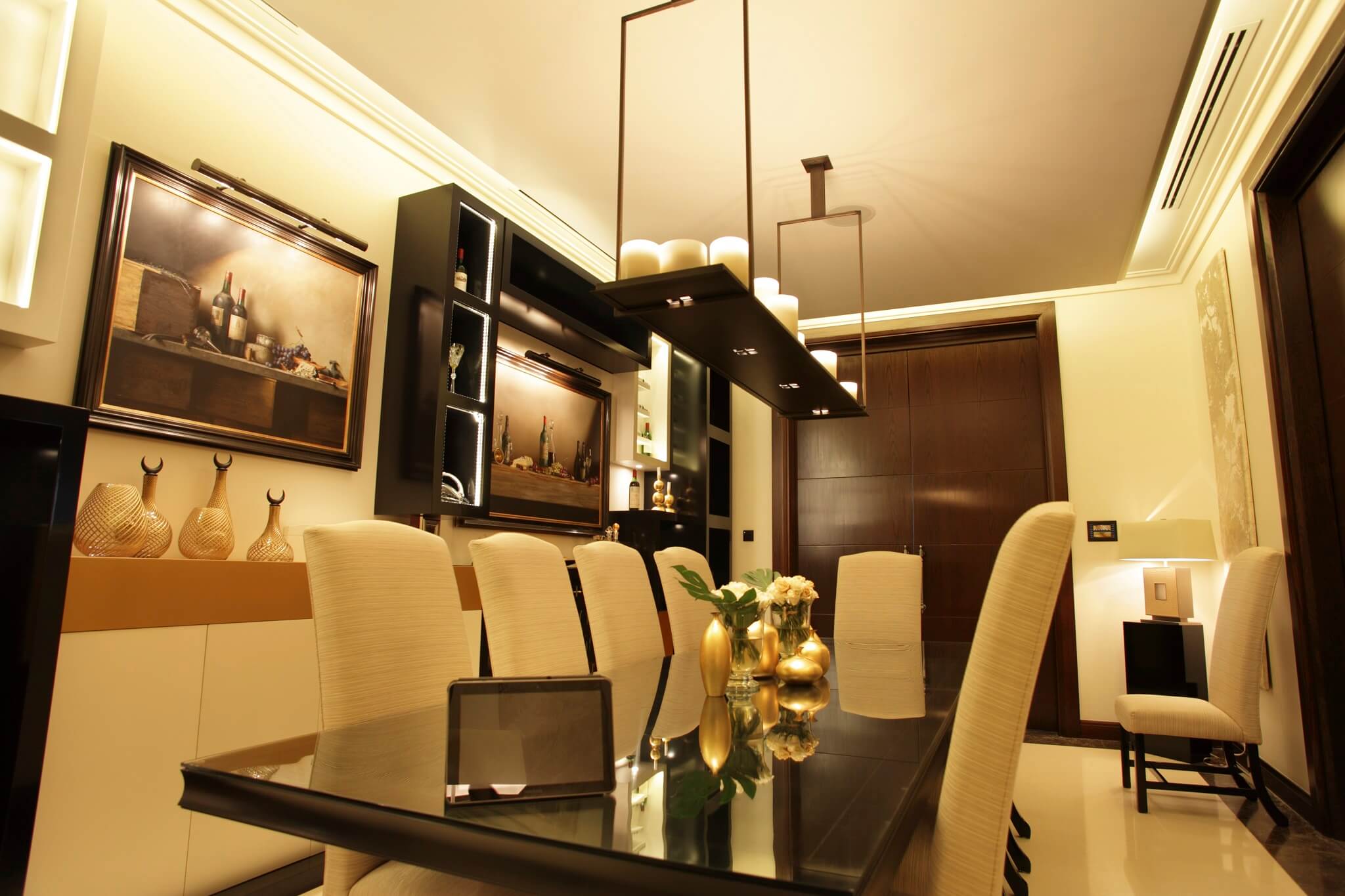
Bedrooms are the strongest case. Soft White tape behind the headboard or in a ceiling cove can hold a warm, low setting for the evening and overnight, with a night route to the bathroom that never brings the room up to full light. Kitchens and studies suit Daylight tape, bright and clear through the working day and settling to warm in the evening, while living rooms and dining rooms usually run Soft White or Ketra, so the room ends the day in the colours of candlelight. Stairs, halls and landings suit a low, warm night setting that guides the way without waking the house. In a home with a cinema, the cinema scene can be programmed to take the lighting to its own preset when it starts and to hand it back to the time-of-day programme afterwards.
We offer free initial consultations at our London and Cheshire offices, at the Lutron Experience Centre in London, or at your property. Contact us to talk through the rooms you would like designed around the day.
Circadian Lighting FAQs
- What is circadian lighting?
Circadian lighting is electric lighting designed to follow the pattern of daylight: brighter and cooler during the day, then warmer and lower through the evening and night. In a luxury home it is specified as part of the lighting design and delivered through the lighting control system, so the changes happen automatically. - Does tunable white lighting improve sleep?
The 2022 expert consensus in PLOS Biology recommends bright, daylight-rich light by day and very little light, and very little blue light, in the three hours before bed and overnight. Tunable white lighting makes those patterns possible indoors. Individual responses vary, so we design the light to support the pattern rather than promise a result. - What colour temperatures does Lutron Lumaris tape cover?
Lumaris tunable white tape comes in two ranges: Soft White from 1,800K to 3,000K and Daylight from 2,500K to 5,000K. Lumaris RGB plus Tunable White tape covers 1,800K to 4,000K as well as colour, and Ketra fixtures cover 1,400K to 10,000K. - Can tunable white tape be added to an existing home?
Often, yes. The Lumaris controller communicates wirelessly with the HomeWorks QSX system, so no control cable has to run back to a central processor, although the tape and controller still need a power supply and an aluminium channel. We survey the joinery, coves and ceilings first to confirm where the tape can be fitted. - Should I choose Lumaris tape or Ketra?
Lumaris tape is the practical choice for coves, joinery, under-cabinet and stair lighting. Ketra is Lutron’s full-spectrum platform, and Lutron’s own guidance is that it reproduces the set colour temperature more accurately, so we specify it where the quality of light is the point of the room. - Can the colour temperature be changed manually?
Yes. The programme runs automatically, and colour temperature and level can also be changed from the keypads and the Lutron app. Scenes such as Morning, Dinner and Goodnight recall a set colour and level at the press of a button. - When should circadian lighting be planned?
At design stage, before first fix. Aluminium channels, controller positions and power supplies need to be built into the joinery and ceilings, and the daylight and shading plan affects how much work the electric light has to do. - Do you design circadian lighting in London and Cheshire?
Yes. Our London and Cheshire offices cover the UK, and we also work in the French Alps, Dubai and further afield.
Lighting Control → · Lighting Design → · Motorised Blinds and Curtains → · Lutron HomeWorks QSX → · Contact Us →