Bedroom Lighting Ideas — Layers, Scenes and Circadian Light
Calm, Flattering Light From Waking to Sleeping
Published November 2026 · Custom Controls · Lutron and Crestron lighting control specialists since 1998
A bedroom is the one room in the house that has to work at both ends of the day. It needs clear, even light for dressing and packing, soft and flattering light for the evening, a focused pool of light for reading that doesn’t keep a partner awake, and almost no light at all in the middle of the night. A single pendant and a pair of bedside lamps can’t do all of that, which is why so many bedrooms end up either too bright or too dark for whatever is actually happening in them.
The answer is layers: several separate sources of light, each doing one job, controlled together so that a single button sets the whole room for the moment. This guide works through those layers using a principal bedroom we planned for this article, in a period London townhouse, and shows how scenes, motorised curtains and tunable white light turn them into a room that looks after itself from waking to sleeping. It is written for homeowners, architects and interior designers planning a new build or renovation.
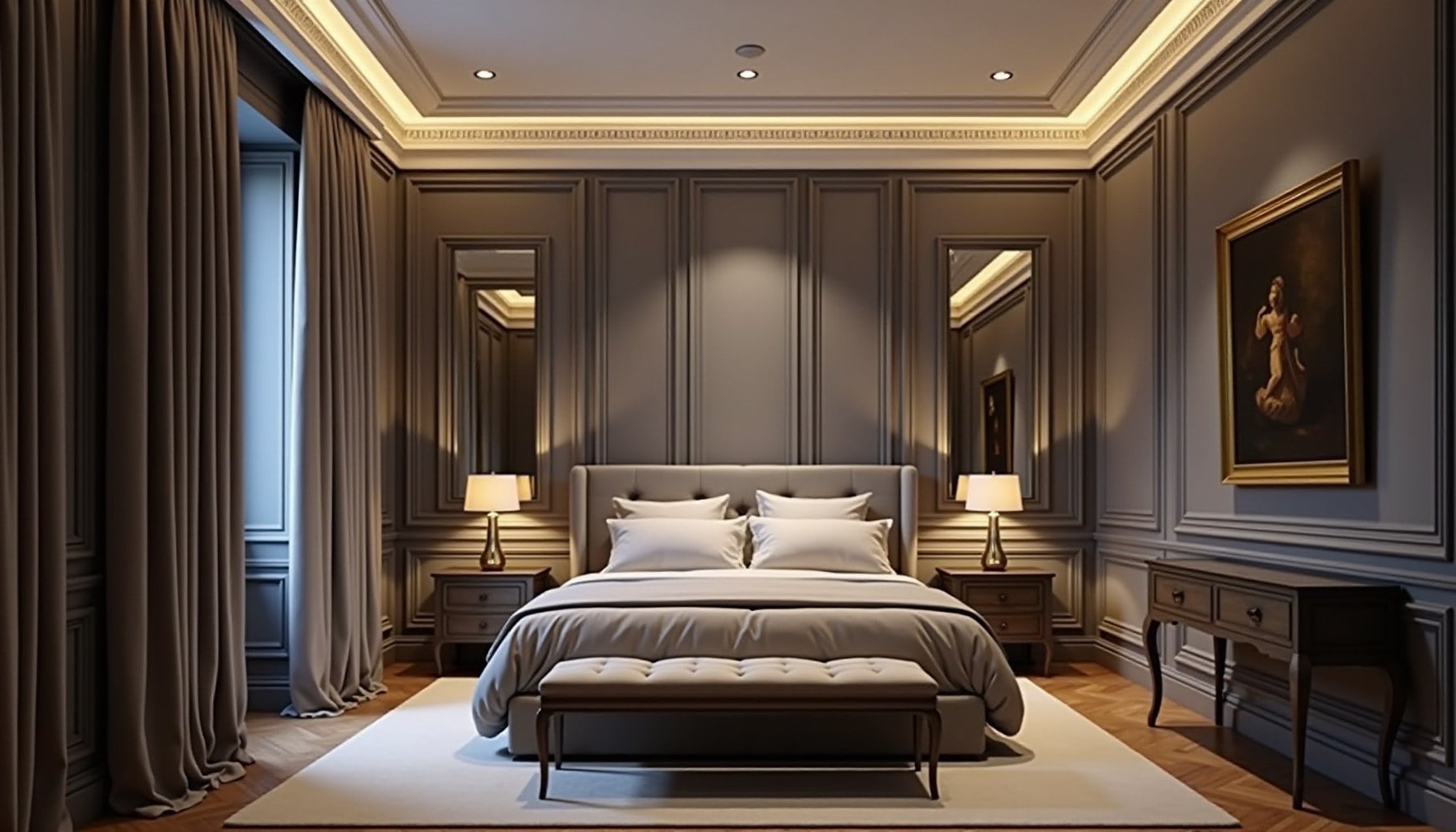
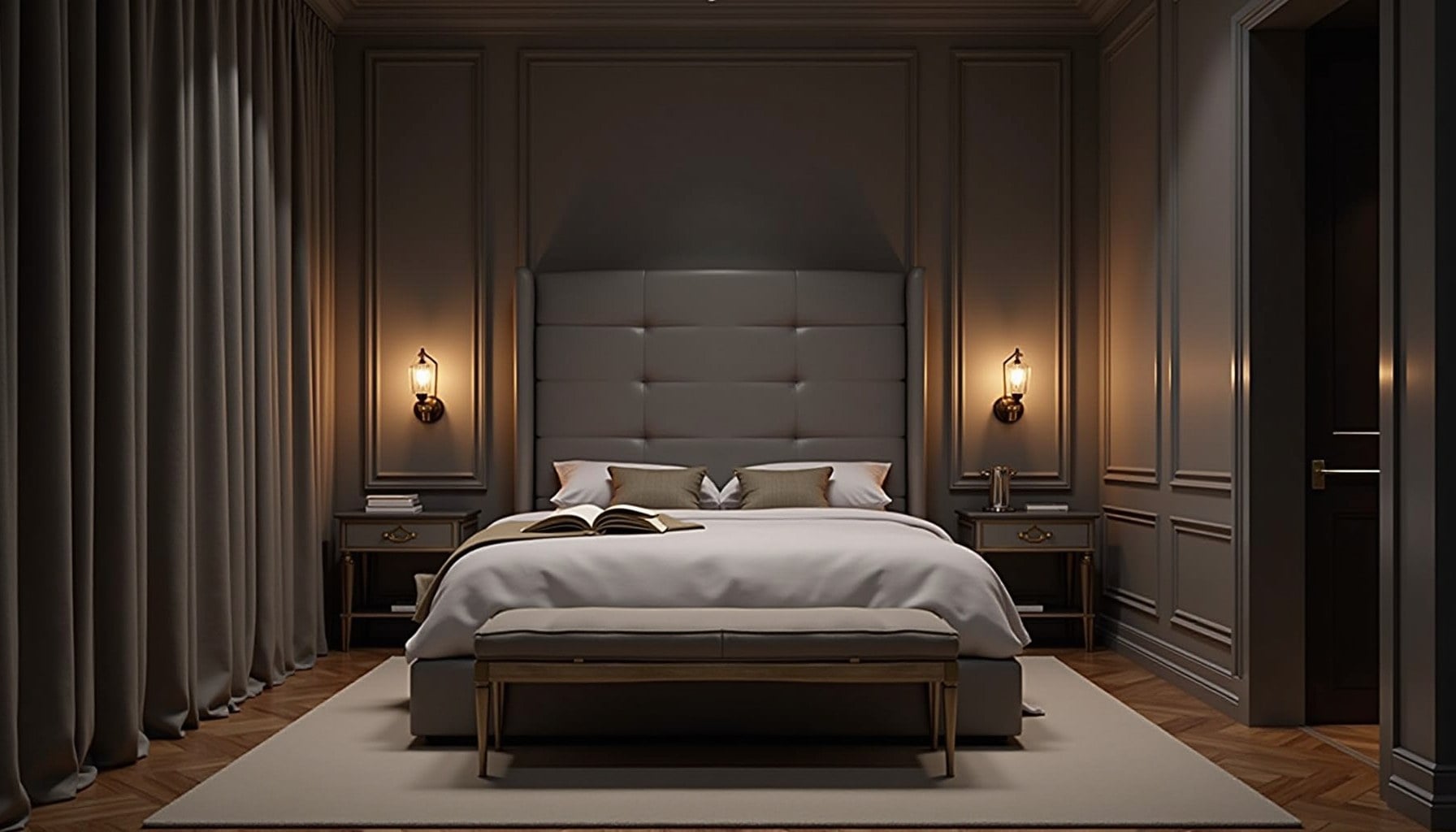
The renders in this article are of that planned room, shown in two of its scenes, so you can see what the same fittings do at different times of night. If you are new to the subject, our guide to what a lighting control system is explains the parts and the terms.

Lighting

Design
Lutron

Crestron

Climate
Start With How the Room Is Used
Every good bedroom lighting scheme starts with a list of what happens in the room and when. Getting up and dressing, often in winter darkness. Reading in bed, sometimes while the other person is asleep. Watching television. Winding down in the evening. Getting up in the night to go to the bathroom. Each of those needs a different quantity, direction and colour of light, and the scheme is designed backwards from them rather than from a grid of downlights on a ceiling plan.
Our planned room is 5.5 by 4.8 metres with a 2.9 metre ceiling, two tall sash windows on one wall, the bed centred on the opposite wall, and doors to a dressing room and an en suite. That gives eight separate lighting channels: ceiling downlights, a cove of light in the cornice, a glow behind the headboard, two independent reading lights, a low-level night path, a picture light and the table lamps. It is more than a typical bedroom has, but each channel exists because one of those activities needs it.
The dimensions and layout here are assumed for the purposes of the article; in a real project they come from the survey and the architect’s drawings, and the channel count follows from the furniture plan.
Ceiling Light Without Glare
Recessed downlights are the workhorse of most bedroom ceilings, and the most common mistake is putting them where the room is used lying down. A downlight above the pillows shines straight into the eyes of anyone in bed, however low it is dimmed. In our plan the six downlights sit around the perimeter and at the foot of the bed, so they light the floor, the wardrobe doors and the walls, and nobody in bed looks directly into one.
Trimless fittings with a deep-set source and a good glare-control baffle work best, and in a principal bedroom tunable white earns its place, because the ceiling layer can be cool and bright for dressing in the morning and warm in the evening. At full output they give a clear, even light for packing or cleaning; most of the time they sit at a quarter of their output or less, adding just enough light to the walls that the room doesn’t feel like a cave.
The downlights are deliberately not the main light in the room in the evening. That job goes to light bounced off soft surfaces, which is what makes a bedroom feel calm rather than lit.
Light the Ceiling, Not the Bed
The single most effective layer in our bedroom is a cove of tunable white LED tape concealed in the cornice, washing the ceiling all round the room. Bounced off the ceiling, the light becomes soft, even and shadowless, and in the evening it is enough on its own to move around the room without a single downlight on. It is far more flattering than direct light from above, and nobody lying in bed looks into a light source.
Where the curtains are the feature of the room, the same tape can go in a concealed pelmet instead, washing down the face of the fabric so the folds glow and the whole window wall becomes a soft, large light source. Either way, the indirect layer does the work in the evening and the downlights only add a little light to the walls.
We use Lutron Lumaris tape for this, controlled by Lutron HomeWorks QSX, because the same channel can then change colour temperature through the day. In our wake-up scene the cove rises slowly at a cool-white setting, like daylight starting to come into the room, before the blinds open. In the evening it sits at a warm 2,700 kelvin or below. The cove profile, the tape and its driver position are drawn into the ceiling and joinery details before first fix, which is one reason bedroom lighting is best planned early.
The curtains themselves are motorised on the same system, with a blackout roller and a sheer behind them. One button can close everything, open the sheer only, or run the morning sequence. Our page on motorised blinds and curtains covers the tracks, motors and options in detail.
The Headboard Glow
A concealed strip of warm LED along the top edge or behind an upholstered headboard adds a low, even glow to the wall behind the bed. It is not a task light and is never bright: its job is to separate the bed from the wall, give the room a focal point in the evening and provide enough background light that the reading lights don’t sit in a dark void.
The detail matters. The strip has to sit in an aluminium profile with a diffuser so no individual LED dots are visible on the wall, the driver needs an accessible position in the bedside joinery rather than sealed inside the headboard, and the light must dim smoothly to very low levels, which means the driver and the dimming method are chosen together. Our guide to dimming protocols explains why a mismatch makes low-level LED flicker.
On its own channel, the headboard glow can sit at 60% in an evening scene and 30% while someone reads, so the wall behind the reading lights never goes completely dark.
Reading Lights on Separate Channels
Reading lights need to be adjustable, directional and independent. Our plan uses wall-mounted reading lights with a narrow, shielded beam on an articulated arm, mounted so the beam falls on the page rather than across the bed. Each side is wired to its own channel, so one person can read while the other side of the bed stays dark.
Each bedside has its own keypad with Read, Night, Goodnight and blind controls, so nobody has to get out of bed to change the room. Pressing Read on the left side brings up the left reading light, drops everything else to a low warm level and leaves the right-hand side of the room dim; pressing it again turns the reading light off. When both people are reading, both lights come up and the rest of the room drops away, which is the scene in the second render. The keypads are engraved with the scene names, so they work for guests without explanation.
Table lamps on the bedsides are on a dimmed 5-amp lamp circuit, so they become part of the scenes rather than being switched on and off at the lamp.
Night Light and Goodnight
The most underrated lighting in a bedroom is the light used at three in the morning. In our plan a low-level LED strip runs under each bedside table and along the skirting to the en suite door, at a very warm 2,200 kelvin and around 5% of its output. It lights the floor, not the room, so you can find your way without waking yourself up fully or disturbing anyone else.
In this scheme the night path is controlled entirely from the keypads: the Night button on either bedside recalls it, and the matching Night scene on the en suite keypad picks up the same low level on the other side of the door. There are no sensors to trigger unexpectedly, and the light is there only when someone asks for it.
Goodnight, on both bedside keypads, does the opposite: it switches off every light in the house, closes any blinds still open and leaves the bedroom in darkness.
Scenes That Set the Whole Room
The channels only become useful when they are grouped into scenes. In our planned bedroom the door keypad carries Bright, Evening, Relax, Night, the blinds and Off. Bright brings every layer up at a cool 4,000 kelvin for dressing, packing or cleaning. Evening sets the downlights at 25%, the cornice cove at 45%, the headboard at 60%, the lamps and picture light at half, all at 2,700 kelvin, with the curtains closed; that is the scene in the first render.
Every Crestron and Lutron system we commission starts as a set of flat reference scenes, and we only finalise the real ones once the room is furnished and decorated, because a bedroom with its curtains, headboard and artwork in place reflects light completely differently from a bare plastered shell. Levels are adjusted with the household until they feel right, then saved permanently.
Scenes can also run on their own. A weekday wake-up sequence can lift the cove and open the sheers at a set time; an evening schedule can close the blackout blinds at sunset so the room is ready before anyone goes upstairs.
Circadian Light in the Bedroom
Light is the strongest cue the body clock uses to keep time, and the bedroom is where the right light at the right time matters most: bright and cool in the morning, warm and dim in the evening, very little at night. With tunable white fittings on HomeWorks QSX, the downlights and cornice cove follow that pattern automatically, while the scenes still recall a fixed level when someone wants it.
Lutron offers this at several levels. Ketra produces white light from 1,400 to 10,000 kelvin from a single fixture with museum-grade colour rendering, Lumaris tape covers coves and pelmets, and the Natural Show feature changes colour temperature with the time of day so nobody has to touch a keypad. Our page on circadian lighting explains what the science does and doesn’t say, and how we design it.
In a bedroom we set the warm end of the range deliberately, keep evening levels low and make sure the night scenes contain almost no blue light, which is what the published guidance asks for in the hours before sleep.
Planning Bedroom Lighting Before First Fix
Almost everything in this scheme depends on decisions made before the walls are closed: the cove or pelmet profile and its access, the cable routes for each channel, the reading light positions relative to the final bed and bedside tables, the keypad positions beside the bed and at the door, and the power and control cabling for every curtain track and blind. Changing any of them after decoration is disruptive and expensive.
That is why we like to agree the furniture plan and the lighting together, with the architect and interior designer, before first fix. The lighting design drawing shows every fitting, channel and keypad, the electrical contractor wires to it, and we install, programme and commission the system once the room is finished. Our residential lighting design service covers the whole process, and the system behind it is described on our home lighting control systems page.
For an existing house, much of this can still be done with wireless keypads and wire-free shading, with the night path and headboard glow added where joinery is being replaced anyway. More lighting ideas: our guides to kitchen lighting, hallway and staircase lighting, bookcase and joinery lighting and garden lighting.
Bedroom Lighting Ideas — Frequently Asked Questions
Where should downlights go in a bedroom?
Around the perimeter and at the foot of the bed, lighting the walls, wardrobes and floor. Avoid placing downlights above the pillows, where anyone lying in bed looks straight into them.
What is the best lighting for a bedroom?
Several layers on separate channels: low-glare ceiling light, a soft indirect wash from a cornice cove or curtain pelmet, a glow behind the headboard, independent reading lights and a very low night light, all recalled together as scenes from keypads by the door and the bed.
What colour temperature is best for a bedroom?
Warm white, around 2,700 kelvin or below, in the evening, and as warm as 2,200 kelvin for night lighting. With tunable white fittings the room can be cooler and brighter for dressing in the morning and warm in the evening from the same lights.
How do you light a bedroom for reading without disturbing a partner?
Use wall-mounted reading lights with a narrow, shielded beam on separate channels for each side of the bed, with a keypad on each bedside, so one reading light can be on while the other side of the room stays dark.
Can bedroom lights and curtains be controlled together?
Yes. With motorised curtains and blinds on the same lighting control system, one button can close the curtains and set the evening lighting, and a morning scene can raise the light and open the sheers together.
Can bedroom lighting be added without rewiring?
Partly. Wireless keypads and wire-free blinds can be added to an existing room, but concealed layers such as a cornice cove, headboard glow and night path need cabling and are best installed during a renovation.
Home Lighting Control → · Circadian Lighting → · Motorised Blinds → · Lighting Design → · Discuss your project →