Bookcase and Joinery Lighting Ideas
Integrating Light Into Shelving, Cabinetry and Display
Published September 2026 · Custom Controls · Lutron and Crestron lighting control specialists since 1998
Lighting built into joinery is one of the most effective ways to give a room depth and warmth. A library wall lit from within, a glass cabinet that glows in the evening, a run of alcove shelving that frames a fireplace — these are the details that make a room feel finished, and they produce the soft, indirect light that people instinctively find comfortable. They are also among the easiest details to get wrong: visible LED dots, hot spots on the top shelf, mismatched colours and drivers sealed behind panels that nobody can reach. Done properly, joinery lighting is designed into the cabinetry from the first drawing.
Why Light Your Joinery
Most rooms are lit from the ceiling, which puts light on the floor and furniture but leaves walls in relative shadow. Lighting within bookcases and cabinetry lights the vertical surfaces instead, which makes a room feel larger and brighter at a much lower overall light level — exactly the quality you want in a sitting room or study in the evening. It also lets a collection of books, ceramics or objects become part of the architecture of the room. With lighting control, joinery lighting can form the gentle base layer of an evening scene, with ceiling downlights dimmed low or switched off altogether.
Bookcases and Library Walls
There are three main approaches to lighting shelving, each with a different effect. Front-edge lighting — a slim LED profile recessed into the underside of each shelf, towards the front — lights the spines of the books below evenly and is the most practical for a working library. Vertical lighting set into the uprights either side of each bay washes light across the shelves from the side, giving a softer, more atmospheric effect that suits display shelving. Back lighting behind a panel or along the rear edge silhouettes objects and adds depth, but is less useful for reading titles.
Whichever approach is chosen, the LED must sit in a recessed channel with a diffuser so that individual dots are never visible and the light is even along the full length of every shelf. The top shelf needs particular care, since it is often the one most in view and the easiest place to create a hot spot on the ceiling above.

Design

Lutron

Crestron

Blinds

Homeworks
Display Cabinets and Glass Shelving
Glass-fronted cabinets and glass shelves behave very differently from solid shelving. Light from above passes down through glass shelves and can light every level from a single source if the cabinet is designed for it; light fitted to the sides or corners avoids reflections in the glass doors. Objects made of glass, crystal or silver respond best to light from behind or below, while ceramics and sculpture need light from the front at an angle to show their form. Heat has to be kept away from delicate collections, which modern LED makes far easier than the halogen fittings of the past.
Artwork and Picture Lighting
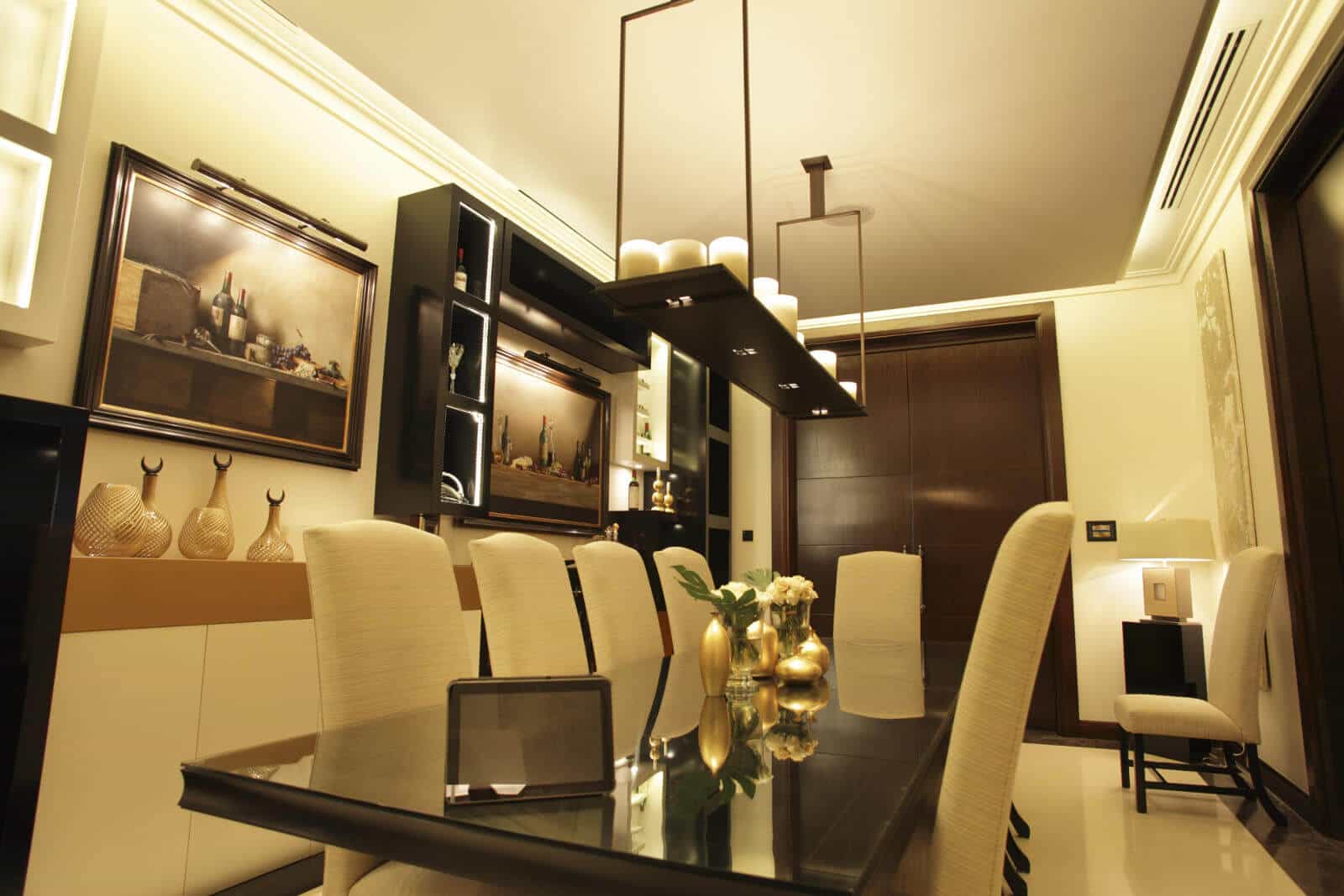
Paintings are often hung above or between runs of joinery, and should be lit as individual pieces rather than by general room lighting. Picture lights mounted on the frame suit traditional interiors; adjustable recessed ceiling fittings with a narrow, framing beam suit contemporary rooms and leave the wall uncluttered. Light with a high colour rendering index (CRI 90 or above) and very low ultraviolet output protects pigments and shows colours as the artist intended. On a lighting control system, each piece can be balanced individually and brought into the room’s scenes.
Colour, Consistency and Control
Joinery lighting sits close to the eye and next to natural materials, so colour quality is critical. A warm 2,700K is right for most sitting rooms, studies and libraries; the same colour temperature should be used throughout every piece of joinery in the room, and matched to the ceiling lighting, or the difference will be obvious. High CRI sources bring out the grain in timber, the colour of book spines and the glaze on ceramics.
Joinery lighting should also dim smoothly all the way down, so it can form the quietest layer of an evening scene. That means every LED driver has to be compatible with the control system — a mismatch is the most common cause of flicker at low levels, as we explain in our guide to lighting dimming protocols. With Lutron or Crestron lighting control, the shelving, cabinets and picture lights in a room become part of one-touch scenes alongside the ceiling lighting and motorised blinds, rather than a row of separate switches hidden inside cupboards.
Working With the Joiner and Interior Designer
Integrated lighting is decided at drawing stage. Rebates for LED profiles have to be routed into shelves before they are finished; cable routes have to run through uprights and carcasses; and drivers need a ventilated, accessible home — typically a base cupboard or a removable panel — rather than being sealed in behind fixed joinery. We work directly with joiners, architects and interior designers to agree these details early, so that the finished piece looks effortless and can still be maintained years from now. Our approach is set out on our architects and interior designers and residential lighting design pages.
You can see lighting control in finished interiors in our Kensington and Dubai projects. If you are commissioning bespoke joinery, talk to us before the drawings are finalised. More lighting ideas: our guides to kitchen lighting, garden and landscape lighting and hallway and staircase lighting.
Bookcase and Joinery Lighting — Frequently Asked Questions
How do you light a bookcase?
Recess a slim LED profile with a diffuser into the underside of each shelf, towards the front edge, to light the books below evenly. Lighting set into the uprights gives a softer, more decorative wash. Either way, plan it before the joinery is made so the channels and cable routes are built in.
What colour temperature is best for shelf lighting?
A warm 2,700K suits most sitting rooms, studies and libraries. Use the same colour temperature throughout the room, and choose high colour rendering (CRI 90 or above) so timber, books and objects look natural.
Where should LED drivers go in joinery?
Somewhere ventilated and accessible — usually a base cupboard or behind a removable panel — never sealed behind fixed joinery. Drivers will eventually need to be reached, and poor ventilation shortens their life.
Can shelf lighting be dimmed with the rest of the room?
Yes, provided the LED drivers are compatible with the lighting control system. With Lutron or Crestron, joinery lighting becomes part of each room’s scenes, dimming smoothly alongside the ceiling lights, picture lights and blinds.
Residential Lighting Design → · Lutron Lighting Control → · Crestron Lighting Control → · Smart Lighting Design Guide → · Contact Us →