Hallway and Staircase Lighting Ideas
Lighting the Spaces That Connect Every Room in the House
Published September 2026 · Custom Controls · Lutron and Crestron lighting control specialists since 1998
The entrance hall sets the tone for the whole house. It is the first space a guest sees and the last one you pass through at night, and the stairs and landings beyond it are used dozens of times a day — often in half-light, often half-asleep. Yet halls and staircases are regularly lit with a single pendant and a two-way switch, leaving dark corners, a gloomy stairwell and a landing that is either glaringly bright or pitch black at three in the morning. Designed properly, these connecting spaces become some of the most atmospheric in the house, and some of the most practical.
The Entrance Hall — First Impressions
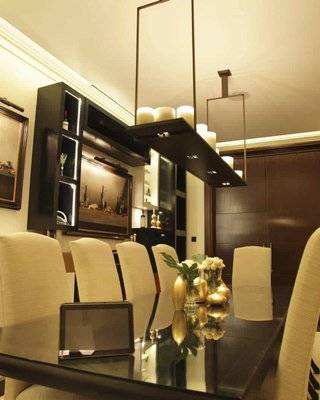
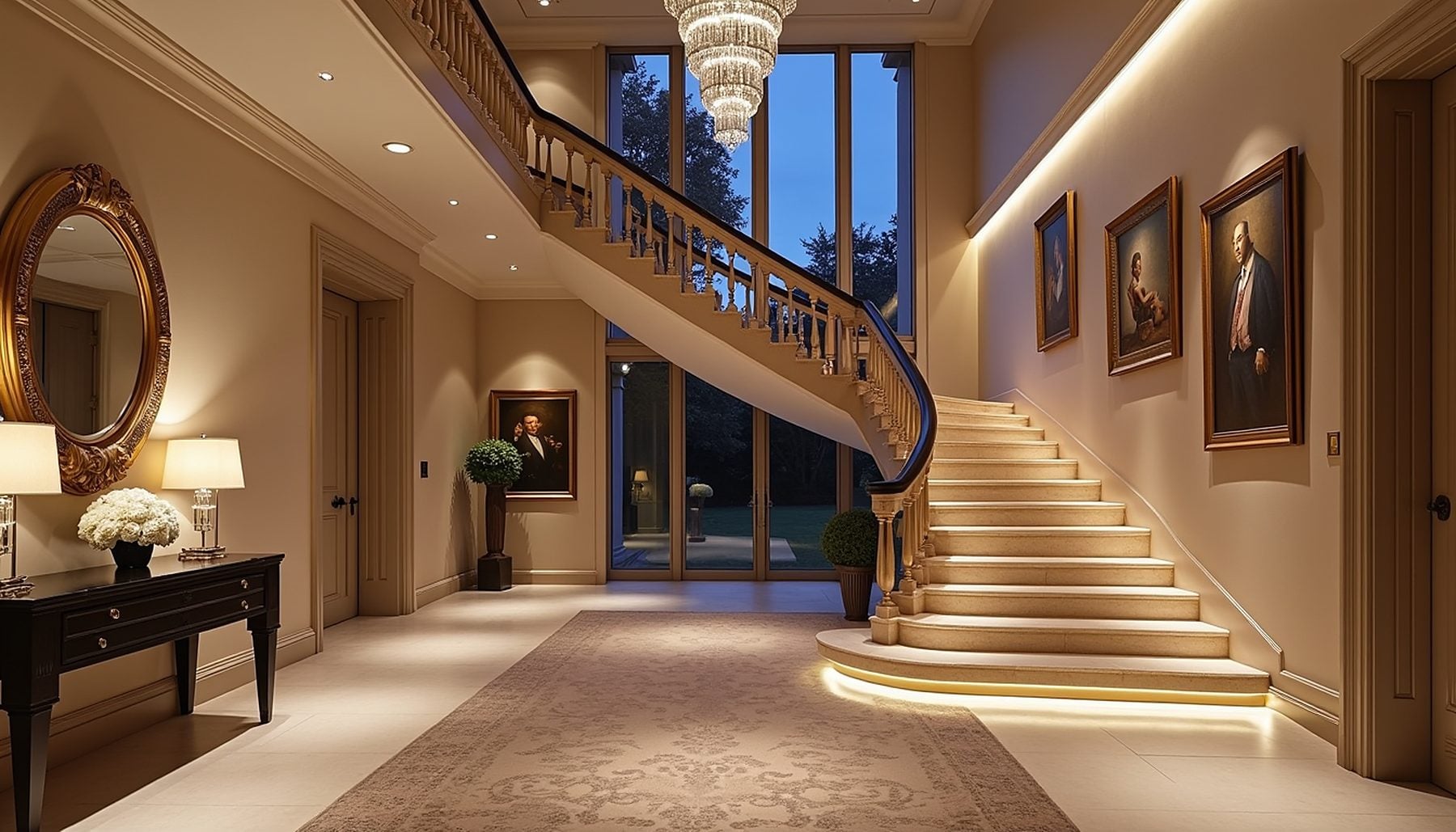
A generous hall needs more than one source of light. A statement pendant or chandelier gives the space its character, but on its own it throws light downwards and leaves the walls in shadow, which makes a hall feel smaller and less welcoming. Washing light across the walls — with discreet recessed fittings, wall lights or light concealed in cornicing — lifts the whole space and shows off panelling, stone or wallpaper. A console table lamp or lit niche adds a warm, human-scale glow at eye level, which is what makes a hall feel inviting rather than simply lit.
Artwork is often hung in halls and along stairs, and deserves light of its own. Adjustable recessed fittings with a narrow beam, or picture lights on individual pieces, pick out each work without spilling light across the rest of the wall; high colour rendering (CRI 90 or above) keeps colours true.

Design

Lutron

Crestron

Security

Homeworks
Staircase Lighting — Safety and Drama
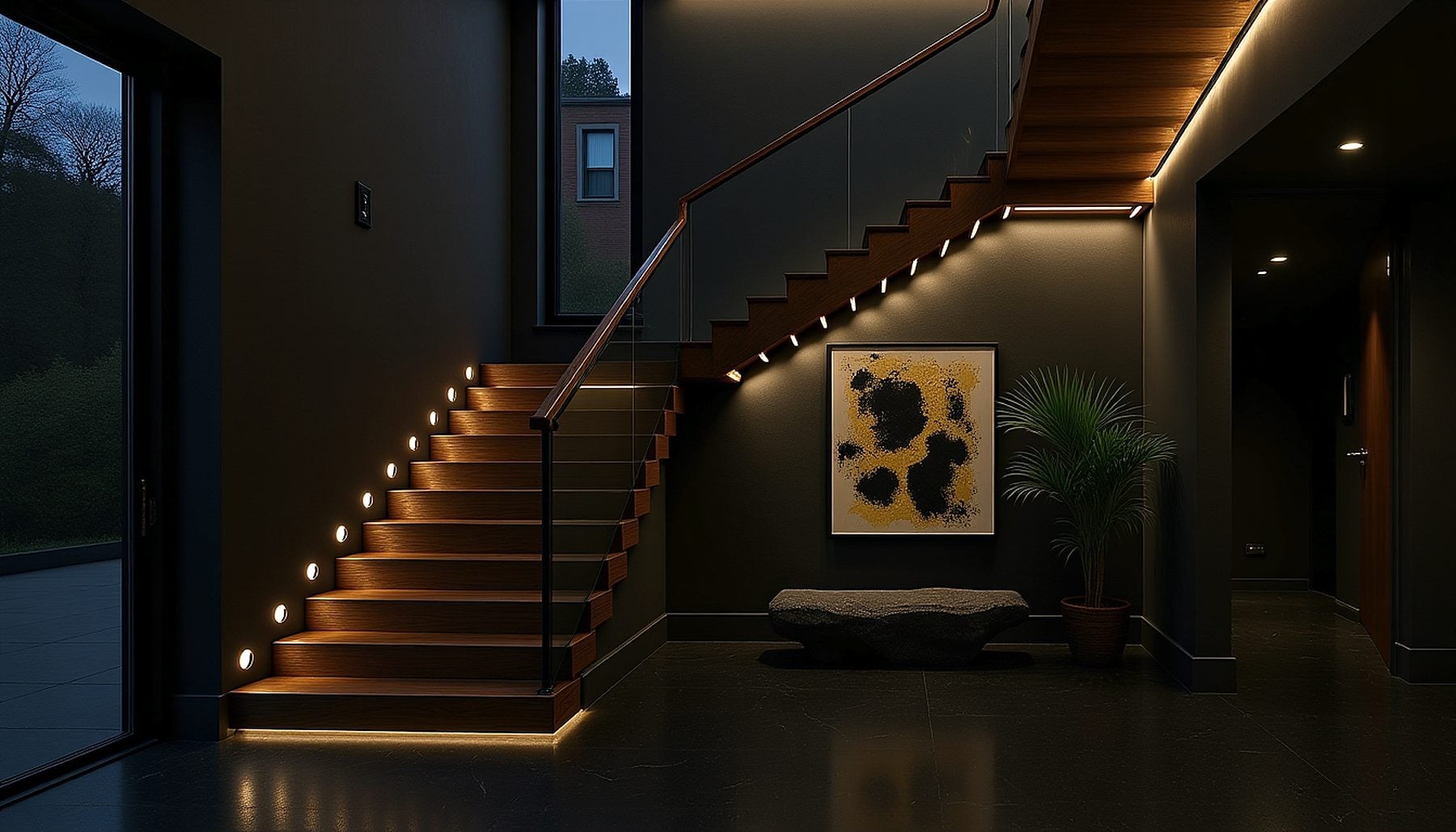
On a staircase, light has one essential job: to make every tread clearly visible without dazzling anyone climbing or descending. Low-level step lights set into the wall beside the stairs, a continuous LED line under each tread nosing, or a light channel built into the handrail all achieve this beautifully, lighting the steps themselves rather than the eyes of the person using them. On a cantilevered or floating staircase, lighting set into the wall beneath each tread emphasises the structure and makes it appear to hover.
Double-height and open stairwells bring their own challenge: fittings high in the ceiling are hard to reach for maintenance and can throw deep shadows down the stairs. A tall pendant or chandelier suspended through the stairwell gives a striking focal point, but it should be paired with step and wall lighting so that the stairs are properly lit without relying on it. Where fittings do have to go high, long-life LED sources and accessible drivers make a considerable difference over the life of the installation.
Landings and Corridors
Long upstairs corridors and landings are often the least-lit spaces in a house. Low wall lights, a gentle wash along one wall or recessed fittings spaced to create a rhythm of light draw you along a corridor rather than lighting it like an office. Where a landing has a window or rooflight, motorised blinds can close automatically at dusk as part of the same lighting scene.
Night Paths and Automatic Lighting
Connecting spaces are where lighting control proves itself every single day. Occupancy sensors can bring the landing, stairs and hall up to a low, warm level when someone gets up in the night — enough to see by, without anyone reaching for a switch or being woken by full brightness — and fade them out again once the space is empty. After dark, an astronomic timeclock can bring on the hall and staircase lighting at a welcoming level at dusk, then dim it through the evening. An Arrive Home scene can light the route from the front door to the kitchen, and a Goodnight button by the bed can switch off the whole house while leaving a gentle path lit to the bathroom.
With Lutron or Crestron lighting control, all of this happens from discreet keypads at the front door, the foot and head of the stairs and each bedroom, replacing the tangle of two-way and intermediate switching that traditional wiring demands in halls and stairwells.
Getting the Details Right
Step and handrail lighting has to be planned before the staircase is built: cable routes into treads and strings, back boxes set into walls at exactly the right height, and drivers located somewhere they can be reached later. Colour temperature should be consistent from the hall up through every landing, so that the connecting spaces read as one. And every fitting needs a dimming method that matches the control system, so that night-light levels are smooth and flicker-free at the very bottom of the range — the point where poorly matched LED drivers most often fail, as we explain in our guide to lighting dimming protocols.
You can see hall and staircase lighting in finished homes in our Wimbledon and Derby projects — the Derby house won the Crestron Integration Award for Best Lighting. Our wider approach is set out on our residential lighting design page, and if you are planning a renovation or new build, talk to us before the staircase drawings are signed off. More lighting ideas: our guides to kitchen lighting, garden and landscape lighting and bookcase and joinery lighting.
Hallway and Staircase Lighting — Frequently Asked Questions
How should a staircase be lit?
Light the treads, not the eyes of the person using the stairs. Low-level step lights in the wall, LED under each tread nosing or a light channel in the handrail all make every step clearly visible without glare, and can be combined with a pendant through the stairwell for character.
How do you light a dark hallway?
Use several layers rather than a single ceiling light: wash light across the walls, add a lamp or lit niche at eye level, and light any artwork individually. Lighting the walls rather than just the floor makes a hall feel larger and more welcoming.
What is night-path lighting?
Low-level lighting on the landing, stairs and route to the bathroom that comes on automatically at a gentle level when someone gets up in the night, triggered by occupancy sensors. It lets you move around safely without switching on full lighting or waking anyone else.
Can hallway lighting be controlled from several places?
Yes. A lighting control system places keypads at the front door, the foot and head of the stairs and in bedrooms, each able to recall whole-house scenes, which replaces complicated two-way and intermediate switching.
Residential Lighting Design → · Lutron Lighting Control → · Crestron Lighting Control → · Smart Lighting Design Guide → · Contact Us →