Choosing a Home Security System — The Complete Guide
Intruder alarms, CCTV, access control, perimeter protection and Crestron integration
Updated June 2026 · Custom Controls · Security system specialists since 1998
A properly specified home security system does more than sound an alarm when a window is broken. It deters intrusion before it happens, provides real-time monitoring during an incident, gives the homeowner full visibility of their property from anywhere in the world, and integrates seamlessly with the wider smart home so that arming the alarm automatically adjusts the heating, lighting and AV system. This guide covers every element of a high-end residential security system — what is available, why the integration matters, and how to specify it correctly.
Our Services

Security

Smart Home

Mood Lighting

WiFi
Crestron
Intruder Alarms
The Texecom alarm system is the product we specify for the vast majority of our high-end residential security installations. Texecom’s Premier Elite range is an NSI Gold-approved, police-response capable system with a level of configurability that consumer-grade alarm systems cannot approach. Individual zones can be configured for different sensitivity levels, response delays and alert behaviours — a system designed for a large property with domestic staff, regular tradespeople and varied occupancy patterns needs this kind of granularity to function without generating false alarms that undermine confidence in the system.
Central monitoring. A Texecom system connected to an NSI-approved alarm receiving centre (ARC) means that when the alarm triggers, a trained operator receives the signal, verifies it and can dispatch police or keyholders within minutes — not after the alarm has been ringing long enough to annoy the neighbours. For properties that are regularly unoccupied — second homes, holiday properties, properties with long absences — central monitoring is the single most important security enhancement available.
Vibration and shock sensors. Standard passive infrared (PIR) detectors sense movement within the property after entry has occurred. Vibration and shock sensors on windows, doors and external walls detect the attempt to break in before entry is achieved — sounding the alarm while the intruder is still outside. The combination of perimeter detection and internal PIR coverage eliminates the window of time between entry and alarm activation that gives opportunistic thieves a workable window.
CCTV Systems
Modern IP CCTV cameras — we specify Hikvision and Axis across our installations — deliver 4K resolution images that identify faces, vehicles and registration plates at distances that older analogue systems could not approach. This matters not just for evidence after an incident but for the real-time monitoring capability it enables: checking the property remotely via a smartphone app, the image quality is sufficient to make meaningful judgements about what is happening.
ARC monitoring of CCTV. Connecting the CCTV feed to the alarm receiving centre means that when the alarm triggers, the monitoring operator can pull up the live CCTV view before dispatching a response — reducing false alarm dispatches and providing the police with a real-time picture of the situation before they arrive.
AI-powered analytics. Current IP camera systems support on-camera or server-side video analytics — detecting specific behaviours (loitering, line crossing, vehicle detection) rather than simply recording motion. This dramatically reduces false alerts from environmental causes (trees moving in wind, animals, lighting changes) and increases the reliability of alerts that do trigger.
Perimeter Protection
The most effective security strategy stops threats before they reach the property boundary. For high-net-worth residential properties — where the threat profile includes not just opportunistic burglary but organised crime and personal security considerations — perimeter protection is the appropriate level of specification.
A perimeter system detects entry into the property grounds and alerts the monitoring station, who verifies the camera feed before deciding on a response. For clients who travel regularly, or whose properties are in isolated locations, the monitoring station acts as a virtual concierge — managing visitor access, verifying deliveries and alerting the client to any activity requiring attention while they are away.
Door Access and Intercom Systems
Physical keys are the weakest point in most residential security systems. A key given to a cleaner, a tradesperson or a property manager can be copied without the homeowner’s knowledge, and there is no audit trail of who entered the property and when. Our access control installations use 2N IP intercoms and Paxton access control to replace physical keys with PIN codes, key fobs and smartphone-based access — each credential individually assigned, time-limited where required, and logged.
The 2N intercom system connects to every room in the property via the Crestron smart home — a visitor at the gate appears on the iPad in the kitchen, the touchscreen in the study and the TV in the living room simultaneously. When the client is not home, the intercom call diverts to their mobile. Two-way audio and video allow remote verification and remote gate release from anywhere in the world.
Crestron Integration — Security as Part of the Smart Home
Texecom alarm systems integrate natively with Crestron Home OS, making security a seamless part of the wider smart home rather than a separate system with its own keypad and interface. The integration enables a range of automation that materially improves both security and convenience:
- Arming the alarm automatically switches off all AV zones, closes all internal blinds, adjusts the heating to an away set point and activates exterior lighting on a randomised schedule that mimics occupancy.
- Disarming on return triggers the welcome home scene — lights to the entry level, heating restored to comfort set points, preferred music zone activated.
- Alarm triggers push notifications to the client’s phone, activate all exterior lighting to full brightness, and can display CCTV camera feeds on any screen in the property.
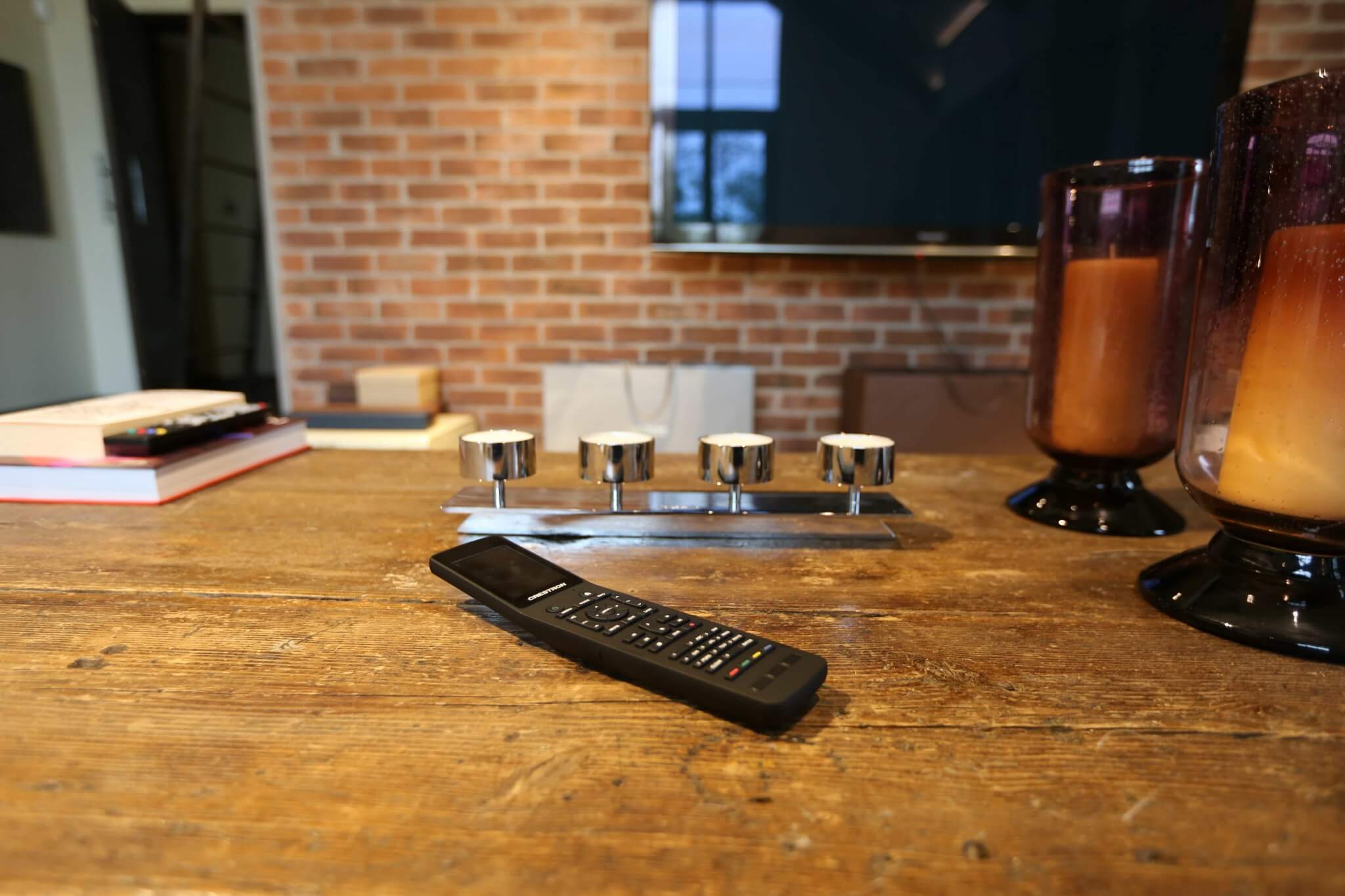
- CCTV cameras are accessible from any Crestron touchscreen or the Crestron app — a single interface for the full property.
What to Specify for Your Property
The right security specification depends on the property size, location, occupancy pattern and the client’s threat assessment. A London townhouse with full-time occupancy needs a different specification to a Cheshire estate used primarily at weekends, which needs a different specification again to a Dubai villa that is unoccupied for months at a time. Custom Controls produces a security specification for every property we work on — assessing the specific vulnerabilities and recommending the minimum specification that addresses them properly.
Frequently Asked Questions — Choosing a Home Security System
What is the difference between a monitored and self-monitored alarm?
A monitored alarm reports confirmed events to a professional alarm receiving centre, where a trained operator verifies the alert and can dispatch police or keyholders within minutes. A self-monitored system relies on the homeowner responding to a notification themselves.
Why does perimeter detection matter alongside an internal alarm?
Perimeter detection identifies an intrusion attempt before entry is achieved, sounding an alert while the intruder is still outside, rather than only after they’ve already entered the property.
Can security systems reduce false alarms from animals or weather?
Yes. Current IP camera analytics can detect specific behaviours — loitering, line crossing, vehicle movement — rather than simply reacting to any motion, filtering out false triggers from trees, animals or changing light levels.
Can a security system replace physical keys entirely?
Yes. Access control using PIN codes, fobs or smartphone credentials can replace physical keys for staff, contractors and family, with every credential individually assigned, time-limited if needed, and logged.
For clients who want to understand how a properly integrated security system would work in their property, contact us to arrange an initial consultation.
Home Security Systems → · Crestron Home Automation → · Smart Home Automation → · Contact Us →