The Advantages & Disadvantages of a Home Lighting Control System
Is a Home Lighting System Always a Good Idea?
To be upfront about it: if we were starting a new build or major renovation, a lighting control system would be our number one priority. If budget were tight, we would install a lighting control system before anything else — before audio video distribution, before broader home automation, arguably even before security. The reason is straightforward: a genuinely reliable lighting control system needs to be wired. Wireless is possible, and we install it where there’s no alternative, but most of the disadvantages below are specifically the disadvantages of wireless systems, not of lighting control generally.
The Advantages of a Lighting Control System
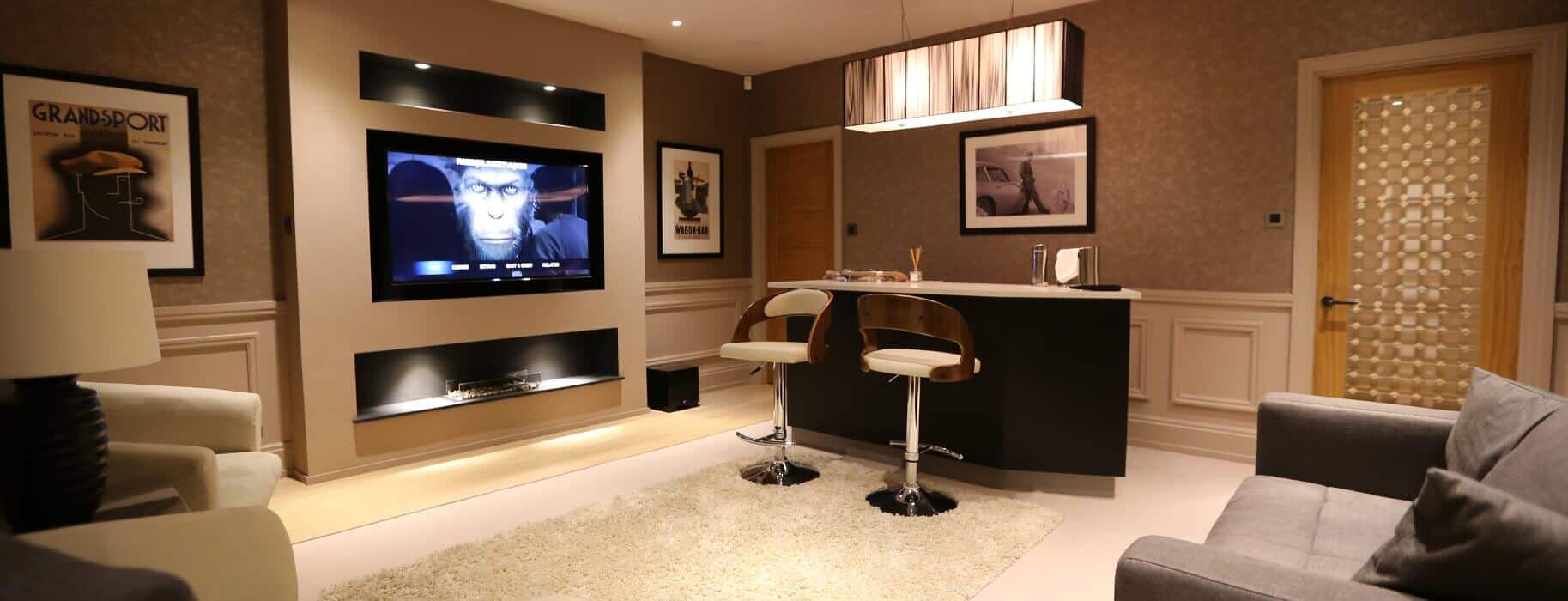
- Lighting scenes show your home off at its best. With a Lutron or Crestron system, lighting levels can be preset and recalled instantly at the push of a button — different levels for different activities, all saved once and available reliably thereafter. This lets a property be lit exactly right every time, adding warmth, ambience and highlighting its best features.
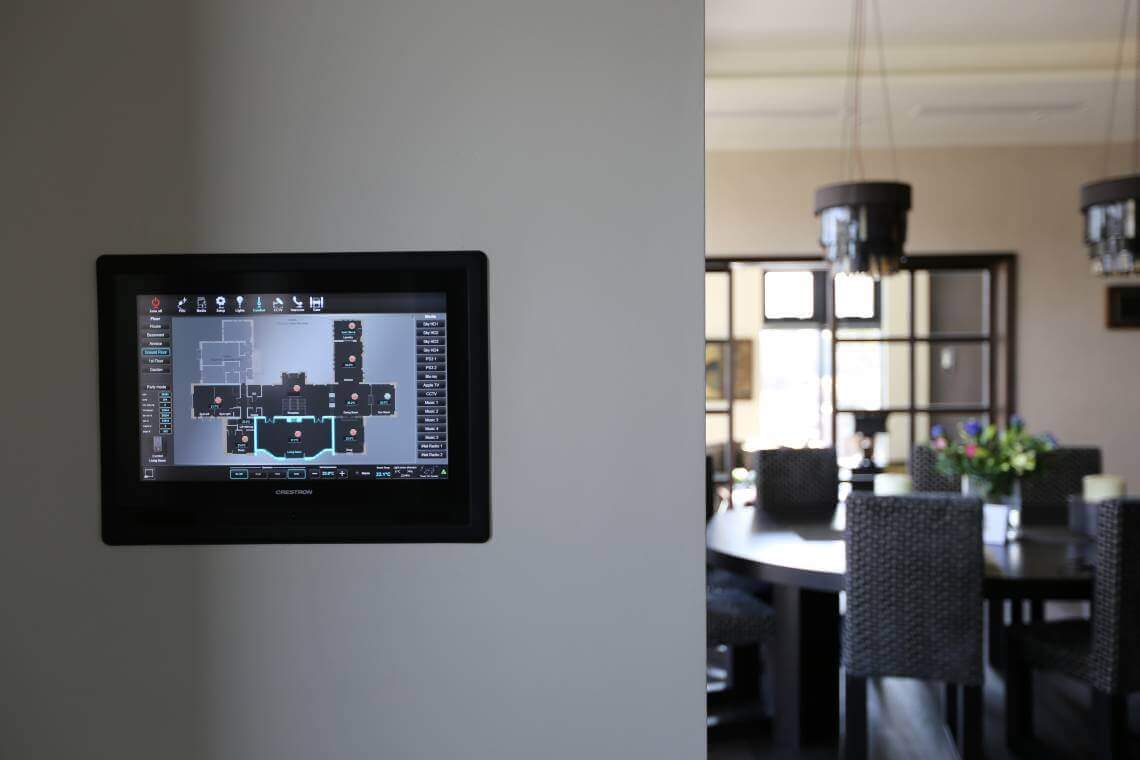
- Genuine convenience. Large houses can waste considerable energy simply through lights being left on unnecessarily. A fully integrated system shows at a glance which lights are on and lets you control them from one central interface. Integration with a security alarm can switch everything off automatically when the alarm is set, or replay recent activity to suggest the property is occupied while away.
- Real energy savings. Crestron and Lutron digital dimmers save energy whenever they dim — even a modest 10% reduction can produce substantial savings across a large property without being noticeable to anyone living there. Building dimmed levels into scenes compounds this further, and a lamp dimmed to its lowest level adds genuine warmth to a room rather than simply using less power. We have seen the practical effect of this directly: on one project, a backup generator rated for two days of emergency power ran for twelve straight days with every light in the house on full — a direct result of pairing the lighting system with efficient LED lamps and drivers.
- Increased lamp life. Lighting control systems ramp lamps up to full brightness gradually rather than switching instantly, which significantly extends lamp life. This matters more than it might first sound — our systems regularly control large chandeliers in double-height spaces, where replacing a lamp means scaffolding, disruption and significant labour cost, not simply popping to the shop for a bulb.
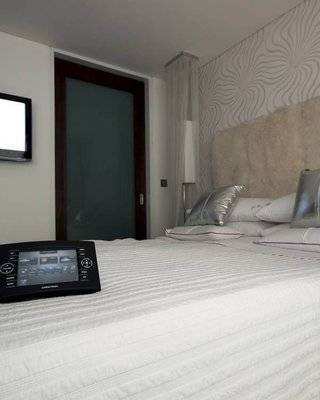
- Scenes are genuinely easy to set up. A properly integrated system lets a client stand in the room with an iPad, adjusting individual lighting channels up and down until the scene looks exactly right, then saving that result permanently. From that point on, the scene is recalled with a single press of a wall keypad or the app — no need to readjust it ever again.
Our Smart Home Services

Lighting Control

Smart Homes

Home Automation

Multi-Room AV

HVAC Controls
The Disadvantages of a Lighting Control System
- Wireless systems can be unreliable. We require 100% reliability and minimal maintenance from any system we install. Wireless technology is, by its nature, subject to interference and a somewhat higher maintenance burden — even if that’s limited to periodic battery changes. For this reason we default to wired lighting wherever practical, reserving wireless for situations where there genuinely is no alternative, such as a period property where chasing in new cabling isn’t an option.
- A badly designed or configured system can be harder to use, not easier. A system that differs unhelpfully from the switches people are used to is a poorly delivered system, not an inherent flaw in lighting control itself. This is why we specify fully customisable systems with bespoke keypad engraving rather than off-the-shelf products with pre-set button labels that may not match what a client actually needs day to day.
- Ongoing maintenance, in theory. A properly installed system should simply keep running without intervention. We maintain systems over ten years old that have required essentially zero maintenance — when problems do arise on a wired system, it is almost always traceable to the original installation quality rather than the technology itself.
Frequently Asked Questions — Lighting Control Pros and Cons
Is wired or wireless lighting control more reliable?
Wired is fundamentally more reliable — it isn’t subject to radio interference or battery maintenance. We specify wired lighting wherever practical, reserving wireless systems like Lutron RadioRA 3 for retrofits and period properties where new cabling genuinely isn’t an option.
Do lighting control systems actually save meaningful energy?
Yes. Even a small reduction in dimming level produces real savings across a large property, and the combined effect of scene-based dimming, automatic switching and efficient LED lamps can be dramatic — we’ve seen a backup generator rated for two days run for twelve on the strength of these savings alone.
Why do lighting control systems extend lamp life?
They bring lamps up to full brightness gradually rather than switching them on instantly, which significantly reduces the thermal stress that shortens lamp life — particularly valuable for hard-to-reach fittings like chandeliers in double-height spaces.
We install high-end, fully integrated lighting control systems into large residential properties. To find out how a lighting control system could work for your home, contact us.