Energy Management and Smart Home Automation
How Crestron and Lutron reduce energy consumption without reducing comfort — and why it matters more than ever
Updated June 2026 · Custom Controls · Smart home specialists since 1998
The most compelling argument for a properly integrated smart home system is not convenience — it is efficiency. A Crestron or Lutron system that manages heating, lighting, blinds and electrical loads intelligently reduces energy consumption in ways that a manually operated home cannot replicate, regardless of how conscientious the occupants are. For large properties, holiday homes and properties with renewable energy generation, the efficiency gains are substantial. This guide explains how the systems work and what they deliver.
Our Services

Smart Home

Mood Lighting

Security

WiFi
Crestron
Intelligent Heating and HVAC Management
Heating and cooling are the largest energy costs in most residential properties. A Crestron home automation system integrates with the property’s HVAC infrastructure — underfloor heating, fan coil units, heat pumps, air conditioning — to manage temperatures intelligently across every zone.
Occupancy-based control. Every room in the property can have an independent temperature set point that adjusts based on occupancy. Rooms that are not in use drop to a background temperature that maintains the fabric of the building without heating empty space. When occupancy is detected — via the smart home’s occupancy sensors, or via the alarm system’s PIR detectors — the room returns to the comfort set point before the occupant arrives, not after. The difference between a room that heats on demand and a room that is always heated to comfort temperature is, in a large property, a substantial energy saving.
Presence and schedule-based management. For properties that are regularly unoccupied for extended periods — weekend retreats, holiday homes, city apartments used only during the working week — the smart home system automatically manages the property into an efficient unoccupied mode when the owners leave and restores it to comfort conditions ahead of their return. A geofencing trigger on the client’s mobile phone initiates the welcome-home sequence as they approach the property: by the time they arrive, every room is at the right temperature, the lighting is set and the security system is disarmed.
Integration with renewable energy. For properties with solar photovoltaic generation, a Crestron energy management module can direct surplus generation to high-consumption loads — immersion heaters, underfloor heating, EV charging — prioritising self-consumption over export. When the hot water cylinder is at temperature, surplus generation shifts to towel rails, then to scheduled loads like washing machines and tumble driers. The system optimises consumption against generation in real time, without any manual intervention.
Lutron Lighting Control — Efficiency Through Dimming
LED lighting running at 100% brightness consumes significantly more energy than the same fitting dimmed to 70% — which is, for most tasks and most times of day, entirely adequate and often preferable. Lutron’s dimming systems apply this principle automatically: daylight sensors adjust artificial lighting levels to compensate for natural light, maintaining a consistent brightness level in the room as external conditions change. At full daylight, the artificial lighting may be off entirely; as light fades through the afternoon, it ramps up smoothly to maintain the target level. The occupant experiences consistent, comfortable lighting; the system consumes only what is needed to achieve it.
Vacancy sensing and automatic off. Lutron’s occupancy sensors detect movement and automatically switch off lighting in unoccupied spaces. In a large property with many rooms, the cumulative saving from lights left on in empty rooms — a perfectly normal occurrence in any busy household — is meaningful. A guest bedroom light left on overnight, a utility room light forgotten during a holiday: a Lutron system eliminates these losses automatically.
Daylight harvesting via motorised blinds. Lutron’s Palladiom motorised blinds integrate directly with the lighting control system. In summer, when solar gain through south-facing windows adds significantly to cooling loads, the blinds close automatically during peak solar hours — reducing the air conditioning demand while maintaining usable daylight levels in the room. In winter, the same blinds open fully during daylight hours to maximise passive solar gain, reducing the heating demand. The blinds respond to the same time and sensor triggers as the lighting system, operating as a coordinated whole rather than independent elements.
Crestron Whole-Home Energy Monitoring
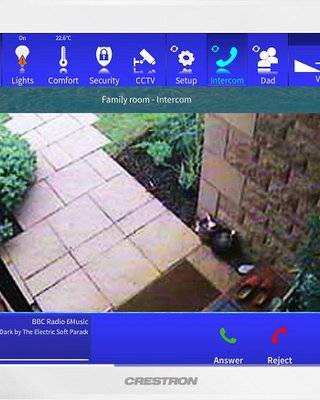
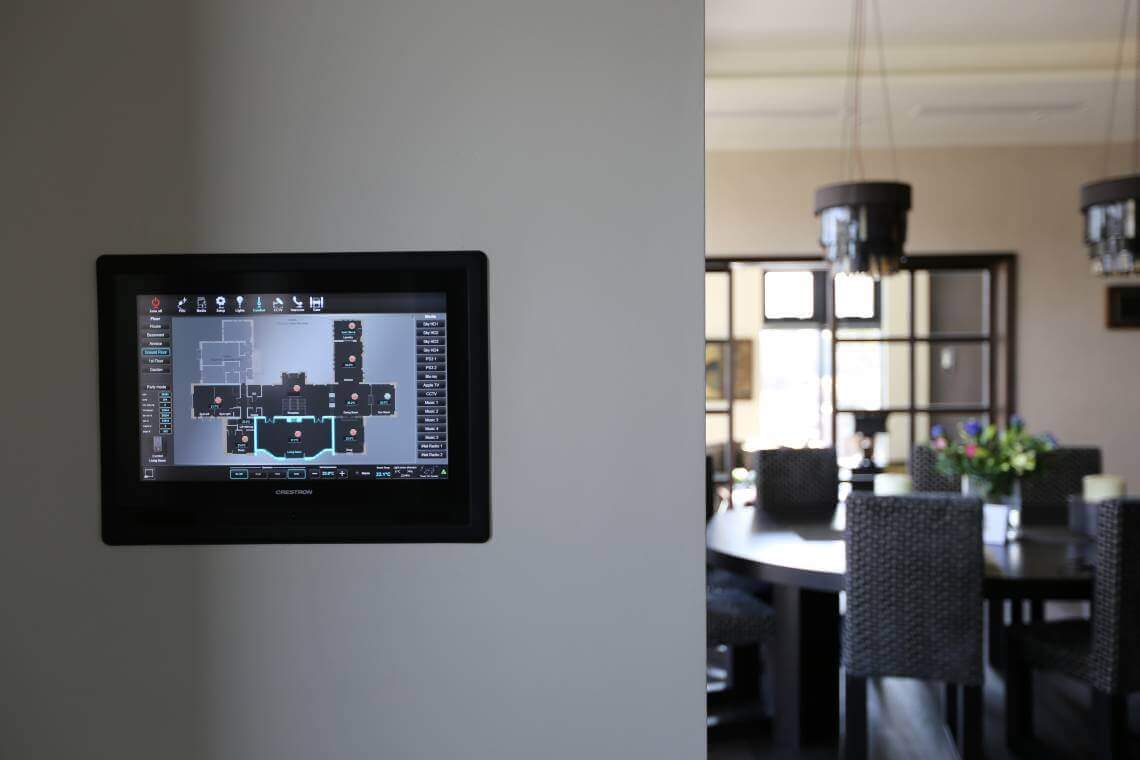
A Crestron system with energy monitoring modules provides real-time and historical visibility of consumption across every circuit in the property. The homeowner can see, from the Crestron app or any touchscreen in the property, exactly which loads are consuming energy and how consumption compares to previous periods. This visibility alone — independent of any automation — typically produces a meaningful reduction in energy consumption by making previously invisible waste visible.
For properties with complex electrical infrastructure — multiple HVAC systems, large equipment rooms, cinema rooms, pool plant, EV charging — the monitoring data provides the basis for informed decisions about operational schedules and setpoints. A cinema room rack that is consuming 2kW in standby mode, a pool heater running on a suboptimal schedule, an EV charger that could be shifted to off-peak tariff hours: these are the optimisations that energy monitoring makes possible.
Holiday Homes and Second Properties
The energy management case is most compelling for properties that spend significant periods unoccupied. A holiday chalet in the Alps, a country house used at weekends, a London flat used only during the working week — all are properties where the gap between occupied comfort settings and unoccupied efficiency settings represents a large and avoidable cost.
Our Alpine chalet installations are a particular case in point. A ski property in Morzine or Les Gets may be occupied for ten weeks of the year. A Crestron system managing heating, lighting and electrical loads reduces the cost of maintaining the property between visits — keeping the building fabric protected from frost and damp without maintaining it at full comfort temperature throughout — and ensures it is ready for arrival without the guest needing to remember to turn anything on in advance.
Getting Started
An energy management assessment begins with understanding the property — its size, its HVAC infrastructure, its occupancy pattern, its renewable energy generation if any, and its current energy costs. From this, Custom Controls can model the savings available from smart home integration and provide a realistic return-on-investment analysis alongside the system specification.
For new builds and major renovations, the conversation should happen at design stage — when the HVAC infrastructure, electrical distribution and control architecture can all be specified together. For existing properties, a retrofit Crestron or Lutron system can deliver significant improvements without structural work. Contact us to discuss your property.
Home Automation → · Lutron Lighting → · Crestron Home Automation → · Crestron HVAC Integration → · Smart Home Automation Guide → · Contact Us →