Movie Aspect Ratios Explained: Which Format Suits Your Cinema?
1.85:1, 2.39:1 and How to Specify a Home Cinema Screen
Aspect ratio confuses more home cinema clients than almost any other technical topic — and it matters more than most people expect when specifying a screen. Get it wrong and a beautifully designed room either wastes a chunk of its image on black bars, or compromises the screen size that fits the space. Here’s what the numbers actually mean, which films use which format, and how to specify a screen that handles them properly.
What Aspect Ratio Actually Means
Aspect ratio is simply the relationship between a screen’s width and height, found by dividing one by the other. Old standard-definition televisions used 4:3 (also written 1.33:1) — for every 1.33cm of width, 1cm of height, producing an almost-square image. Modern televisions use 16:9 (1.78:1) — a true widescreen shape that has been the broadcast and streaming standard for two decades. If you have ever wondered why an old film or TV show appears with black bars on the sides, or gets stretched and cropped to fill a modern screen, this mismatch in ratio is the reason. The same mismatch, in reverse, is why a modern blockbuster arrives with bars above and below the picture on an ordinary television.
Common Film Aspect Ratios at a Glance
Most of what you’ll watch at home falls into a handful of movie aspect ratios. Knowing which ones dominate your viewing is the starting point for choosing a screen shape, because the right answer for a room used mainly for sport and streaming is very different from one built around theatrical releases.
- 1.33:1 (4:3) — the Academy-era and early television standard. Classic films and archive TV are framed this way (many classics, including Casablanca, are closer to 1.37:1) and appear with bars at both sides on any widescreen display.
- 1.78:1 (16:9) — the television and streaming standard. Almost all broadcast TV, sport, documentaries and a large share of streaming series fill a 16:9 screen exactly.
- 1.85:1 (flat) — the most common theatrical film aspect ratio for dramas and comedies, used by films such as Pulp Fiction. On a 16:9 screen it leaves only very thin bars top and bottom.
- 2.00:1 — a compromise format adopted by a number of streaming originals, sitting between flat and scope.
- 2.20:1 (70mm) — the large-format 70mm ratio, used for epics such as Lawrence of Arabia and revived for some recent 70mm productions.
- 2.39:1 (scope) — the widest mainstream film format, often still labelled 2.35:1 or 2.40:1. Blockbusters, action and science fiction (Blade Runner 2049 is a good example) are typically framed this way, which is why they show deep black bars on a TV.
- 1.90:1 and 1.43:1 (IMAX) — expanded-aspect IMAX sequences, which some releases switch to for selected scenes, so the image height changes mid-film.
Because 16:9 and 2.39:1 between them cover the bulk of home viewing, the real design decision is usually which of those two the screen should favour. A home cinema screen that’s fixed at one ratio, masked electronically, or paired with an anamorphic lens each handles the other format differently, and that choice is best made alongside the room, seating distance and projector.
Once the ratio is settled, the rest of the room follows from it — screen height, seating position, speaker placement and calibration all depend on it. These are the services that sit behind a correctly specified screen, and each is covered in more detail on its own page.

Home Cinema

Cinema Design

Calibration

Seating

Lighting Control
Why Cinema Uses Different Ratios From Your TV
Films are not shot or projected in 16:9. Commercial cinema has settled on two standard ratios since the 1950s: 1.85:1, the “flat” widescreen format used for the majority of dramas, comedies and character-driven films, and 2.39:1 — often called “scope” or anamorphic widescreen — the wider, more dramatic format favoured for action, science fiction and large-scale blockbusters. IMAX uses a taller format again, 1.43:1, on the small number of screens equipped with true IMAX film or laser projection.
Neither cinema ratio matches a 16:9 television. A 2.39:1 film shown on a 16:9 screen either appears with black letterbox bars top and bottom, or has its edges cropped to fill the frame — neither of which represents the film as the director intended it to be seen. The labels cause confusion too: early anamorphic prints were 2.35:1, and the projection standard was adjusted in the early 1970s to roughly 2.39:1, yet discs and listings still say 2.35, 2.39 or 2.40. In practice they describe the same wide format, and a 2.39:1 screen handles all three.
Letterboxing, Pillarboxing and Why Black Bars Appear
Black bars are not a fault; they are the picture being shown at its true shape on a screen of a different shape. When the picture is wider than the screen, the bars sit above and below — letterboxing. When the picture is narrower, as with a 4:3 programme, the bars sit at the sides — pillarboxing. A small image surrounded by bars on all four sides is windowboxing, and it usually points to a mismatch between the source, the player and the display settings rather than to the film itself.
The scale of the loss is easy to calculate. A 1.85:1 film on a 16:9 television uses about 96% of the screen height, so the bars are barely noticeable. A 2.39:1 film uses only about 74% of the height, which means roughly a quarter of the panel is black. That is the real argument for a scope-shaped screen in a dedicated room: every pixel of the projector’s output and every inch of the wall can go towards the picture rather than the bars, and the film is seen at the scale it was composed for.
Specifying a 2.39:1 Screen for a Dedicated Cinema Room
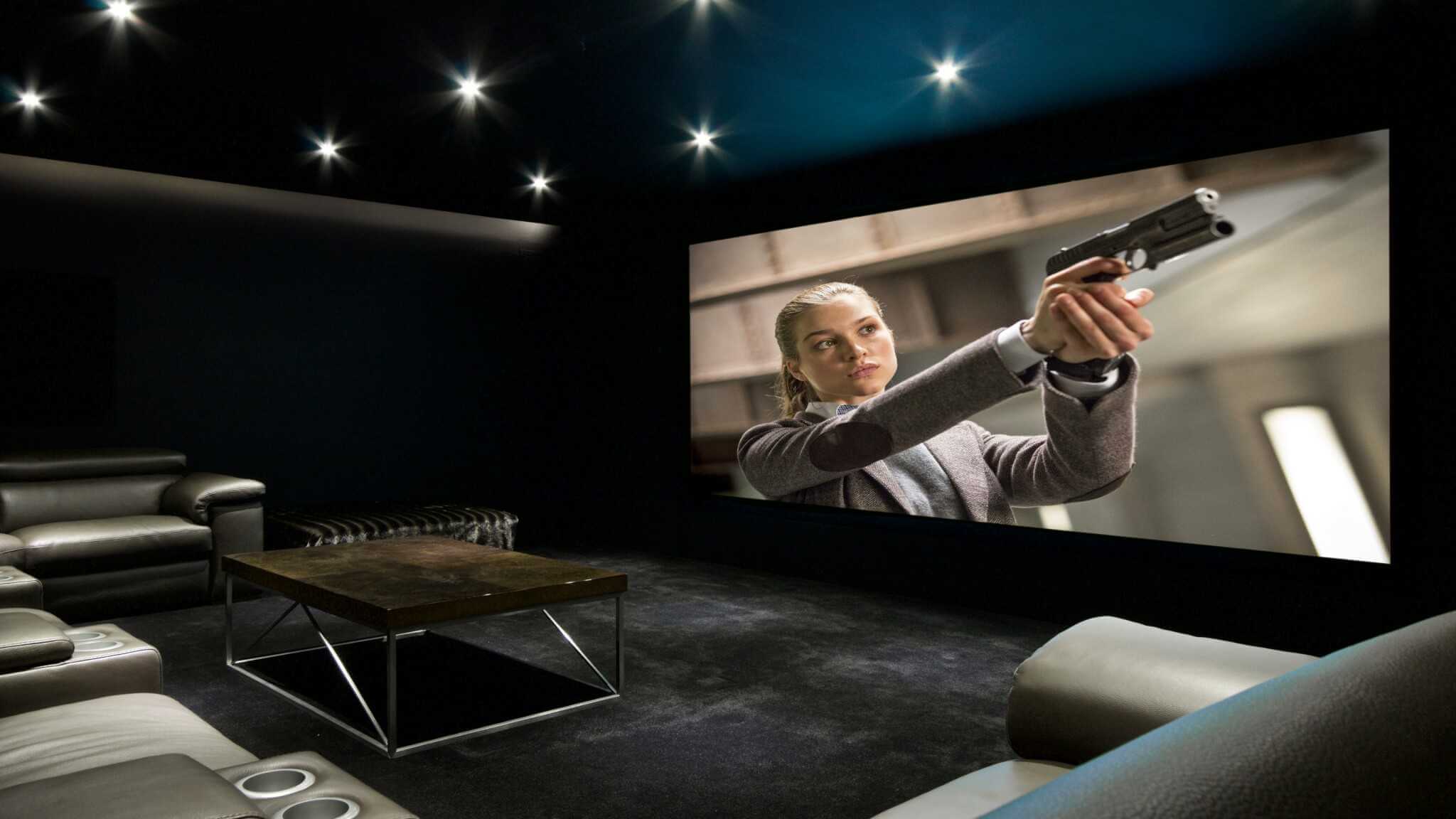
For a dedicated home cinema room, specifying a screen at 2.39:1 rather than 16:9 is a genuine design decision worth considering carefully. The maths illustrates why:
- A 16:9 screen at 4m wide is 2.3m tall
- A 2.39:1 screen at the same 4m width is only 1.7m tall
That difference in height changes the design of the whole room. A shorter screen at the same width can simplify sightlines, reduce the need for tiered seating, or — just as often — allow us to specify a wider screen within the same height budget, since a 2.39:1 screen reaches further across the wall before it reaches the ceiling. The height of the screen also drives the position of the front speakers, the projector’s throw and the seating distance, which is why the ratio is settled at the start of the design rather than after the room is built. Read more about our cinema room design process →
How to Get a True 2.39:1 Image Onto That Screen
Once a 2.39:1 screen is installed, getting the most from 2.39:1 source material — the majority of major theatrical releases on Blu-ray and most streaming and Kaleidescape sources — is usually straightforward. A projector specified for the room, combined with a compatible screen, simply lets the “extra” width on a 16:9 display path go unused: the image fills the 2.39:1 screen edge to edge with no black bars, because the screen itself is already the right shape. Most televisions let you preview the effect by pressing the aspect ratio button on a remote — toggling between modes reveals the additional picture information either side that a standard 16:9 display normally discards.
What About 16:9 Content on a 2.39:1 Screen?
Not every source is shot at 2.39:1 — live sport via Sky or terrestrial broadcast remains 16:9. For these sources on a 2.39:1 screen, an anamorphic lens paired with a compatible projector stretches the 16:9 image horizontally to fill the full width of the screen, rather than leaving black bars either side. This means Sky Q, terrestrial sport and any other 16:9 source can fill the same 2.39:1 screen just as effectively as native widescreen film content — the room performs equally well for film nights and live sport, without compromise to either.
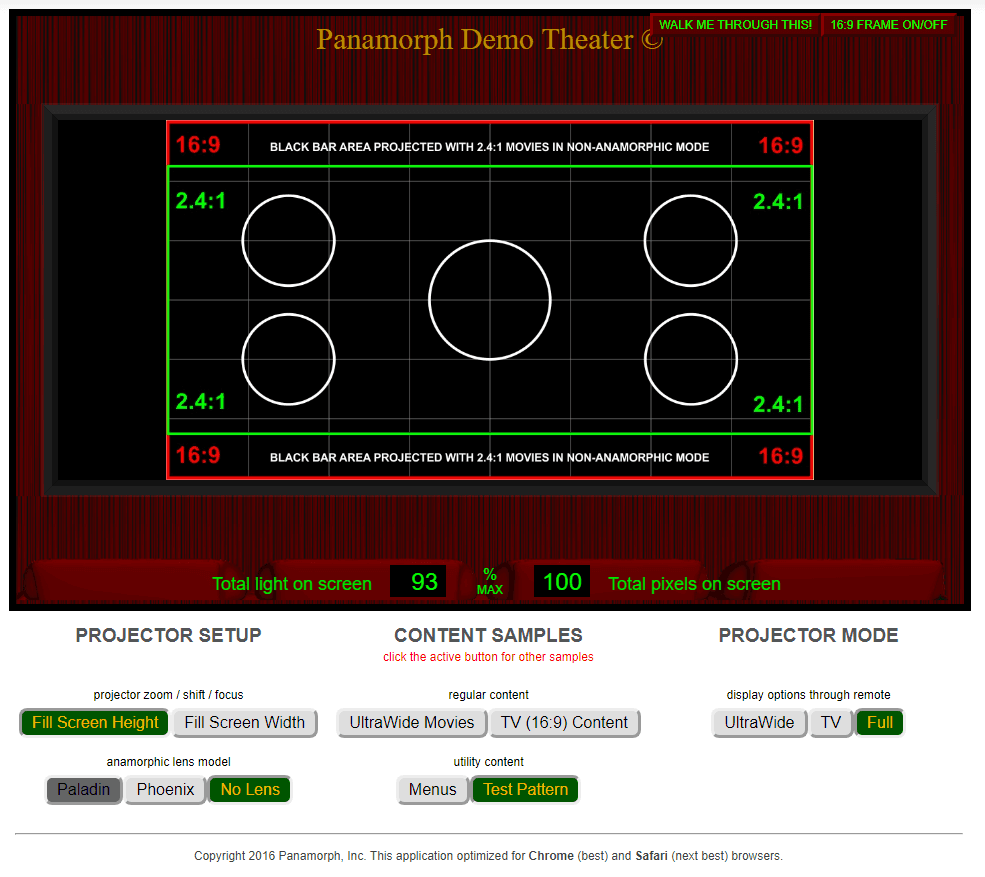
Panamorph, a leading manufacturer of anamorphic lens systems, maintain an online demonstration tool showing how different aspect ratios appear on a fixed screen — worth exploring if you want to see the difference for yourself before specifying a room.
Choosing a Screen Shape for Your Room
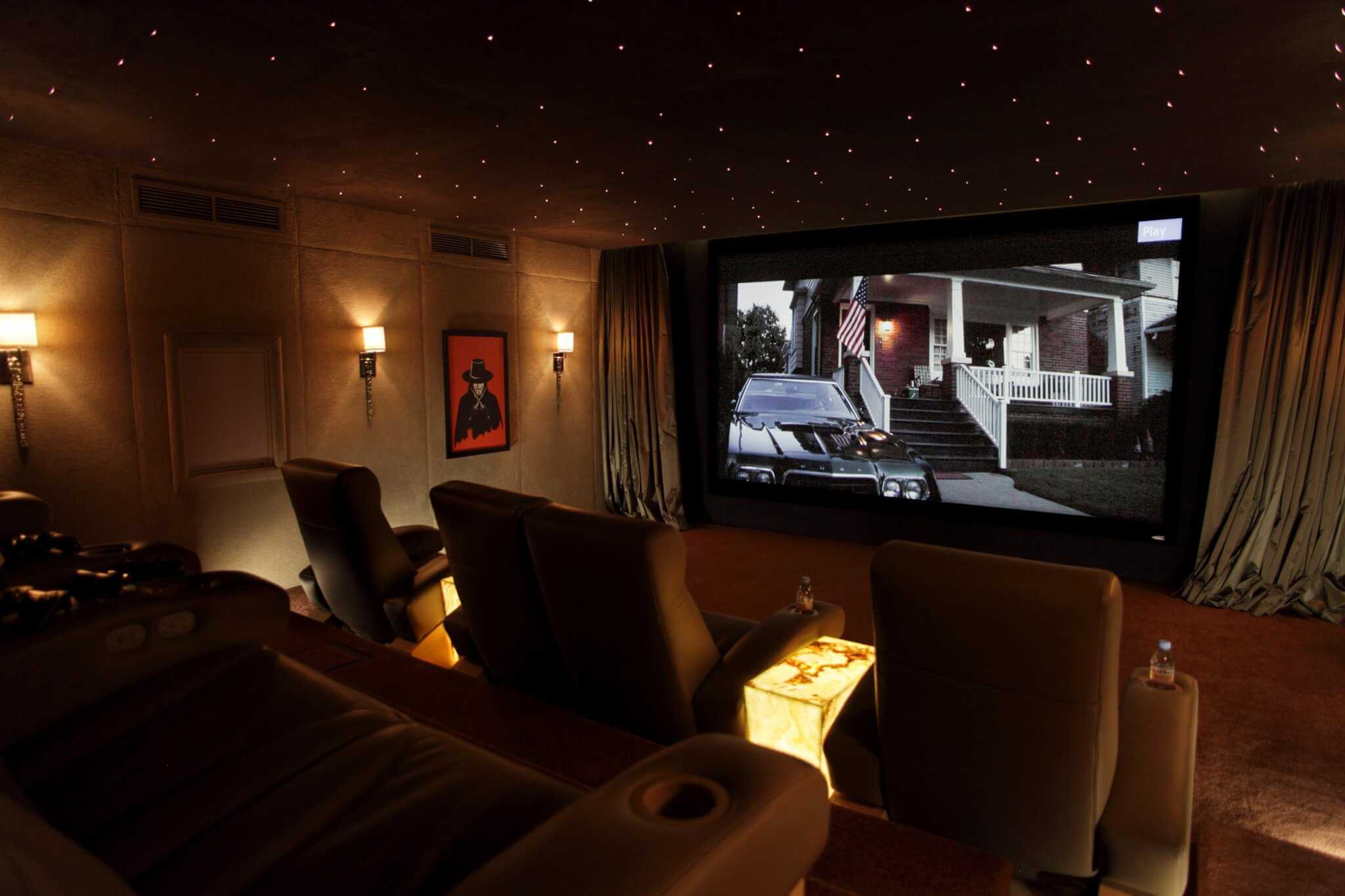
The right ratio depends on how the room will actually be used. A room built mainly for theatrical films and Kaleidescape or Blu-ray sources gains the most from a 2.39:1 screen, because most of its content arrives in a wide format and fills the screen with no bars. A room that is also used heavily for sport, broadcast TV and streaming series needs a plan for 16:9 material, whether that is an anamorphic lens, projector zoom and lens memory, or side masking that adjusts the screen to the picture. Each approach has trade-offs in brightness, cost and complexity, and the right one is best decided with the room dimensions, seating distance and projector in front of you.
Material that switches ratio mid-film, such as IMAX sequences, is worth planning for as well, because the image height changes during the film. A properly specified system adjusts for this automatically, and the same attention to detail extends to calibration, so that brightness and colour stay consistent whichever format is on the screen.
Frequently Asked Questions — Movie Aspect Ratios
What is the difference between 1.85:1 and 2.39:1?
1.85:1 is the standard “flat” widescreen format used for the majority of theatrical films — dramas, comedies and character-driven stories. 2.39:1, sometimes called “scope” or anamorphic widescreen, is wider and is generally used for action, science fiction and large-scale blockbusters.
Should I specify a 2.39:1 screen for my home cinema?
It depends on the room and the content you watch most. A 2.39:1 screen at a given width is shorter than the equivalent 16:9 screen, which can simplify the room design or allow a wider screen within the same available height. We assess this during the cinema design process for every project.
Can I watch sport and TV on a 2.39:1 cinema screen without black bars?
Yes. An anamorphic lens, paired with a compatible projector, stretches standard 16:9 content to fill the full width of a 2.39:1 screen — so live sport, terrestrial TV and any other widescreen source fill the screen just as effectively as native scope-ratio film content.
What aspect ratio does IMAX use?
True IMAX film and laser projection uses 1.43:1 — a taller, almost-square format compared with standard cinema ratios. Most commercial “IMAX” screens today are digital and closer to 1.90:1, since few venues retain true 1.43:1 projection equipment.
What is the most common film aspect ratio?
For theatrical films, 1.85:1 (flat) and 2.39:1 (scope) cover the vast majority of releases, with scope dominating big-budget titles. For television and streaming series, 16:9 (1.78:1) is the standard, although some streaming originals now use 2.00:1.
Why do films have black bars on my TV?
A TV is 16:9, which is narrower than a 2.39:1 scope film. To show the whole frame without cropping, the picture is scaled to the screen’s width, leaving black bars above and below. A 2.39:1 cinema screen removes them because the screen is already the same shape as the film.
For help specifying the right screen ratio and projection system for your room, read more about our home cinema design service or get in touch to discuss your project →