The Ultimate Whole House Audio Video Wiring Guide
How to future proof a home by wiring for Multi-Room Audio Video
A question we are often asked (and we often see asked on home building forums etc) is what wiring to put it in to a new build property to cater for whole house AV. Installing cables correctly at the build (or renovation stage) can be done relatively cheaply and allow whole house / multi-room systems to be added at a later date with no disruption.
Follow this wiring guide and you’ll be as future proofed as it is possible to be!
At every possible TV point (behind where the TV might go):
- 4 x Cat5e or Cat6 cables
- 2 x Coax cables
In every room where stereo audio might be required:
- 2 x Speaker cables left in the ceiling void (at opposite ends of the room – eg either side of the bedhead)
In every room where surround sound might be required:
- 1 x speaker cable – Centre speaker – to behind the TV.
- 2 x speaker cables – Front Left and Right – to either side of the TV (in the corners and in the ceiling void)
- 2 x speaker cables – Back Left and Right – to the side of the room opposite the TV (in the corners and in the ceiling void)
- 1 x speaker cable and 1 x Cat5e at a low level on the same wall as the TV and near a power socket – Subwoofer.
All cables run back to a central location with a footprint of 600mm x 600mm and at least one meter of height (under the stairs, utility rooms etc are all good but avoid loft spaces). Do not daisy chain cables, each one should be a single cable home run to the ‘AV Hub’ and should be labelled. The AV hub will require at least four double 13A sockets and should ideally be on its own spur from the fuse board.
The above cables will allow you to run TV from centralised sources (Sky, Media streamers etc), send audio back from TVs (Netflix etc from the TV back to the ceiling speakers) and provide great wifi throughout. The speaker cables allow you to enjoy multiroom audio without hardware in the rooms.
Obviously with the advent of the likes of Sonos it is perfectly possible to run a multi-room audio system wirelessly. This can be a great solution for a retrofit project however we would still recommend installing the above where possible. The above cabling opens up many possibilities for TV distribution, in-ceiling speakers and wired surround sound. A truly flexible solution!
Our Smart Home Services

Multi-Room AV

Home Wifi

Smart Homes

Home Automation

Home Cinema
Wired Access Points vs Mesh WiFi vs Powerline Adaptors
One of the cables most worth including in the list above is easy to overlook: a home run of Cat6 to the ceiling void at the centre of every room, dedicated purely to a wireless access point. This single decision, made at first fix when a wall is open and a ceiling void is accessible, is the difference between a property with genuinely fast, reliable WiFi everywhere and one that relies on a router in a cupboard fighting its way through several stud walls and a chimney breast.
Wired access points — the only approach that doesn’t compromise. A wired access point receives its own dedicated Ethernet connection back to a central switch, and in most cases its power over that same cable (PoE), so there’s no need for a separate plug socket in the ceiling either. Because each access point has its own full-speed link back to the network, performance doesn’t degrade as you add more access points or move further from the router — every point in the house gets the same fast, low-latency connection. This is the standard we specify on every new build and major renovation, and it’s the same principle behind the enterprise-grade systems we install professionally. Read more about our home WiFi installation service →
Mesh WiFi — a genuinely good retrofit solution. Mesh systems solve the coverage problem without any cabling at all: a number of nodes placed around the home talk to each other wirelessly, relaying the signal from node to node until it reaches your device. For an existing property where pulling cable through finished walls and ceilings isn’t practical, a well-specified mesh system is by far the best retrofit option available, and a huge improvement over a single router trying to cover an entire house. The trade-off is that each wireless “hop” between nodes uses up some of the available bandwidth, and the more nodes a signal has to pass through, the more that bandwidth is shared and the higher the latency. In a typical home this is rarely noticeable; in a large property with several hops between the router and the furthest room, or where many devices are competing for the same wireless backhaul, it becomes a real limitation.
Powerline adaptors — useful, with caveats. Powerline adaptors send a network signal over the home’s existing electrical wiring, which can be a genuinely useful way of getting a wired-equivalent connection to a room without running new cable — particularly handy for a single faraway room such as a garden office or loft conversion. Performance varies considerably depending on the age and quality of a property’s electrics, and is affected by anything else sharing the circuit; it isn’t something we’d rely on as the foundation of a whole-house network, but as a targeted retrofit fix to a specific problem room, it has its place.
Why we always recommend wiring it in from the start. Mesh and powerline are both excellent answers to the question “how do I add WiFi coverage to a finished house?” But neither was ever going to compete with a dedicated, hardwired connection on speed, reliability or the ability to scale up as more devices are added — they’re solving for a constraint, not pursuing the best possible result. Running a single extra Cat6 cable to the centre of each room during construction costs very little in the context of a build, and means that decision never has to be made at all: the access points are wired, full speed, with capacity to spare for whatever gets added to the network in the years that follow.
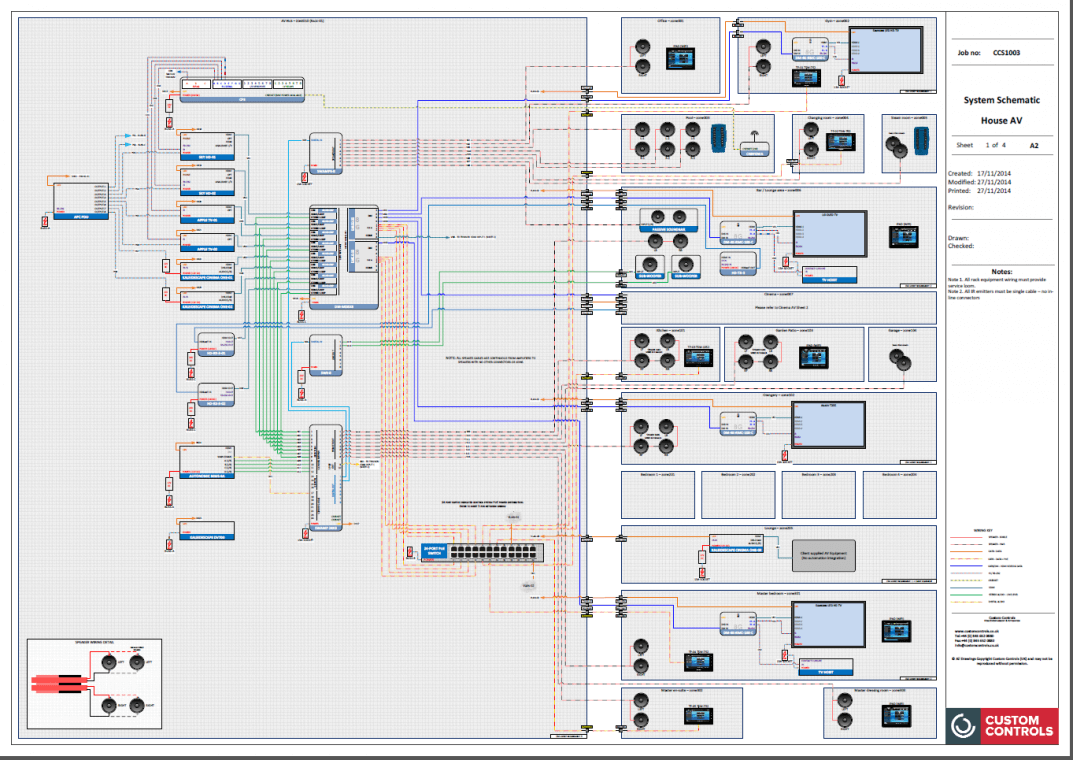
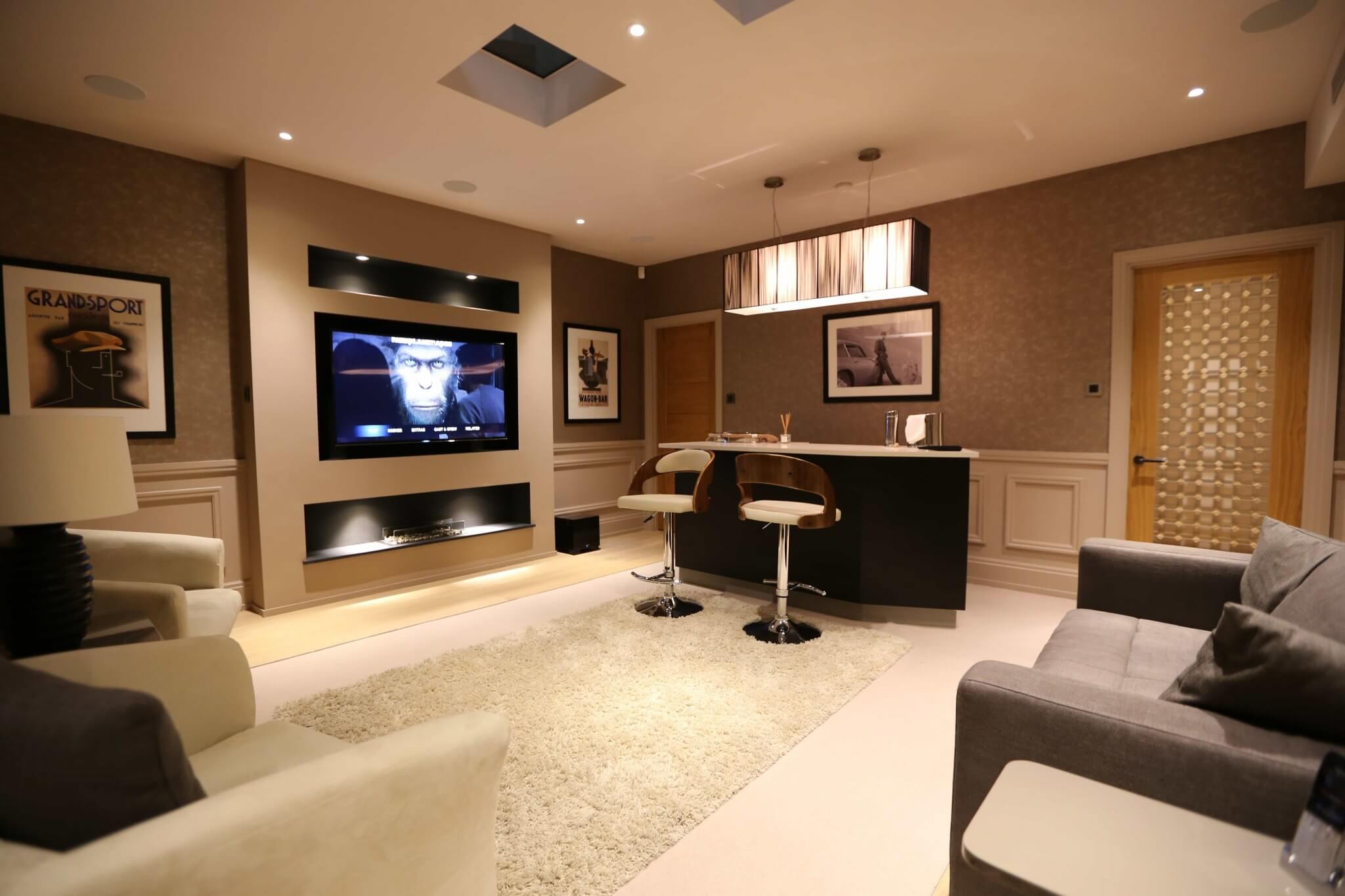
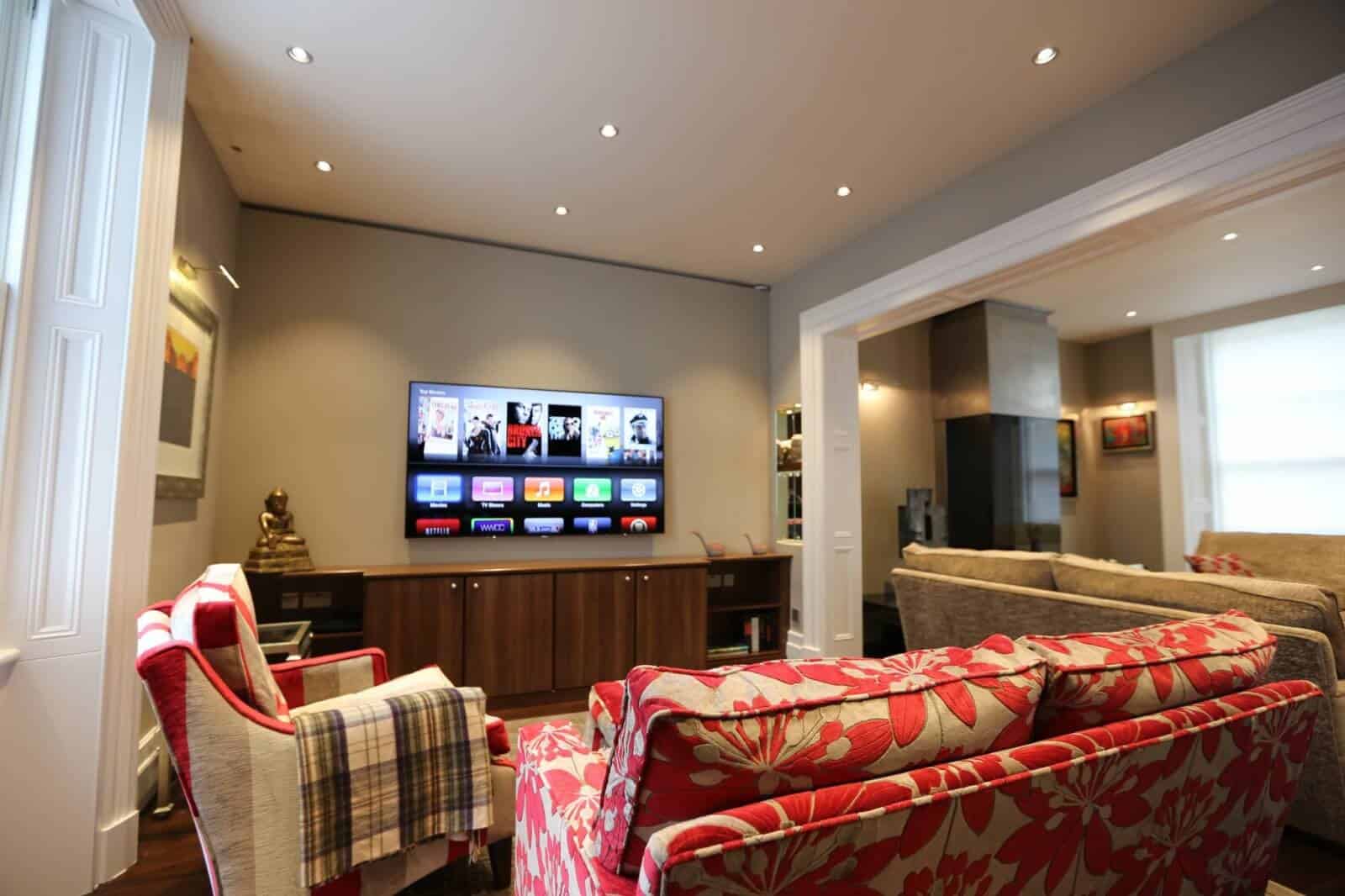
Some Examples of our Audio Video Installations:
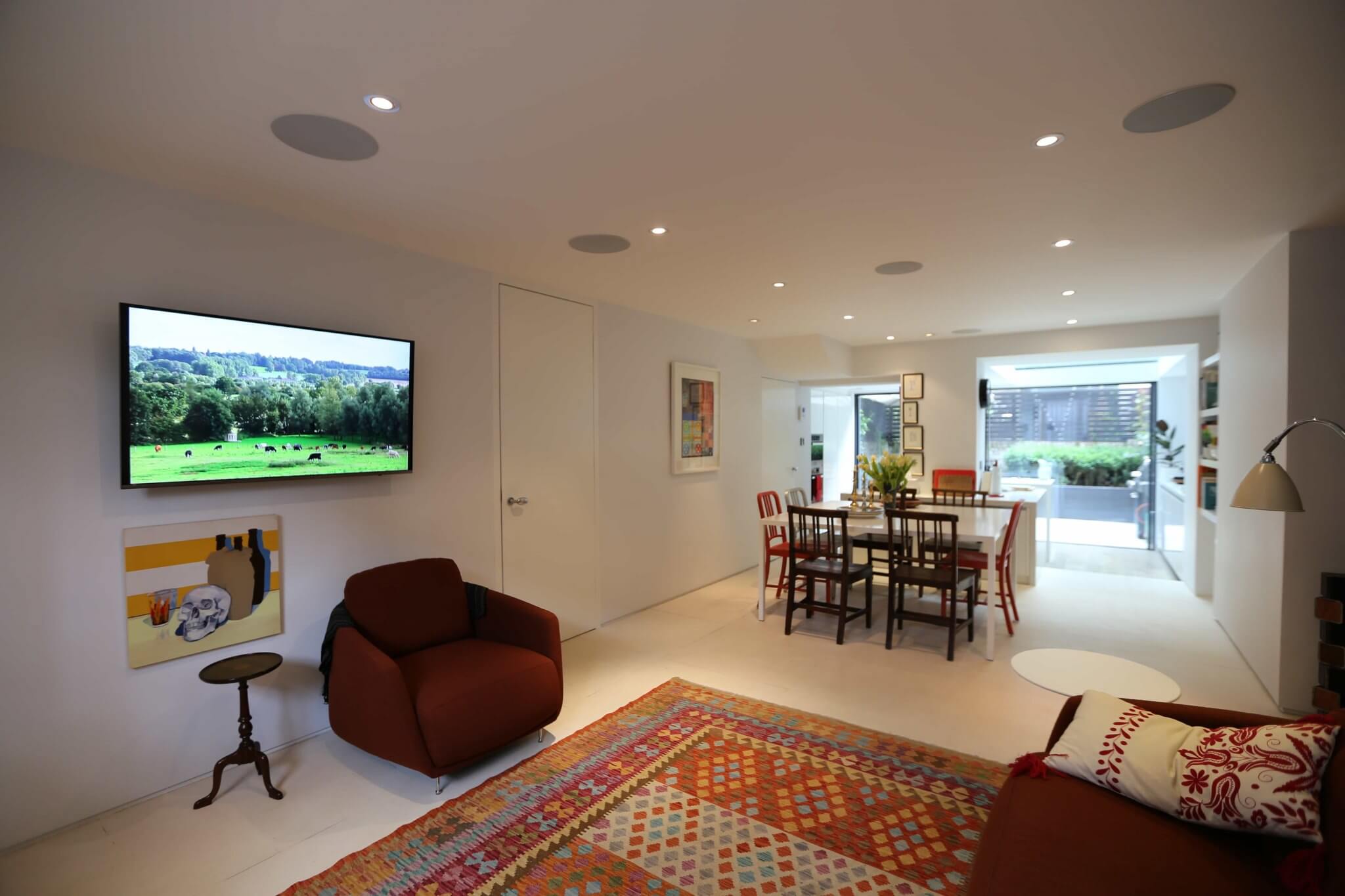
Audio Video Installation in Primrose Hill
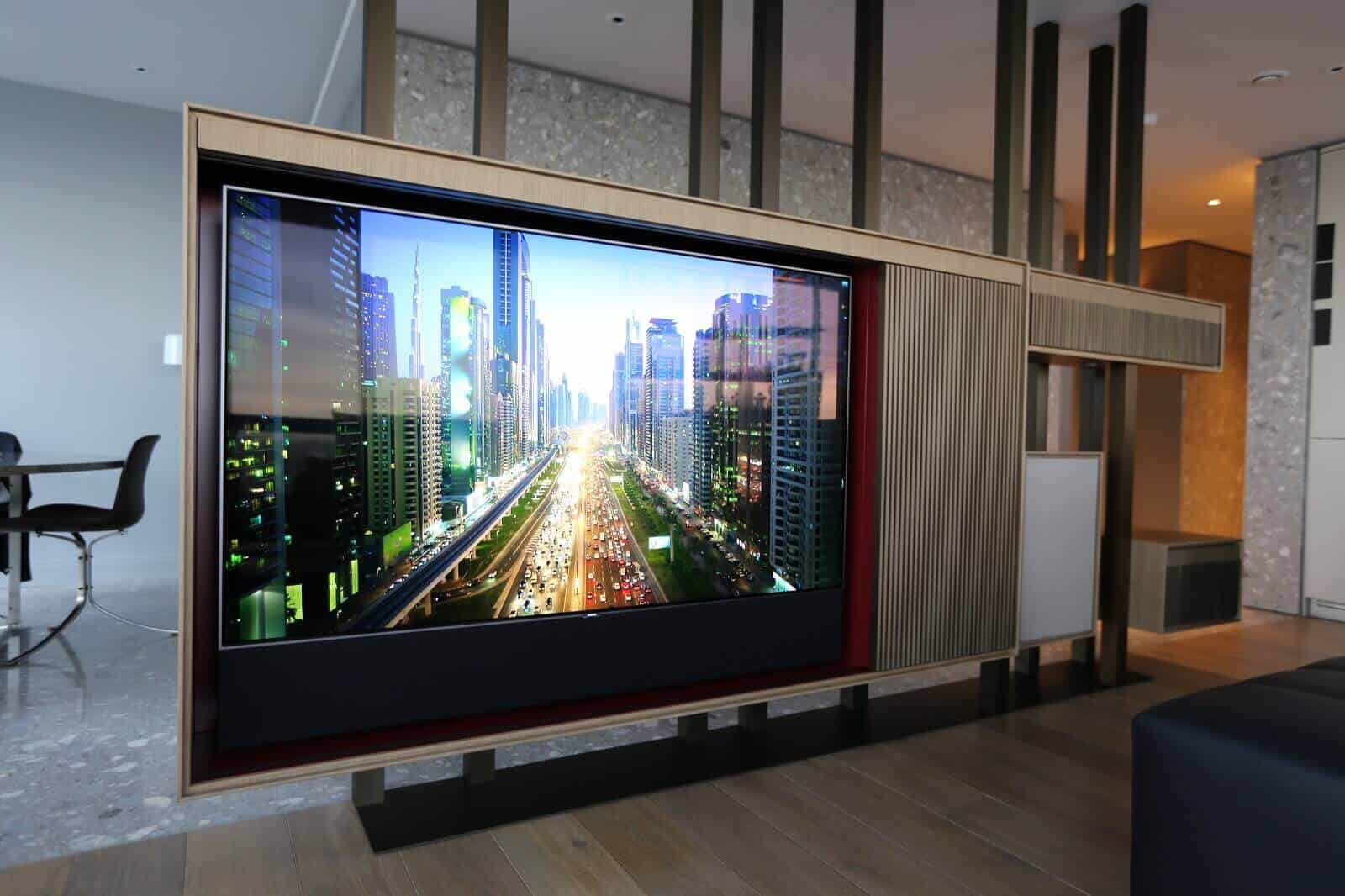
Surround Sound in the Canaletto Tower, London
Multi-Room Audio Video in Kensington