Hale Garage Home Cinema Install
Converting an Unused Double Garage into a Home Cinema Room
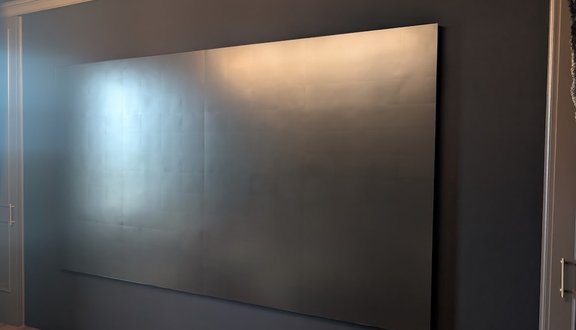
This Home Cinema Room design transforms an unused double garage into a beautiful cinema room. Externally we leave the up and over double garage door in place (to preserve the street scene) and build an insulated stud wall behind it. This stud wall houses all the front speakers and acoustic treatments before being wrapped in fabric with the projector screen installed over the top.
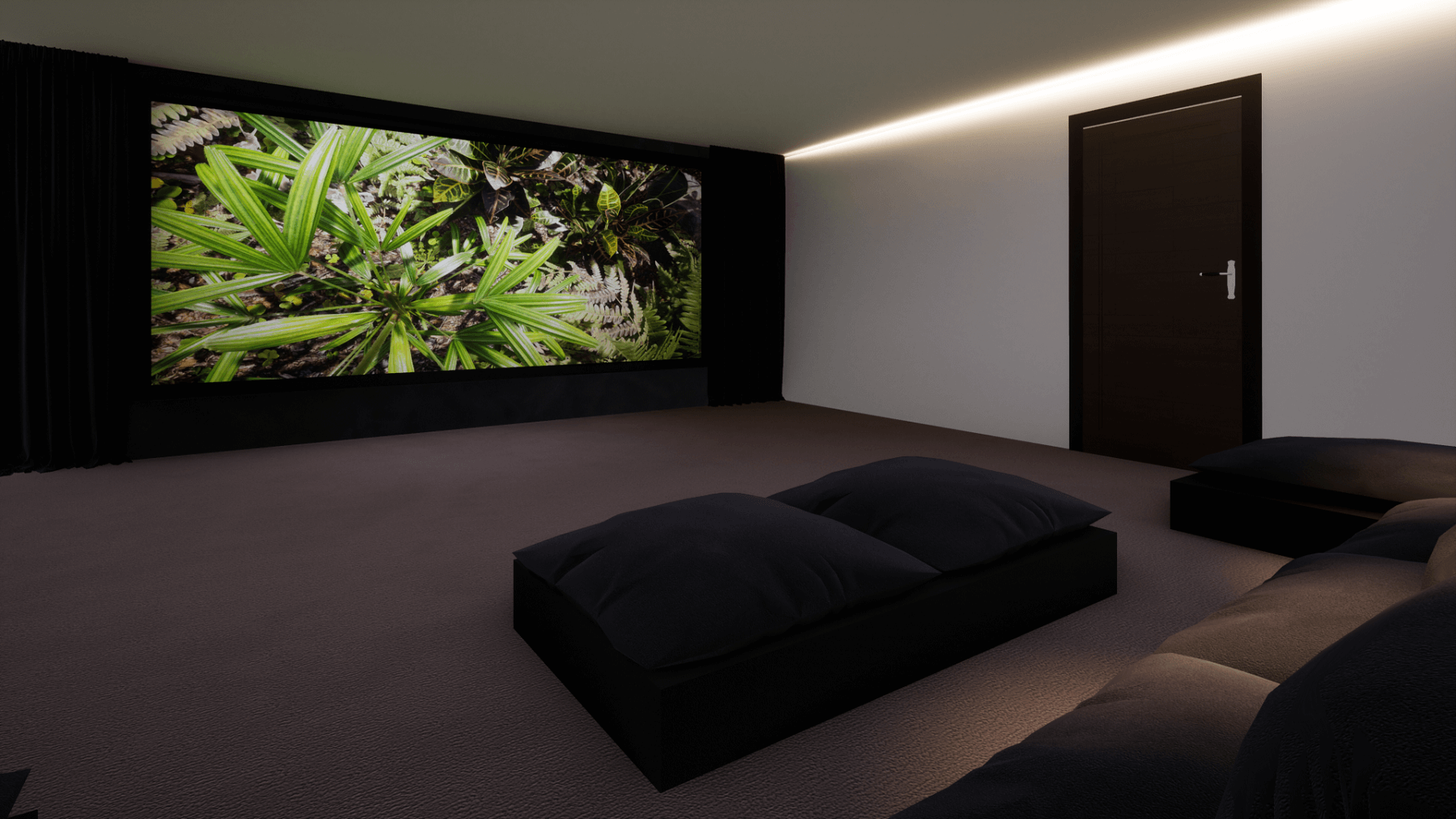
The Initial Room Design
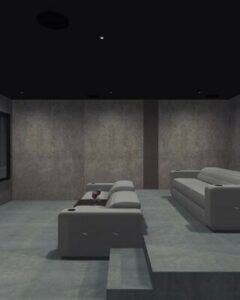
The actual cinema design is fairly straight forward – the garage door wall houses the projector screen with a wrap around sofa on the opposite wall. The walls are simply painted plaster walls with elements such as the velvet sofa and thick pile carpet chosen to enhance the acoustics of the room. The stud wall at the projector screen end of the room houses a huge amount of acoustic treatments which work in two ways – to enhance the room acoustic profile and also to minimise sound leakage to the exterior of the property.
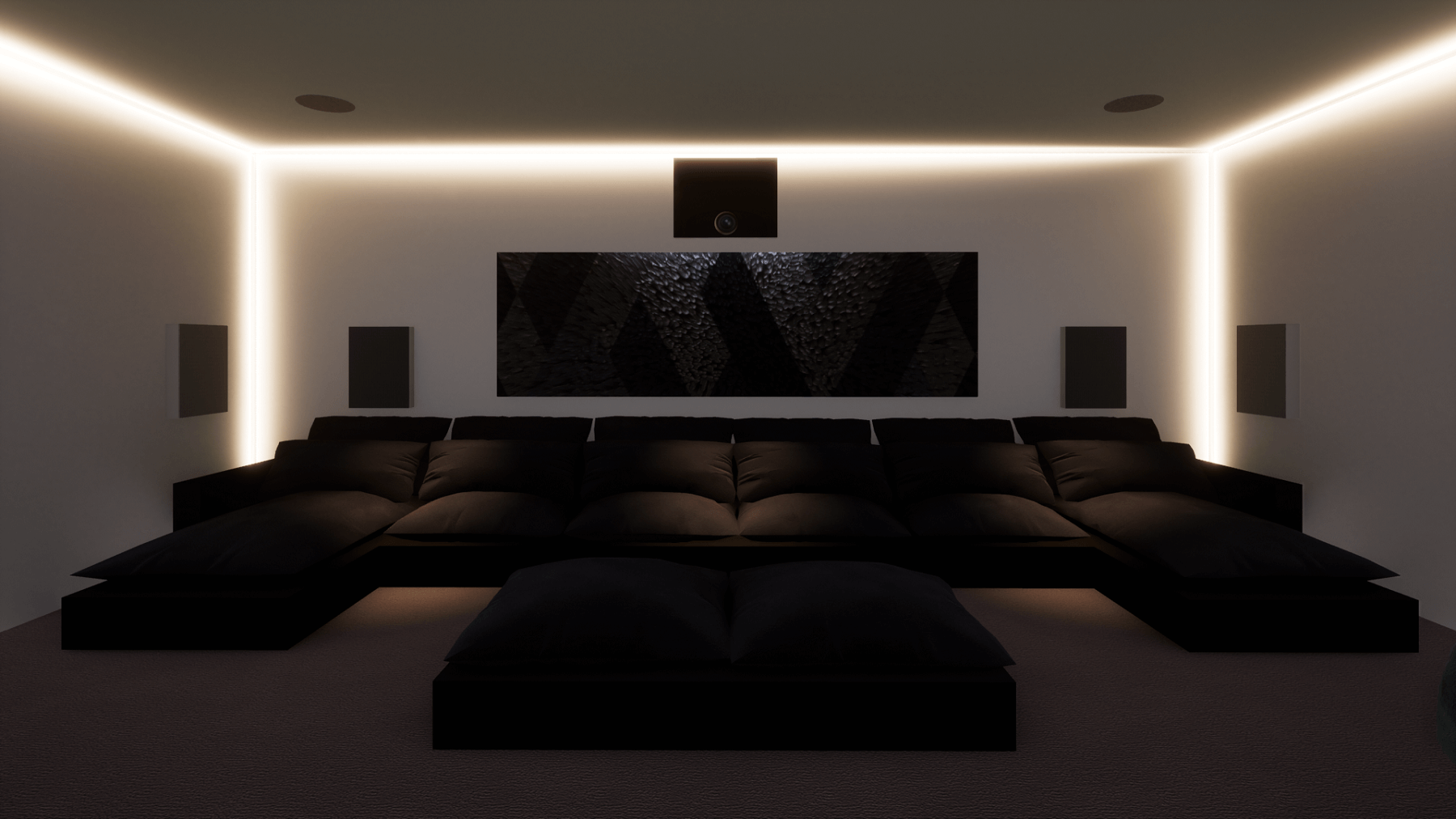
The Audio Video Package
The room lends itself perfectly to a large 3.8m wide projector screen with the projected image provided by a Sony laser projector. This is a combination we install in the vast majority of our cinema rooms and it works perfectly – delivering a crisp and clear image which rivals an OLED or plasma TV.
Audio is provided by our friends at Artcoustic Speakers in a 7.2.2 format – seven speakers providing surround sound, enhanced by two subwoofers (also installed behind the screen) and two ceiling speakers for height channels. This combination absolutely excels in a room like this and the flexibility of the Artcoustic range allows us to design a speaker package up or down to meet a clients budget needs.
Our Home Cinema & Home Theater Services
Read more about our Home Cinema and Home Theater work:

Home Cinema

Cinema Design

Calibration

Acoustics

Seating
Lighting Design & Control
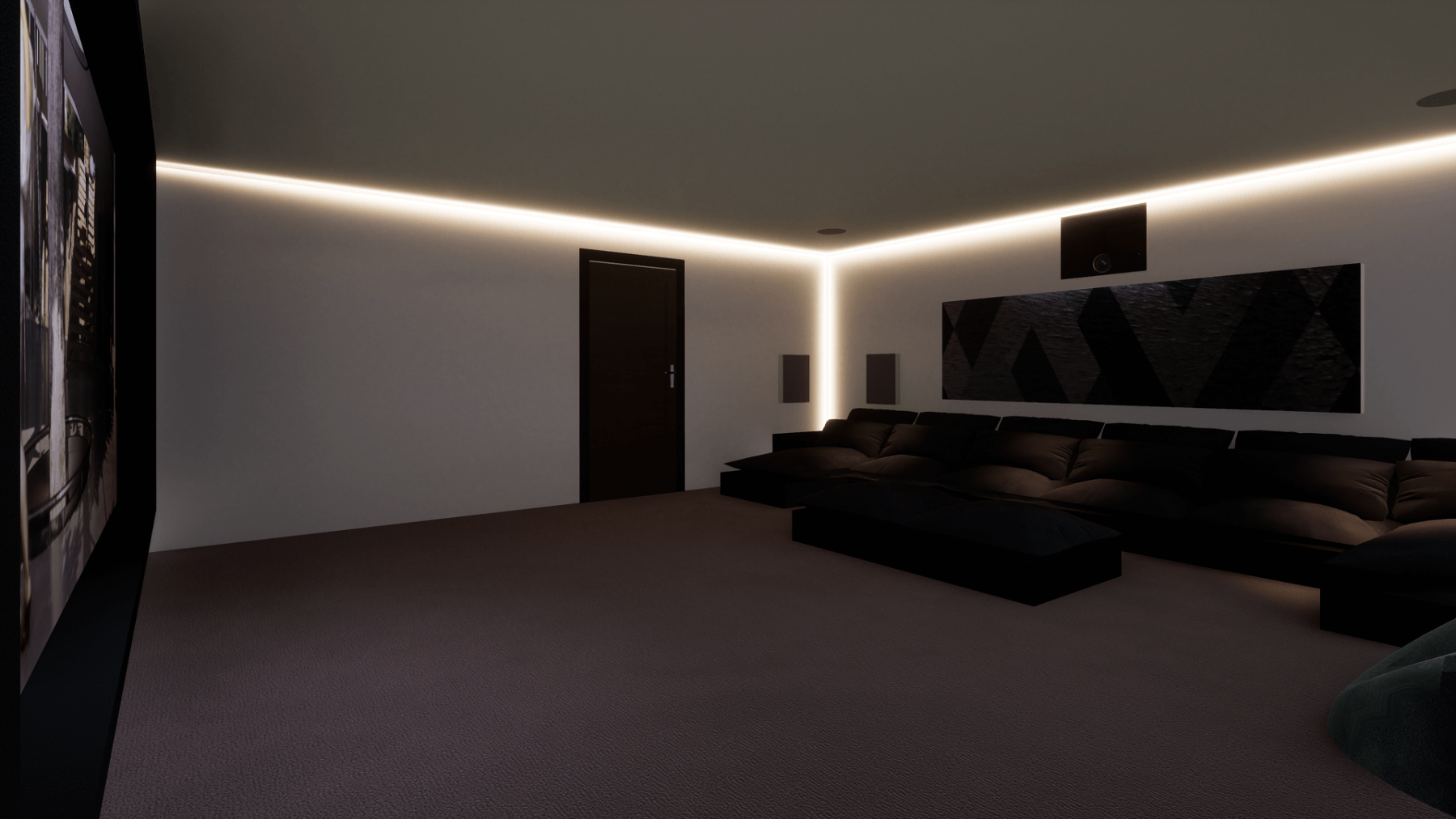
Lighting design in Cinema Rooms is crucial to providing an enjoyable experience but a delicate balance has to be struck – the lighting should not detract from the enjoyment of the room. This is a relatively simple room but has a relatively advanced lighting design. LED strip lights run along the edges of the walls and ceiling and drop down the back walls with recessed LED spotlights in the ceiling above the seating area. Each light can be individually controlled by a Lutron lighting control system, integrated with the Crestron control system, which allows perfect lighting scenes to be recalled at the touch of a button.
If you have an unused garage and would like a space to enjoy time with your family then please do get in touch to see how we can help.
Walkthrough Video
Project Specification — Hale, Cheshire Garage Cinema
This double garage conversion in Hale, Cheshire is one of our most frequently referenced projects when clients ask whether a garage can realistically become a dedicated cinema room. The answer, as this project demonstrates, is emphatically yes — and in many ways a garage offers advantages over a purpose-built internal room. The existing concrete floor provides excellent acoustic mass. The detached or semi-detached structure means sound transmission to neighbouring rooms is minimal. And the double-width footprint typically gives enough room for a proper screen, a meaningful speaker array and comfortable seating for six or more.
The project brief was clear: a cinema room that looked and performed like a dedicated screening room, with no external evidence of the conversion. The existing garage door was retained in place — preserving the street scene and avoiding any planning considerations — with an insulated acoustic stud wall constructed directly behind it. This stud wall serves multiple purposes simultaneously: it houses the front left, centre and front right Artcoustic speakers behind an acoustically transparent fabric, carries substantial acoustic absorption material to control early reflections from the screen end of the room, and provides the structural surface on which the 3.8m projector screen is mounted.
The Technology
Projection
A Sony laser projector provides the image — the same projector specification we use across the majority of our dedicated cinema rooms. Sony’s laser light engine delivers a brightness and colour accuracy that lamp-based projectors cannot match at this price point, with a rated laser life of 20,000 hours that effectively eliminates lamp replacement costs entirely. The 3.8m screen width at the client’s viewing distance delivers an angular screen size that genuinely fills the visual field — one of the key differences between a cinema room and watching a television.
Audio — Artcoustic 7.2.2 Dolby Atmos
A 7.2.2 Dolby Atmos configuration provides the audio — seven surround channels, two subwoofers and two ceiling height channels for Atmos object audio. The front three channels are housed behind the acoustically transparent front wall fabric alongside the screen. Surround and rear channels are Artcoustic wall-mounted speakers in matching finish, and the two Atmos height channels are Artcoustic in-ceiling models. The two subwoofers are also positioned behind the front wall, giving the bass energy a clean and even path into the room without the placement compromises that visible subwoofers require.
Acoustic Treatment
The room acoustic design relied on a combination of structural treatment and furnishing choices. The front stud wall carries a substantial quantity of acoustic absorption behind the fabric — controlling the first reflection from the screen and preventing the bass energy from the subwoofers from building up at the screen end. The rear of the room uses the velvet sofa’s high back as a natural diffuser, and the thick pile carpet provides significant mid and high frequency absorption across the full floor area. The result is a room with a controlled reverb time appropriate for cinema reproduction — not a dead room, but a room where the audio system’s imaging and dynamics are not compromised by the space it sits in.
Control
The cinema is controlled via a Crestron system, allowing a single button press to lower the screen, warm up the Sony projector, set the Dolby Atmos receiver to the correct input and recall the Lutron cinema lighting scene simultaneously. The client can also control the system from the Crestron app on their phone — useful for turning the projector off remotely if it has been left running.
Lighting
Lutron lighting control manages all lighting scenes in the room — a bright scene for entering and leaving, a cinema scene with the room at the correct low level for film viewing, and a cleaning scene at full brightness. The lighting transitions are programmed to be slow and cinematic rather than abrupt — the room dims gradually when a film starts rather than switching off instantly.
The Result
The finished room is indistinguishable from a purpose-built internal cinema. Visitors who do not know the room was once a garage consistently fail to identify it as such. The acoustic performance comfortably exceeds what most internal room conversions achieve, precisely because the garage structure provides inherent acoustic isolation advantages. And the 3.8m screen at the client’s viewing distance delivers a genuinely cinematic experience — the kind of image size that makes the difference between watching a film at home and watching a film.
This project is a regular reference point for clients in Cheshire and across the North West who are considering a garage conversion. If you have a double garage and the ambition for a cinema room, the conversation is worth having.
Frequently Asked Questions — Garage Cinema Conversion, Hale
Does a garage cinema conversion need planning permission?
In this Hale, Cheshire project, the original garage door was retained externally, preserving the street scene and avoiding planning considerations entirely — the same approach we follow for most garage cinema conversions.
Can a garage actually outperform a purpose-built internal cinema room?
In several respects, yes. A garage’s concrete floor provides excellent acoustic mass, and its detached or semi-detached structure means minimal sound transmission to neighbouring rooms — genuine advantages over many internal room conversions.
How is sound leakage prevented when the garage door is left in place?
An insulated acoustic stud wall is built directly behind the original garage door, carrying substantial acoustic absorption material and housing the front speaker array — fully isolating the room’s interior from the door itself.
Project Details
- Location: Hale, Cheshire
- Room type: Double garage conversion
- Screen width: 3.8m
- Projection: Sony laser projector
- Audio: Artcoustic 7.2.2 Dolby Atmos
- Control: Crestron
- Lighting: Lutron
- Seating: Bespoke velvet wrap-around sofa
Read more about our home cinema installation service →
Home cinema acoustic design →
View more case studies →
Discuss your garage cinema conversion →
Home Cinema Installer Cheshire →
Crestron Installer Cheshire →
Lutron Installer Cheshire →