Installing the Ultimate TV Sound System
A Numbered Walkthrough of a Real, Fully Concealed System
Modern televisions are extraordinary — ultra-thin panels with pictures better than anything available a few years ago. The one area that’s genuinely got worse over the same period is the sound. The thinner the TV, the less physical space remains for a meaningful speaker, and manufacturers have had no choice but to fit smaller and smaller drivers as panels have slimmed down. Fortunately, there are plenty of options to enhance TV audio properly, from a straightforward soundbar through to a fully custom surround system. This article walks through one of the very best examples available — designed and built specifically for this project.
Our Home Cinema & Home Theater Services
Read more about our Home Cinema and Home Theater work:

Design

Calibration

Treatments

Seating

Theatres
The Ultimate TV Sound System
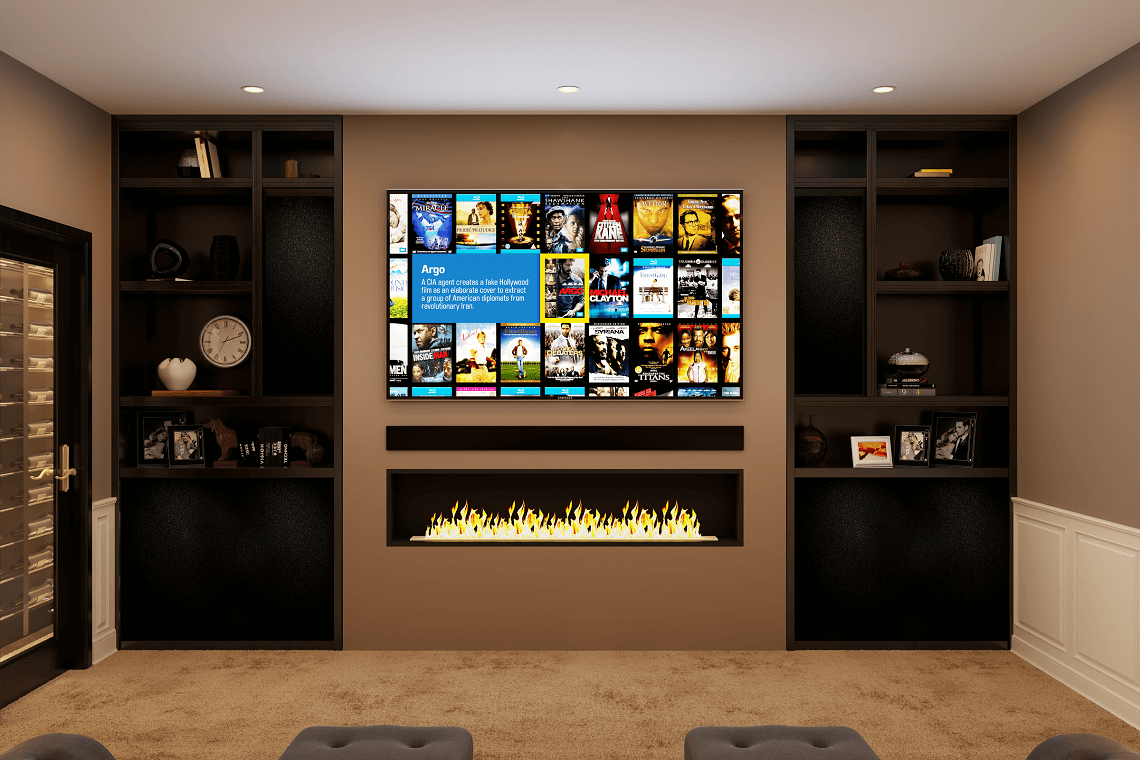
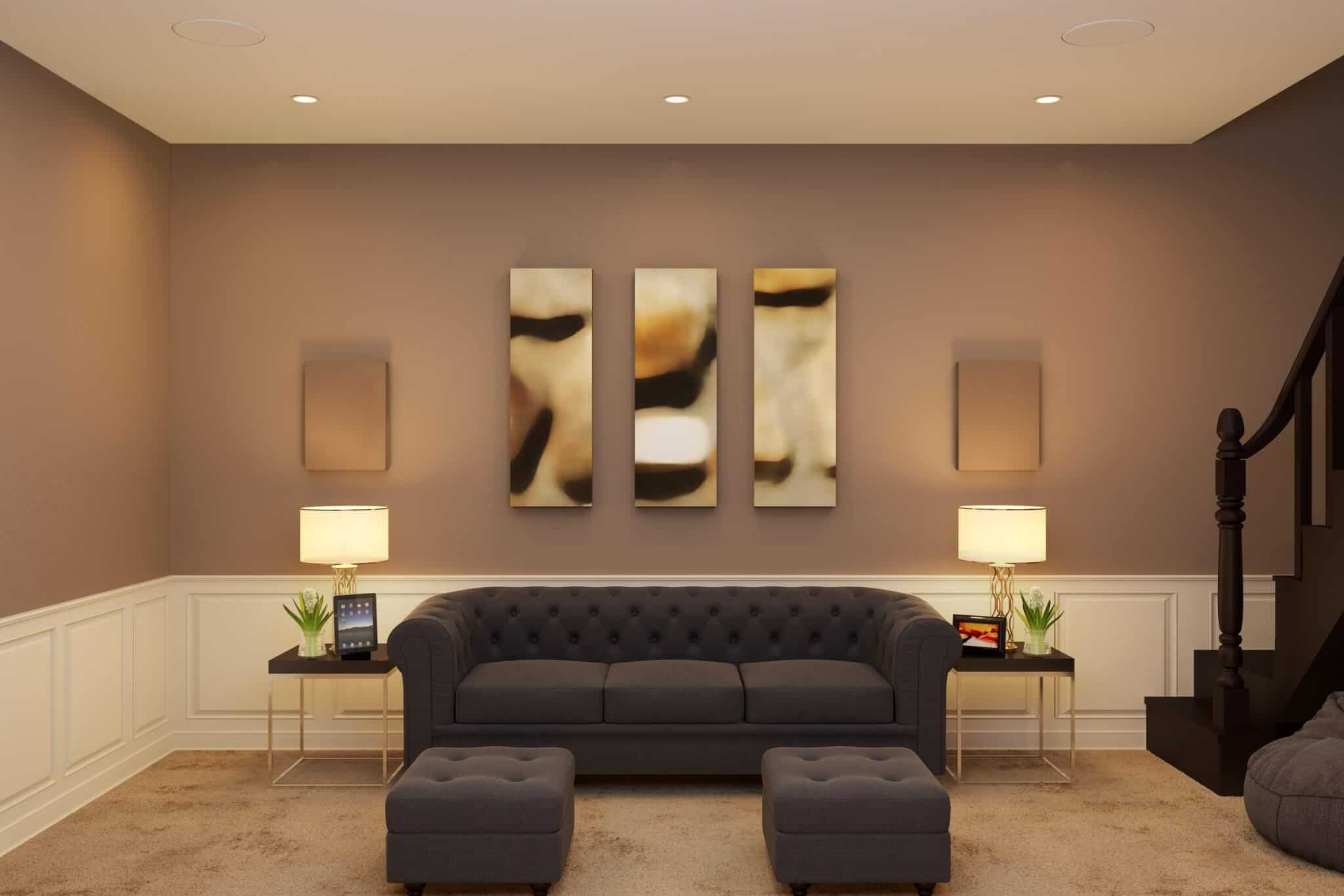
The photograph above shows exactly that — a system designed to be every bit as discreet as it is high-performing, and we’re going to break down every component. What’s actually in this room: a TV soundbar custom-built to the exact width of the screen, two speakers positioned either side of the TV (matched to its height), a substantial subwoofer providing low bass, and a rack of equipment powering every speaker and handling content streaming. At the rear of the room, two wall-mounted speakers are finished in a custom RAL colour matched to the walls, with two ceiling speakers providing height channels for 3D audio formats — shown in the photograph further down the page.
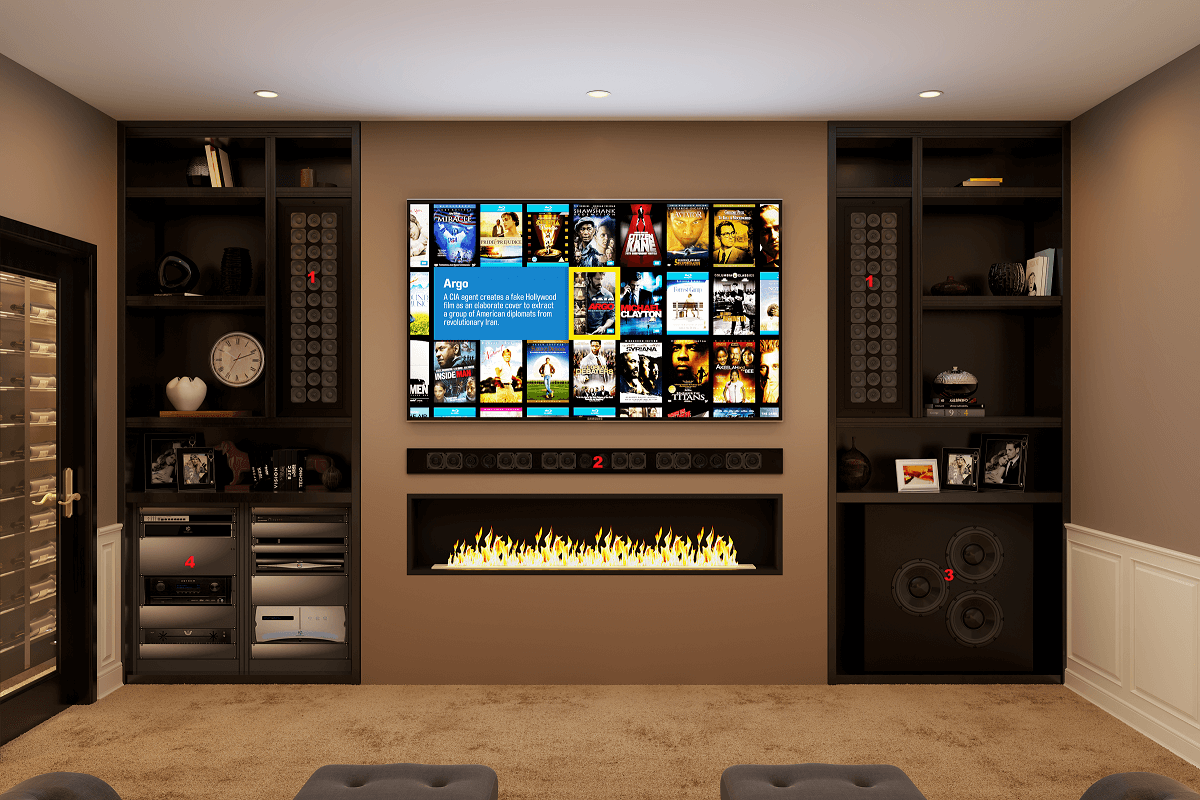
The image above shows the same system with the speaker covers removed, each component numbered and explained below:
- 1 — Artcoustic SL24-12 speakers. Installed in custom cabinetwork either side of the TV, providing front left and right audio for the surround system. These are the same speakers we specify in our high end home cinema rooms, so the pedigree behind them is genuinely exceptional.
- 2 — Artcoustic soundbar. Built to the exact width of the TV and recessed into the chimney breast for a clean aesthetic. The soundbar uses the same drive units as the side speakers, producing a uniform, consistent sound across the front stage.
- 3 — Artcoustic subwoofer. A system like this needs real bass, and this Artcoustic subwoofer delivers it — three 10-inch drivers producing substantial low-frequency output that reinforces the soundtrack and genuinely immerses the viewer in the action.
- 4 — The AV equipment rack. A system like this needs content to do it justice: this installation has every streaming service available via Apple TV, alongside Sky TV and a Kaleidescape Blu-ray server — a limitless library of content, all displayed at full 4K resolution.
- 5 — Artcoustic SL8-4 (pictured below). Rear surround channels are handled by on-wall Artcoustic speakers, colour-matched to the Farrow & Ball paint on the walls for a genuinely discreet finish.
- 6 — Artcoustic ceiling speakers. In-ceiling speakers provide height channels for 3D audio formats such as Dolby Atmos, completing a genuinely immersive audio experience.
Combined with the room’s broader aesthetic, this system creates a genuinely satisfying space to unwind with a film, a box set or live television.
Choosing a TV Surround Sound System
Every TV sound system sits somewhere on the same ladder, and the right rung depends on the room, how it’s used and how visible you’re prepared for the technology to be. A soundbar puts every channel into a single enclosure under the screen and relies on processing to suggest width and height. The best of them are impressive for their size, but they’re working against physics — surround effects are reflected off walls rather than delivered from where the director placed them, and bass is limited by the size of the cabinet.
The first genuine step up is a discrete front stage: separate left, centre and right channels, ideally built from the same drive units so dialogue and effects pan across the screen without a change in character. That’s exactly what the custom soundbar and side speakers in this installation do. Add dedicated surround speakers at the sides or rear and a subwoofer, and you have a true 5.1 TV surround sound system; add two or four overhead speakers and it becomes a 5.1.2 or 5.1.4 Dolby Atmos system, with height effects arriving from above rather than being simulated.
In-wall, on-wall or in-ceiling. In-wall and in-ceiling speakers disappear almost completely behind paintable grilles and are the natural choice in a new build or major renovation. On-wall speakers like the Artcoustic surrounds in this room suit a finished space where chasing walls isn’t an option, and can be colour-matched so they read as part of the decoration.
Processing and calibration. The AV receiver or processor decodes Dolby Atmos and DTS:X, manages bass between the speakers and subwoofer, and handles room correction. A TV connected over HDMI eARC can pass lossless multichannel audio from its built-in apps to the processor, but for the best results sources such as Apple TV, Sky and Kaleidescape connect to the processor directly. Measured calibration — levels, distances, crossovers and EQ set with a microphone at the listening positions — is what turns a collection of good speakers into a coherent system.
Control. A system with a TV, processor and several sources needs to be as easy to use as the TV speaker it replaces. We integrate the whole system into a single remote or keypad, often as part of a wider Crestron system, so one button turns on the screen, selects the source and sets the volume — and the room’s lighting too, if you want it to.
Frequently Asked Questions — TV Sound Systems
Why does modern TV sound need enhancing?
Modern televisions are extremely thin, leaving almost no physical space for a meaningful speaker. As panels have got slimmer, built-in speakers have necessarily got smaller too, which is why TV audio quality has generally declined even as picture quality has improved dramatically.
Can speakers be made to match the TV’s exact dimensions?
Yes. In this installation, both the soundbar and the side speakers are custom-built to match the TV’s width and height precisely, creating a uniform, integrated appearance rather than a mismatched collection of separate components.
Can rear and ceiling speakers be colour-matched to the room?
Yes. The rear surround speakers in this system are finished in a custom RAL colour matched to Farrow & Ball paint on the walls, so the speakers disappear into the room’s decoration rather than standing out as visible technology.
What sources does a system like this typically use?
This installation combines an Apple TV for streaming services, Sky TV for live broadcast, and a Kaleidescape server for reference-quality film playback — all displayed at full 4K resolution through a single rack of equipment.
Is a soundbar or a separate surround sound system better for a TV?
A separate system wins wherever it’s practical. A soundbar has to simulate surround and height effects from a single box under the screen, whereas a discrete system places real speakers where the sound is meant to come from and uses a proper subwoofer for bass. A custom soundbar like the one in this room is a good compromise at the front, provided it’s paired with genuine surround and height speakers.
What makes a TV surround sound system Dolby Atmos?
Height speakers. A Dolby Atmos system adds two or four overhead channels — in-ceiling speakers in this installation — to a conventional 5.1 or 7.1 layout, so sound can be placed above the listener. It also needs a processor that decodes Atmos and sources that carry it, such as streaming apps, Blu-ray or Kaleidescape.
If you’re looking for more inspiration on TV sound systems or home cinema generally, see our 40 Home Cinema Ideas gallery or our Top 5 Living Room TV Solutions post.