Living Room TV Solutions — The Complete Guide
Wall-hung, hidden, OLED, laser TV, soundbars and Artcoustic — how to build the perfect living room cinema
Updated June 2026 · Custom Controls · 25+ years installing living room AV systems
The living room is where most households spend the majority of their screen time, and the gap between a standard TV on a bracket and a properly designed living room cinema system is larger than most people realise. This guide covers every approach — from a clean wall-hung display with hidden sources to a disappearing TV behind a moving panel, from a Samsung OLED to a laser TV on a short-throw screen, and from a soundbar to a full Artcoustic surround system concealed entirely within the room. Whatever the brief, there is an approach that delivers a dramatically better result than a television on a stand.
Our Smart Home & AV Services

Smart Home

Music Systems

Mood Lighting

Security

WiFi
Display Options — Choosing the Right Screen Technology
OLED — the living room standard. OLED televisions from LG and Sony are the display technology we specify most frequently for living room installations. OLED delivers true pixel-level black — each pixel switches off completely rather than being masked by a backlight — which produces contrast ratios and black levels that no LCD technology can match. In a living room where some ambient light is unavoidable, OLED holds its image quality better than most competing technologies because the contrast is intrinsic rather than dependent on darkness. Current OLED screens are available up to 97″ in the LG G-series and Sony Bravia range, with Dolby Vision and 4K HDR across the full range. For most living room installations, OLED at 65″–77″ is the correct specification.
Samsung OLED and QD-OLED. Samsung’s QD-OLED panels combine quantum dot colour with OLED pixel structure, delivering slightly higher peak brightness than conventional OLED with comparable black levels. The Samsung S95 series is a strong alternative to LG and Sony OLED for clients who prioritise brightness and colour saturation, particularly in rooms with higher ambient light levels.
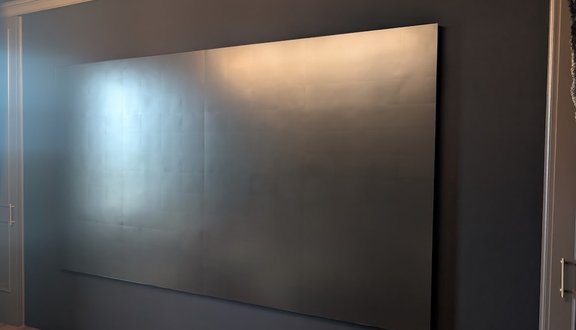
Laser TV — the projector alternative for living rooms. For clients who want a genuinely large screen — 100″–150″ — in a living room where ceiling-mounting a conventional projector is impractical, a laser TV is an increasingly compelling option. Laser TV units sit close to the screen — typically 20–50cm away — on a piece of furniture or low unit, and project onto a dedicated ambient light rejecting (ALR) short-throw screen. The result is a 100″+ image from a unit that looks like a soundbar when in use and requires no ceiling mount, no projector pocket and no long cable run.
Samsung The Frame. For clients who want a television that disappears aesthetically when not in use, The Frame TV displays artwork in the screen’s idle state. It sits flush to the wall with a zero-gap mount and a customisable frame that matches the room’s interior. In a formal sitting room where a television is a necessary concession rather than a welcome focal point, The Frame turns that concession into a feature. Read our full guide to The Frame and The Frame Pro.
Installation Approaches
1 — Wall-hung with hidden sources. The cleanest installation available. A centralised AV system positions all source equipment in a rack in another room or concealed in nearby cabinetwork. Only the display is visible. HDMI and signal cables run within the wall. This is our most common approach in London and Cheshire living room installations.
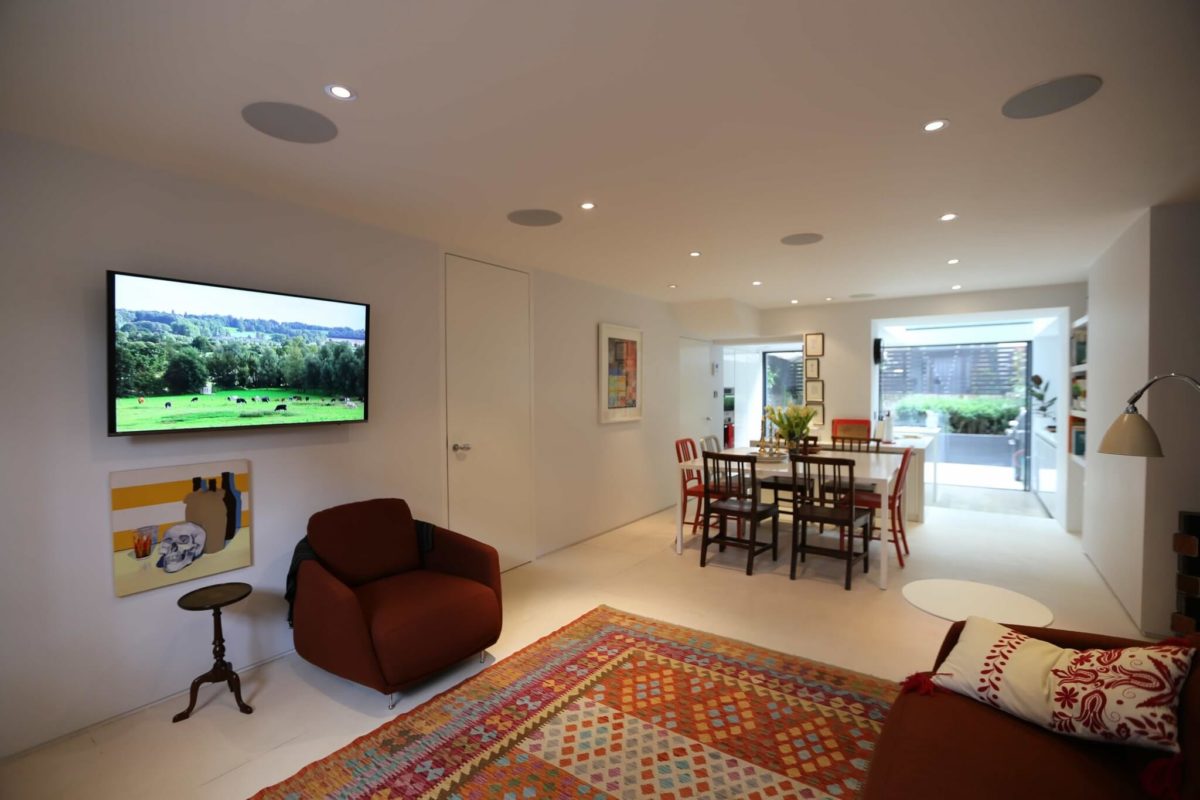
2 — Future Automation TV stands and mounts. Where a wall mount is not available or not suitable, Future Automation produces a range of freestanding TV stands and wall-mounted motorised brackets that bring flexibility to the display position. A motorised swivel version can rotate to face the kitchen for casual viewing and rotate back to face the sofa for film watching, triggered automatically by source selection from the Crestron system.
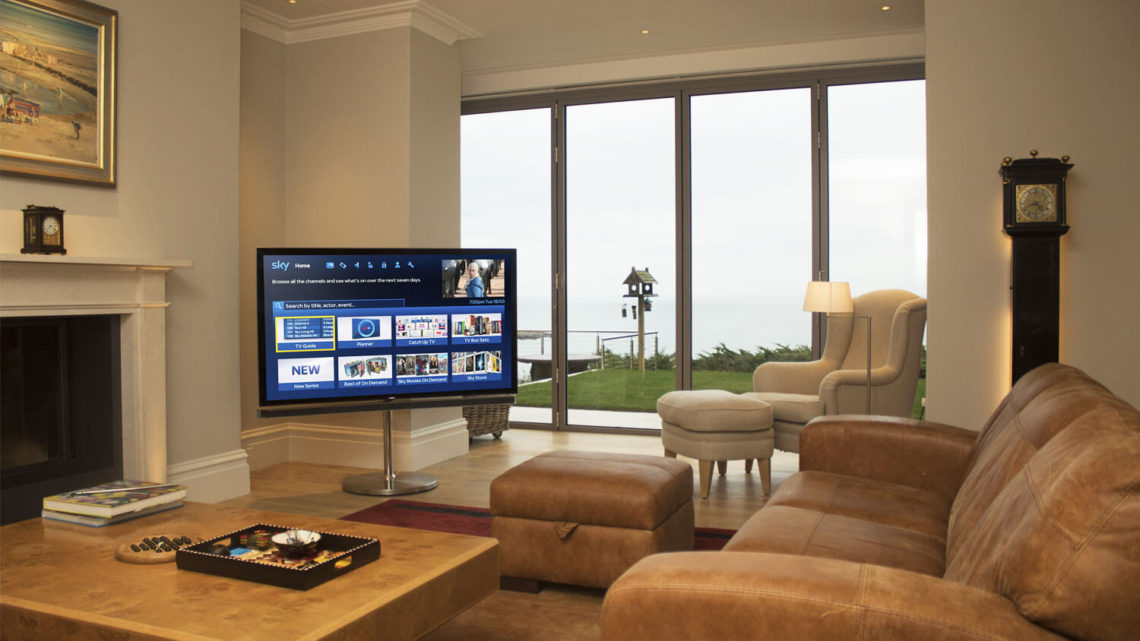
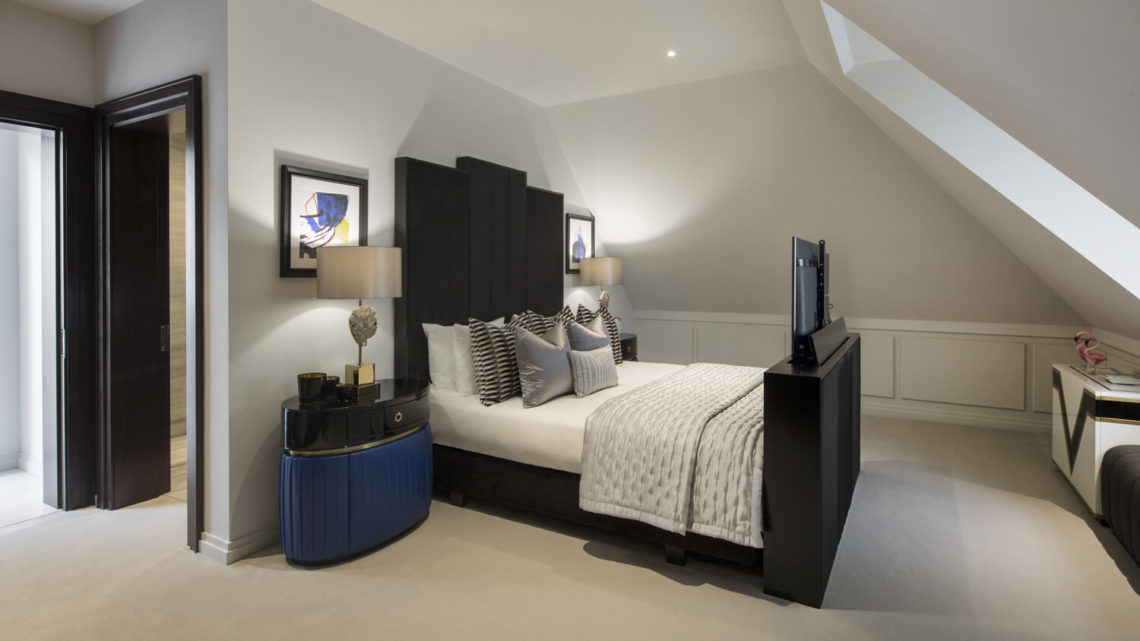
3 — Hidden TVs — lifts, moving panels and picture mechanisms. For clients who do not want the television to be the focal point of a room when not in use, Future Automation’s concealment mechanisms provide a range of solutions. A TV lift conceals the display within a piece of furniture or the floor structure. A moving panel mechanism slides or pivots artwork to reveal the TV behind it. All are programmable into the Crestron control system.
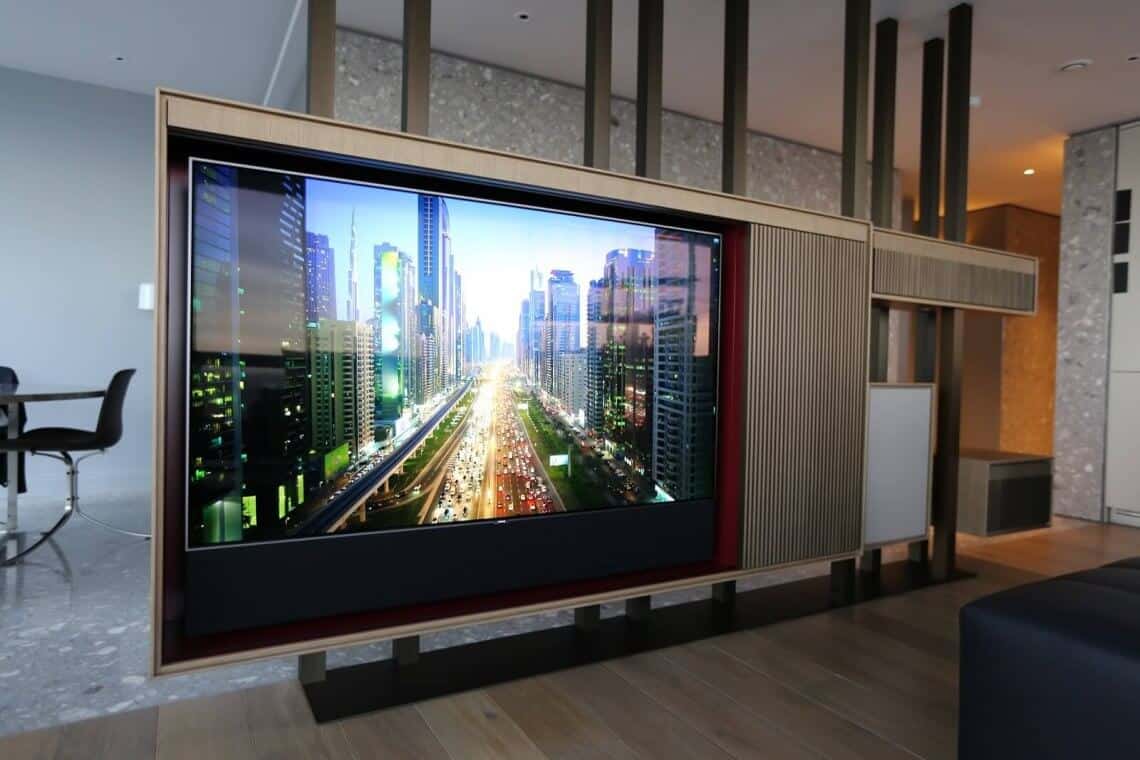
4 — Bespoke furniture integration. For the no-compromise living room, custom cabinetwork designed around the specific TV, soundbar and source equipment requirements delivers an installation that looks purpose-built rather than assembled. In our Canaletto Tower project a custom Italian-built unit houses the display with an under-mount soundbar, a subwoofer built into the cabinet structure and a sliding door that conceals everything when the system is off.
Audio — From Soundbar to Full Artcoustic Surround
The TV’s built-in speakers are the weakest element in any living room AV system. Every installation we deliver includes a meaningful audio upgrade.
Artcoustic bespoke soundbars. Artcoustic produces custom-width soundbars that match the exact width of the installed TV — available in any finish colour to match the wall, cabinetwork or TV bezel. Paired with a concealed subwoofer and optional on-wall or in-ceiling rear channels, a full Artcoustic surround system can be installed without any visible speaker grilles. Our Kensington living room cinema and the Chelsea living room cinema are reference installations for this approach.
Fully concealed in-ceiling and in-wall speakers. For living rooms where on-wall speakers are not acceptable, Sonance and Origin Acoustics in-ceiling speakers can be fully plastered in — no visible grille, no evidence of any speaker installation. The Belgravia living room cinema demonstrates this approach: the 75″ Samsung is the only visible piece of equipment; the 5.1 surround system is entirely within the ceiling and cabinetwork — Artcoustic 5.2.1 fully colour-matched and concealed within the room architecture, with an Anthem MRX-1120 AVR and full Crestron control tying the whole system together.
Anthem AVR processing. Whether the audio system is a three-channel soundbar or a full 7.2.4 Dolby Atmos configuration, an Anthem MRX AVR with ARC Genesis room correction delivers significantly better results than consumer AVRs at equivalent price points.
TV Mounting Height
The most frequent installation mistake in a living room TV installation is mounting the screen too high. The ideal position places the centre of the screen at seated eye level — approximately 100–110cm from the floor for most sofa heights. A motorised tilting mount — angling the screen slightly downward — compensates for screens that need to be positioned higher than ideal.
Living Room Cinema Case Studies
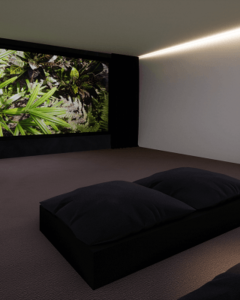
Kensington Basement Cinema — Artcoustic 5.2.1 fully colour-matched and concealed within the room architecture, Anthem MRX-1120 AVR and Crestron control.
Belgravia Living Room Cinema — 75″ Samsung, fully plastered-in Sonance 5.1 surround. No visible speakers, no visible hardware.
Modern Kensington Living Room — 55″ Samsung with Artcoustic 5.1 colour-matched on-wall surround.
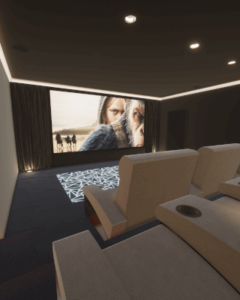
Chelsea Living Room Cinema — Samsung 75″ QLED with Artcoustic soundbar and 5.1, Anthem AVR and Future Automation rotating wall mount.
Hampstead Living Room — Future Automation moving panel mechanism concealing the TV completely behind artwork.
Frequently Asked Questions — Living Room TV Solutions
What is the best TV technology for a living room?
OLED remains our most frequently specified technology for living rooms, thanks to pixel-level black and contrast that holds up well even with some ambient light present. Samsung’s QD-OLED range is a strong alternative where higher peak brightness matters more.
Can I get a genuinely large screen in a living room without a ceiling-mounted projector?
Yes. A laser TV sits close to the screen on a piece of furniture and projects onto a dedicated ambient light rejecting screen, delivering a 100″+ image with no ceiling mount or long cable run required.
How high should a TV be mounted in a living room?
The centre of the screen should sit at seated eye level, typically 100–110cm from the floor for most sofa heights. A motorised tilting mount can compensate where the screen needs to be positioned higher than ideal.
Can a full surround sound system be installed with no visible speakers?
Yes. Fully plastered-in ceiling speakers, combined with a colour-matched soundbar and concealed subwoofer, can deliver genuine 5.1 or larger surround performance with literally no visible speaker hardware anywhere in the room.
Media Room Installation → · Artcoustic Speakers → · Future Automation Lifts → · Whole-Home AV → · Contact Us →