Crestron Systems for Clients with Disabilities
How Home Automation Can Make Life Easier
A Crestron Home Automation system can make life considerably easier for clients with a disability — reduced mobility, limited vision or hearing loss among them. A well-designed system increases independence and reduces day-to-day reliance on a carer for tasks that automation can handle reliably instead. For the broader picture of how Crestron supports independent living, including voice control and Josh.ai, see our companion guide: Crestron for Accessibility, Voice Control and EV Charging →
How Crestron Home Automation Actually Helps
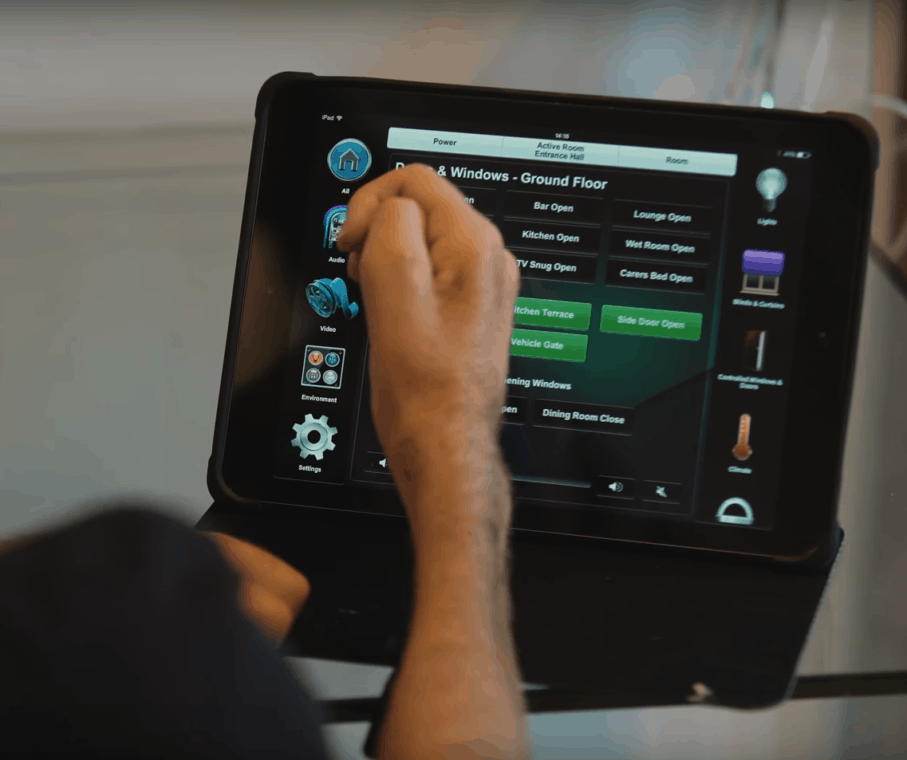
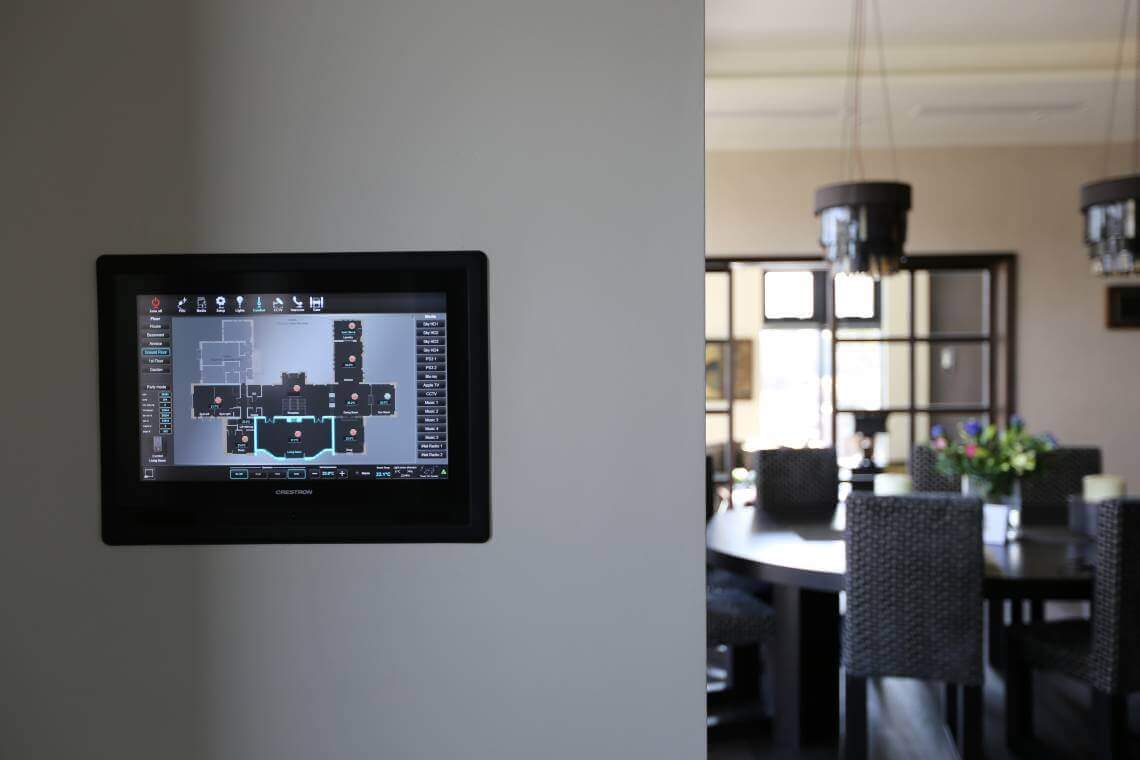
A Crestron system can control — and therefore automate — virtually anything electrical in a home. A single button press, voice command or time schedule can carry out preset actions exactly when needed. For someone with limited movement, something as simple as closing the curtains can be a genuine daily struggle, or something that currently requires a carer’s visit to manage. With a Crestron system, curtains can close automatically at nightfall with lighting brought up to a preferred level at the same time — or closed on demand by a button press or voice command. Every solution is designed around the specific person it’s for, rather than a generic specification: buttons are sized for the range of movement a client actually has, high-contrast text is used where vision is limited, and the interface is built around what genuinely suits that household.
Our Crestron Services
As an experienced UK Crestron dealer, we offer a full range of Crestron services. Click an icon below for more details:

Home
Automation

Lighting
Controls

Audio Video

Programming

Support
Examples of Home Automation Supporting a Disability
- Curtains and blinds. Closed by a button press, a voice command, or automatically at nightfall — removing a daily task that can otherwise require physical effort or a carer’s assistance.
- Doors. Both entry/exit doors and internal doors can be automated, providing privacy and easier access without anyone needing to physically operate a handle or push a heavy door.
- Security and fire integration. For clients with limited vision or hearing, alarms can be linked to lighting circuits to provide a clear visual signal alongside an audible one, and doors can automatically seal off the source of a fire to help maintain a safe means of escape.
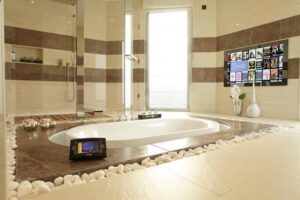
- Bath and shower control. Voice or single-button control of water temperature removes the need to manage fiddly physical controls, particularly valuable for anyone with limited dexterity or grip strength.
- Communication. Voice-driven calling and messaging removes the need to type, opening up communication options for clients who find a keyboard or touchscreen difficult to use.
- Audio video control. Modern Crestron remotes and the Crestron Home app support voice commands directly, so selecting a favourite programme, a film, or a podcast is as simple as asking for it.
- Heating and cooling. The same voice or touchpanel control extends to climate — adjusting temperature or ventilation without needing to locate or operate a separate thermostat.
- Lighting. A single button press controls every light in a room or zone, and adding voice control makes this even more accessible for clients who find physical switches difficult to reach or operate.
- Location-aware comfort. For clients who want it, a Crestron system can recognise which room is occupied and bring lighting and heating to the right level automatically as they move through the home, with music following them between rooms and doors opening automatically as they approach — entirely optional, and only ever configured with the client’s full knowledge and consent.
- Intercom and door access. Two-way communication with the front door or gate lets a client see and speak to a visitor before deciding whether to grant access, without needing to physically reach the door.
Frequently Asked Questions — Crestron for Disability and Accessibility
Can a Crestron system be customised for a specific disability?
Yes. Every interface is custom designed — larger buttons for clients with limited range of movement, high-contrast text for clients with limited vision, voice control for clients who find physical interfaces difficult — built around the specific person rather than a generic specification.
Can Crestron automate doors for someone with limited mobility?
Yes. Both entry and exit doors and internal doors can be automated, opened by voice command, button press or automatically as someone approaches, removing the physical effort of operating a handle or pushing a heavy door.
Can Crestron help with safety for clients with limited vision or hearing?
Yes. Alarms can be linked to lighting circuits to provide a visual signal alongside an audible one, and the system can automatically seal off a room in the event of a fire to help maintain a safe escape route.
Crestron Home Automation can meaningfully improve quality of life for clients with disabilities — the examples above are a starting point, not a limit. We design every system around the individual client’s actual needs. Get in touch to discuss how a system could help.