Ultimate Gaming Rooms — High-End Home Cinema Systems for Gaming
Why a properly designed cinema room is the finest gaming experience available
Updated June 2026 · Custom Controls · 25+ years installing home cinema and gaming rooms
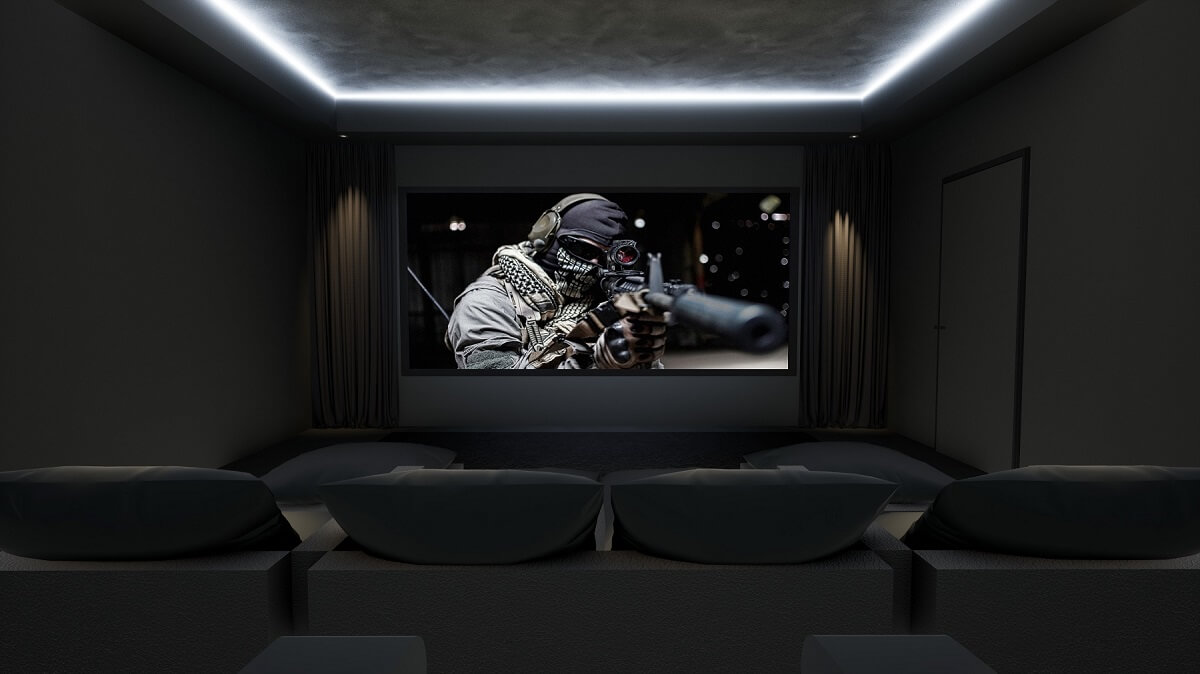
The finest gaming experience available is not a high-end gaming monitor with headphones. It is a 4m projector screen, a full Dolby Atmos surround sound system, a darkened room with custom lighting and a seat you could spend eight hours in without discomfort. Everything that makes a cinema room exceptional for films makes it exceptional for gaming — and in many respects gaming benefits even more from the full cinema treatment than film does. The frame rates are higher, the spatial audio is more reactive to the player’s actions, and the scale of the image changes the game from a screen you are watching to an environment you are inside.
Our Home Cinema Services

Design

Calibration

Installation

Seating

Treatments
The Visual Difference — Scale and Immersion
A 65″ television is approximately 1.4m wide. A standard home cinema projection screen is 2.5–4m wide — two to three times the width. At normal gaming viewing distances, the difference in visual field coverage is the difference between a game you observe and a world you inhabit. In a first-person shooter, enemies approach from outside your central vision and you instinctively turn. In a racing game, the peripheral view of the track boundaries and approaching corners is experienced as spatial awareness rather than screen data. In an open-world game, the horizon genuinely recedes into the distance.
The current Sony and JVC 4K laser projectors we specify deliver gaming images that are sharper, brighter and more colour-accurate than any television at any price. The 4K resolution at large screen sizes means pixel density is maintained — there is no loss of sharpness on a 4m screen compared to a 65″ television at the equivalent viewing distance.
Input lag. The one area where projectors historically compared poorly to monitors was input lag — the delay between controller input and on-screen response. Current Sony and JVC projectors include a dedicated gaming mode that reduces input lag to under 20 milliseconds — imperceptible to any player in any genre. This is a meaningful change from even five years ago, where gaming mode was an afterthought on most projector ranges.
High frame rate. Current Sony 4K laser projectors support 4K at 120Hz — the same high frame rate that the PlayStation 5 and Xbox Series X deliver on their highest-performance titles. Combined with the 4K resolution and the scale of the projected image, the result is a gaming image that no display technology can surpass.
The Audio Difference — Spatial Sound at Scale
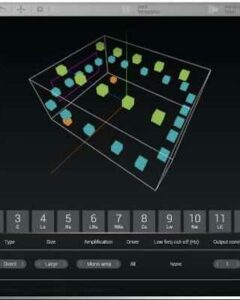
Gaming audio has advanced significantly in recent years. Major titles now incorporate spatial audio — Dolby Atmos, DTS:X or proprietary systems like Sony Tempest — where sounds are positioned as objects in three-dimensional space rather than assigned to fixed speaker channels. Footsteps above you, helicopters moving from left to right overhead, rainfall that arrives from above rather than from speakers at ear level: all of this requires height channels and a capable processor to render correctly.
A full Artcoustic Dolby Atmos speaker system — with front, surround and height channels — renders spatial gaming audio at the level the game’s audio engineers intended. The difference between Dolby Atmos gaming audio on a proper multi-channel system and the same title on a soundbar or headphones is not subtle. The spatial precision of the audio provides genuine in-game information: you hear where threats are approaching from before you see them. In competitive gaming, this is an advantage. In immersive single-player gaming, it is the difference between playing a game and experiencing it.
Tactile transducers. For gaming rooms, tactile transducers — installed under the seating and driven from the subwoofer channel — add a physical dimension to the audio. Explosions, impact events and bass-heavy environmental sound are felt as physical vibration through the seat. In a racing game, the rumble of different road surfaces translates directly into the chair. It is the closest thing to a force-feedback cockpit without the complexity.
Lighting Design for Gaming
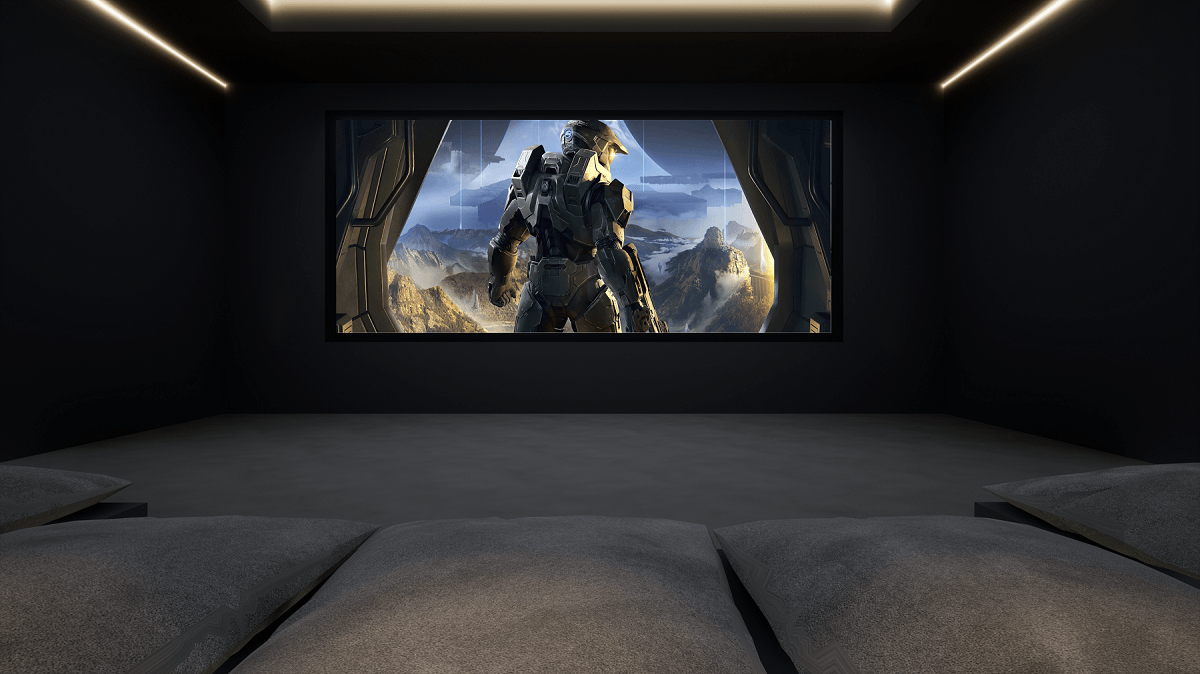
Cinema room lighting design translates directly to gaming. The same principles apply: a dim ambient level that allows navigation without casting light on the screen, controlled RGB LED strip that can be tuned to different colour temperatures and intensities, and individual seat lighting for those who need to see a controller without affecting others in the room.
For gaming rooms specifically, bias lighting — LED strip behind the screen or display, tuned to match the screen’s white balance — reduces eye strain during long sessions. A Lutron lighting control system allows custom gaming scenes to be programmed and recalled from a keypad: a high-energy mode with reactive RGB lighting for competitive sessions, a softer ambient mode for story-driven games played with others.
The Console Setup
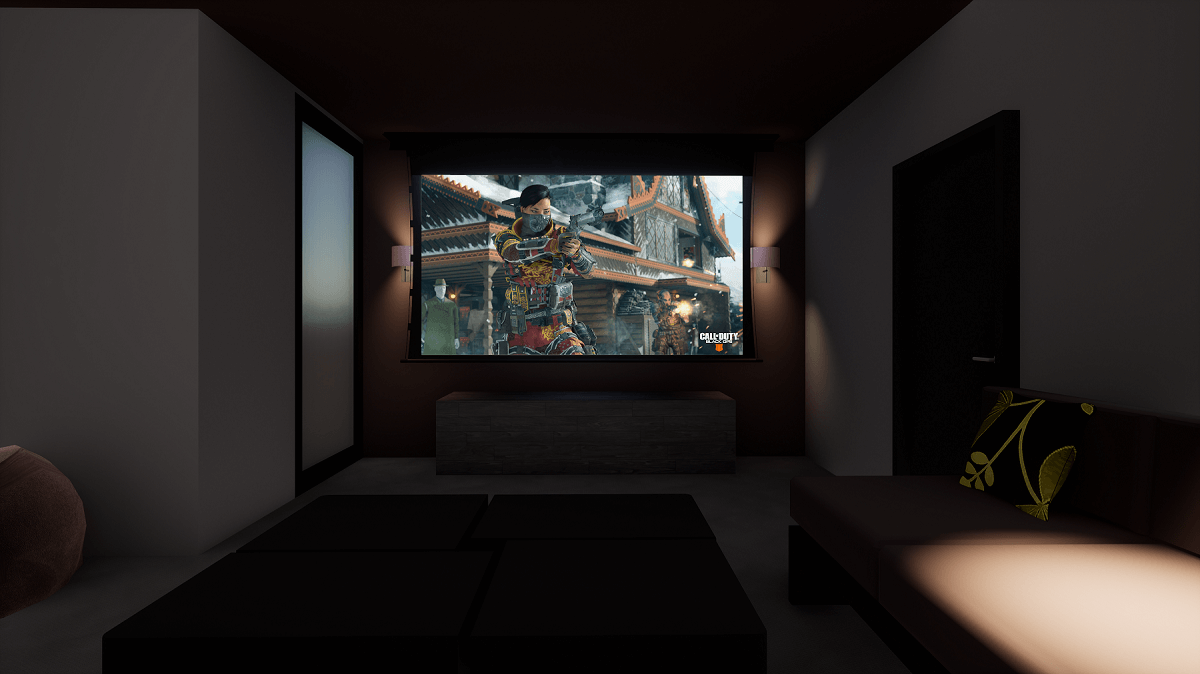
PlayStation 5, Xbox Series X and current gaming PCs all deliver 4K HDR output via HDMI 2.1. In a cinema room installation, the console is rack-mounted in the equipment room or cabinet — out of sight, out of the way — with the HDMI signal routed through the AV processor or distributed via the Crestron matrix to the projector. An HDMI input plate on the wall of the gaming room allows any additional source — a portable gaming device, a laptop, a friend’s console — to be connected to the full cinema system instantly without touching the rack.
Multiple consoles can be pre-installed in the rack and selected from the Crestron touchpanel interface alongside film sources. The transition from watching a film to gaming is a single button press — the processor switches input, the lighting adjusts to gaming mode and the projector remains on.
Multi-Player Gaming
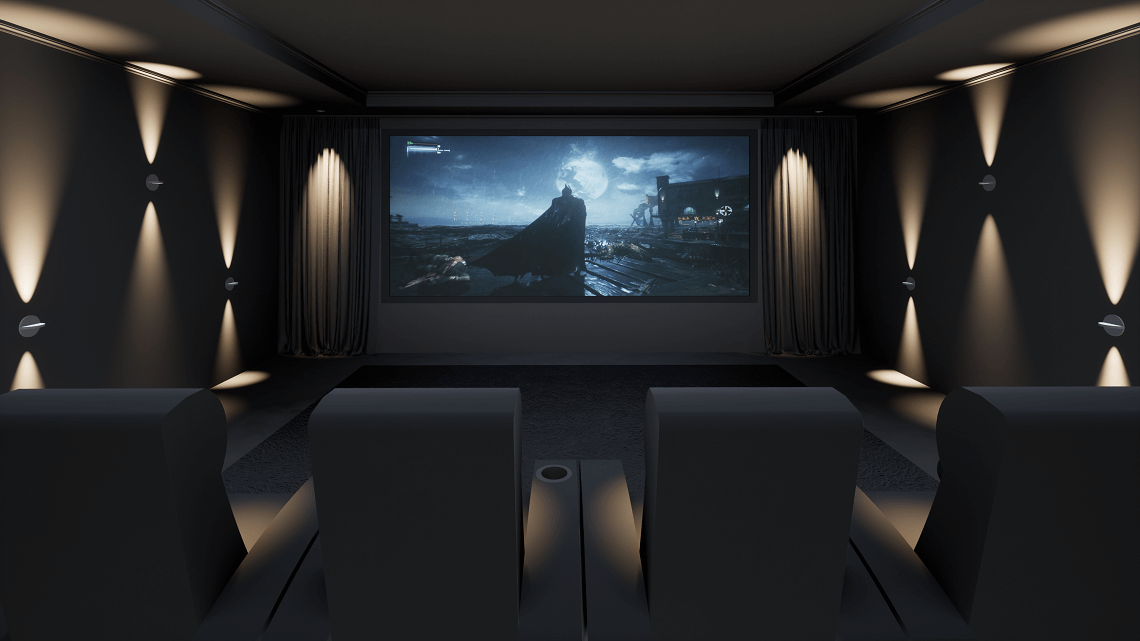
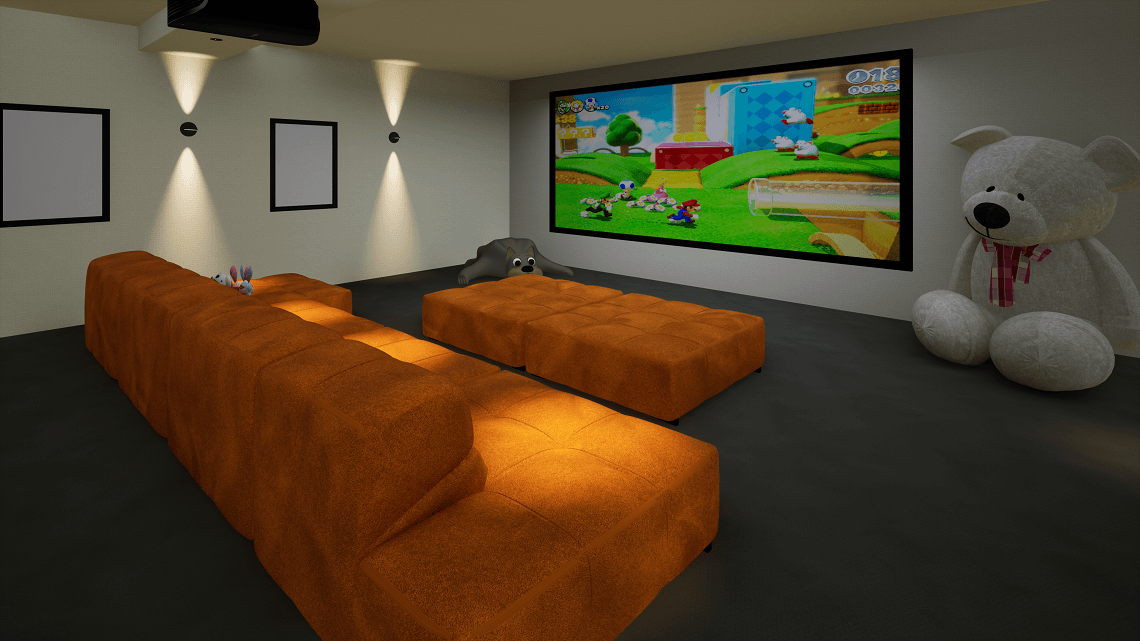
A cinema room with proper tiered seating and a 4m screen is the finest multi-player gaming environment available in a private home. Four players on a split-screen title each have a quarter of a 4m screen — still larger than most people’s entire television. A party game on the big screen with eight people in Cineak recliners and full surround sound is an experience that clients who have hosted it describe as the highlight of their social calendar.
Clients with children consistently report that the gaming room becomes the primary reason the cinema room is used daily rather than occasionally — the weekly family gaming night is the event that justifies the space.
Gaming Room Case Studies
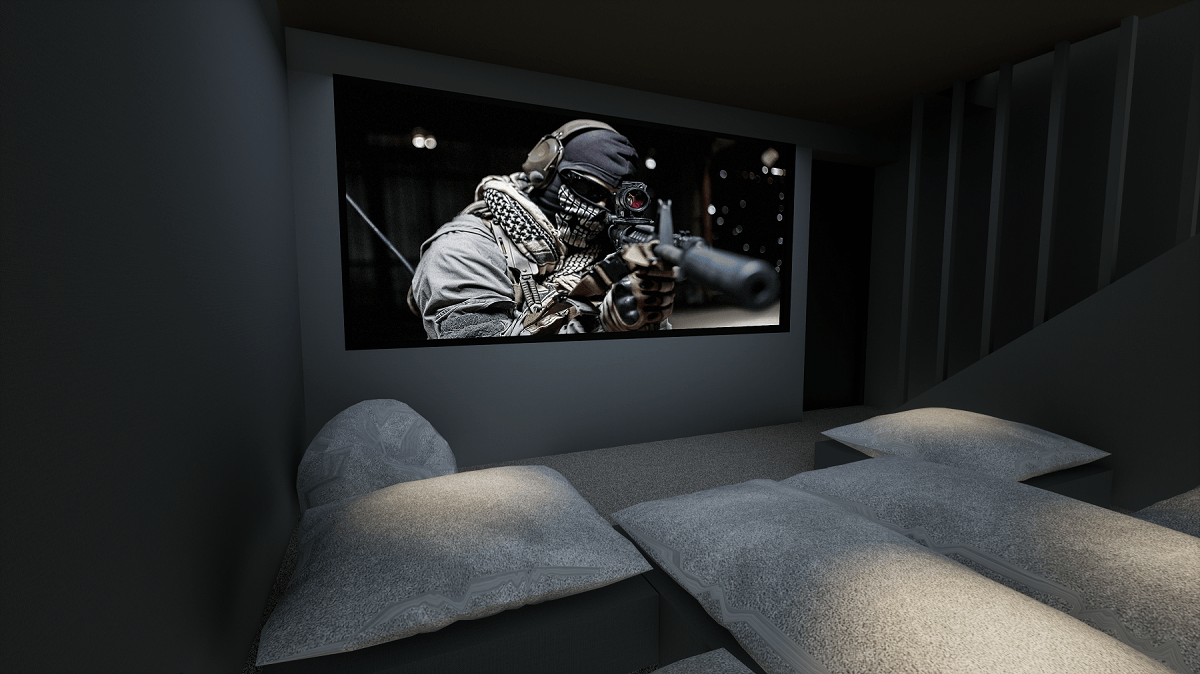
Gaming Room — Cheshire
Family Gaming Room — Dubai
Lake District Cinema and Gaming Room
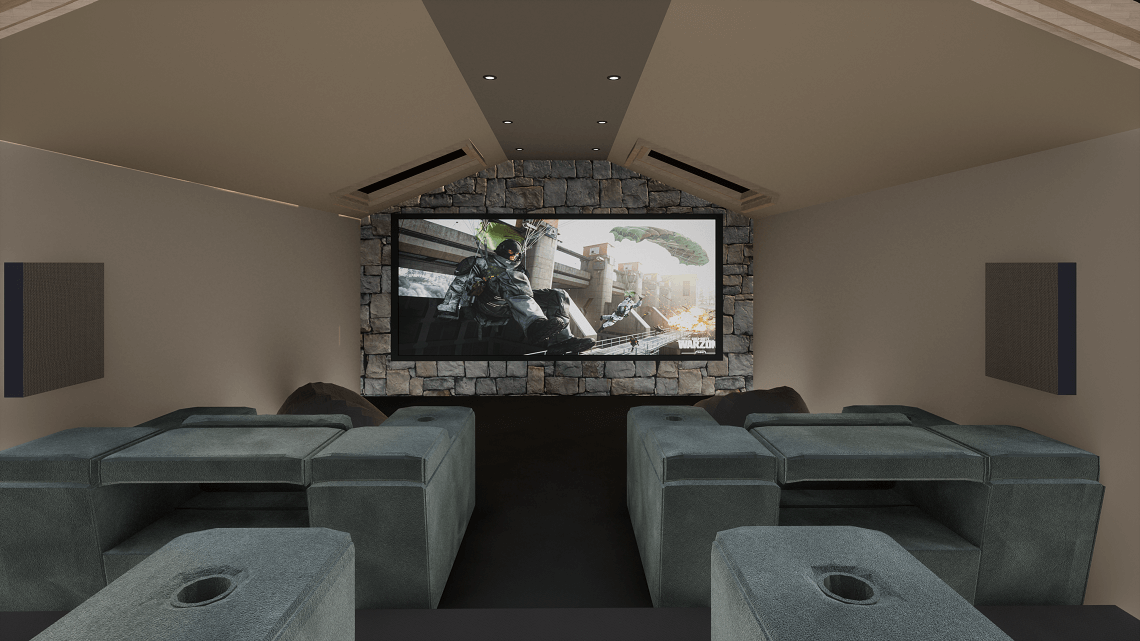
Garage Gaming Room — Hale, Cheshire
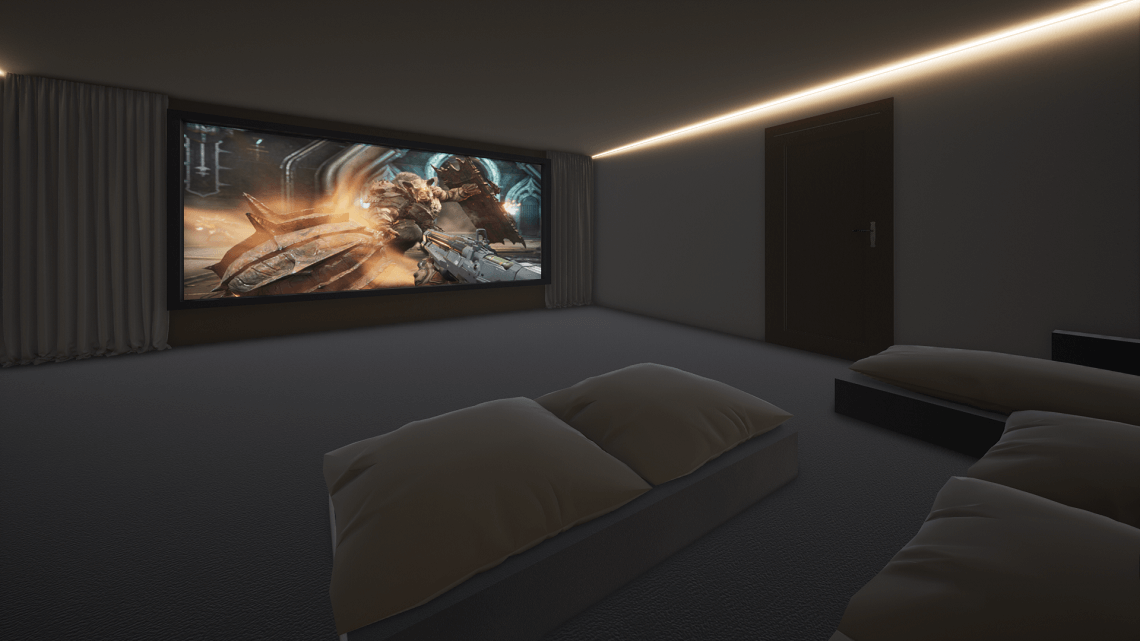
Games Room and Cinema — Prestbury, Cheshire
Home Cinema Installation → · Top 40 Cinema Ideas → · Cinema Seating → · Cinema Lighting → · TV Sound System Guide → · Contact Us →