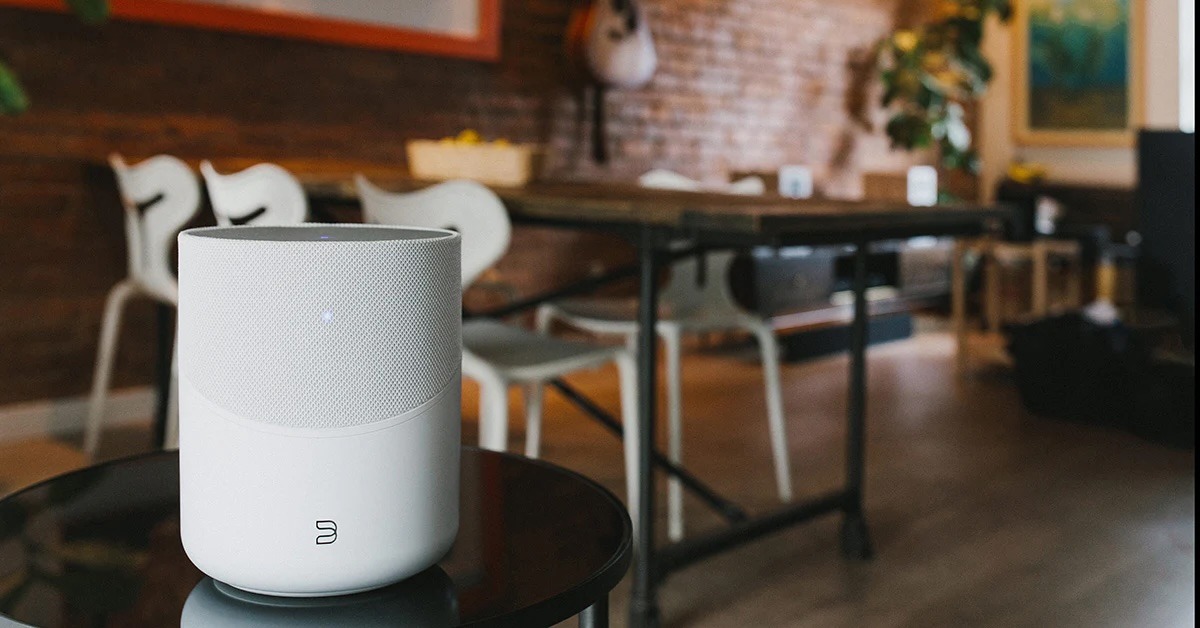
Bluesound & NAD: The Definitive Guide to Whole House Audio
High end Whole Home & Multi-room Audio
There is a particular kind of frustration that comes from a whole-house audio system that works brilliantly in a showroom and becomes a source of daily irritation in a real home. The music stops when the internet hiccups. The app loses track of your speakers. Guests cannot figure out how to play a song without calling for help. Systems that represent a major investment deliver a worse experience than a Bluetooth speaker on the kitchen counter. This is the problem that Bluesound — and NAD Electronics, its sister brand within the Lenbrook group — was created to solve. Founded by audiophiles dissatisfied with the compromises of early streaming systems, Bluesound built BluOS entirely from scratch: a dedicated, music-only operating system designed to work reliably, sound exceptional, and remain simple enough for every member of a family to use without instruction.
More than a decade on, BluOS underpins products across a growing family of brands — including NAD, PSB, DALI, Cyrus, Roksan, and Monitor Audio — creating an ecosystem of remarkable breadth. A Bluesound Node on a high-end stereo rack, ceiling speakers in a kitchen, and a compact all-in-one wireless speaker in a guest bedroom can all live within the same system, managed through a single app, playing in perfect synchrony. For our clients, Bluesound and NAD have become the platform of choice for installations of every scale — from a carefully considered two-room apartment system to sprawling multi-building estate installations spanning dozens of independent zones. The reasons consistently come down to three things: reliability, flexibility, and software that genuinely respects how real people live with music.

Multi-Room Audio

Smart Home

WiFi & Networks

Crestron

Home Cinema
One Ecosystem, Infinite Configurations
What makes Bluesound and NAD so compelling for professional installers — and so transparent for clients — is the deliberate architecture of the platform. Every device, regardless of form factor or price point, runs the same BluOS operating system and communicates over the same network protocol. This means a streaming node in a study and a rack-mounted custom-install amplifier serving a home cinema anteroom are genuinely interoperable, manageable as a unified whole. This architectural consistency delivers something that most rival platforms cannot: the ability to mix and match hardware categories without compromise. A complete installation might include audiophile streaming nodes feeding high-end hi-fi separates in a dedicated listening room; rack-mounted NAD CI streamers and amplifiers powering ceiling speakers through kitchens, living rooms, and entertaining spaces; Bluesound PULSE all-in-one wireless speakers for bedrooms, pool houses, or guest suites; NAD integrated amplifiers with built-in BluOS for rooms where a full system is not needed but quality matters — and a single BluOS app controlling all of the above, with independent volume, source, and grouping per zone.
Critically, the platform is open to third-party control. BluOS integrates natively with Crestron, Control4, RTI, ELAN, URC, and Lutron, making it straightforward to incorporate into a wider smart-home ecosystem without any compromise to the audio experience. But for clients who simply want to play music — without the complexity of a full automation setup — the BluOS Controller app alone provides everything required. This flexibility is not theoretical. We have designed and installed systems across this entire spectrum, and the consistency of the BluOS experience across every product category remains one of its most impressive attributes. A visitor who has never encountered the system before can pick up their phone, open BluOS, and be playing music within thirty seconds.
You can read more about our whole house audio and video installation services here, or explore our broader hi-fi and music system capabilities.
Audiophile Streaming Nodes: Serious Sound for Serious Systems
For clients with an existing high-end hi-fi system — a fine integrated amplifier, a pair of outstanding loudspeakers, a carefully treated listening room — the question is not whether to build a new system from scratch, but how to add the convenience of multi-room streaming without sacrificing any of the sonic quality they have invested in. The Bluesound Node family is the answer. These compact streaming sources connect to any existing amplifier or preamplifier and bring the full BluOS platform — all streaming services, local library playback, and multi-room grouping — to that system. The latest generation represents a substantial leap in performance.
Node Nano
Remarkably compact — barely larger than an Apple TV — the Node Nano houses a quad-core 1.8GHz ARM processor and an ESS SABRE DAC delivering up to 24-bit/192kHz resolution. An exceptional way to bring hi-res streaming to a legacy system at an accessible price point, or to add a discreet BluOS zone in a room where space is at a premium.
Node (2024)
The backbone of countless audiophile installations. The 2024 generation adds Dirac Live room correction compatibility — a genuinely transformative feature that brings professional acoustic measurement and correction to any stereo system. Praised by reviewers for its balanced, detailed, and musically engaging performance, the Node 2024 represents exceptional value for the performance it delivers.
Node Icon
Bluesound’s most ambitious streamer, and winner of What Hi-Fi’s 2025 Award. Twin ESS SABRE DAC chips, full Dirac Live room correction, dual 6.35mm headphone outputs, and a large display showing album artwork and playback information. Described by What Hi-Fi as a triumph, with a rhythmically agile and dynamically engaging sound, a very stable and well-featured streaming platform, and a compact footprint. For clients who want the best available streaming source within the BluOS ecosystem, this is it.
What unites all three Nodes is the BluOS platform. Regardless of which model sits in the rack, it will appear in the BluOS app alongside every other device in the installation, can be grouped with any other zone for whole-home playback, and serves as a certified Roon endpoint for clients who choose to run Roon alongside BluOS.
Rack-Efficient Multiroom Amplification: the Engine Room of Whole-Home Audio
For installations serving four or more zones, the economics and practicalities of the system change. Placing a discrete streamer in every zone becomes expensive, wiring-intensive, and difficult to maintain. The NAD Custom Install platform offers a fundamentally more elegant solution: centralised, rack-mounted streaming and amplification that is managed from a single equipment location — typically a data or plant room — while delivering music to every corner of the property.
NAD CI 580 V2: Four Zones in One Rack Unit
The CI 580 V2 is the cornerstone of any serious NAD whole-home installation. This 1U rack-mount streamer contains four fully independent BluOS zones, each capable of playing different content simultaneously or being grouped in any combination. A single power supply and a single Ethernet port serve all four zones, keeping the rack wiring lean and the system architecture clean. By stacking multiple CI 580 V2 units, a single standard rack can accommodate up to 64 fully independent BluOS zones. Each zone is a full Roon endpoint, has its own AirPlay 2, Spotify Connect, and TIDAL Connect instance, and can be individually equalised and controlled. For an estate or commercial installation, this represents extraordinary value and remarkable space efficiency compared to any system requiring individual hardware per zone.
Each zone on the CI 580 V2 offers both analogue and digital outputs, connecting to the amplification of the installer’s choice. This means the streaming tier can be specified completely independently of the amplification tier, allowing the right power and quality for each specific room without any architectural constraint.
NAD CI 980: Eight Channels of Musical Amplification
Paired with the CI 580 V2, the NAD CI 980 eight-channel power amplifier delivers 50 watts per channel across eight channels — four stereo zones — from a single 2U rack chassis. NAD’s approach to amplifier design, which consistently prioritises musicality and real-world load stability over headline specifications, is carried through fully to this custom install product. The CI 980’s design reflects installer realities: thermostatically controlled cooling ensures long-term reliable operation with multiple units in close proximity; Phoenix connector blocks on the speaker outputs make multi-drop wiring clean and efficient; 12V trigger support and daisy-chained input connections minimise inter-unit wiring. Multiple CI 980s can be operated in the same rack without thermal concern, making it straightforward to scale from four zones to sixteen or more as a project demands.
NAD CI 720: Streamer and Amplifier Combined, Six Zones in Three Rack Units
Where the CI 580 V2 and CI 980 work as a separate streamer-and-amplifier pairing, the NAD CI 720 takes a different approach: it combines a full BluOS streaming zone with 60 watts per channel of NAD HybridDigital amplification in a single self-contained unit. For rooms where simplicity and space efficiency are the priority — particularly in retrofit projects or installations where the rack space is limited — the CI 720 offers a complete, high-performance zone in one compact chassis.
The CI 720’s most remarkable attribute is its “blade” form factor. Using NAD’s RM 720 rack accessory, up to six CI 720 units can be mounted in just 3U of rack space — six fully independent, self-contained streaming amplifier zones occupying the same footprint that a single traditional rack-mount amplifier might require. Each CI 720 delivers 60 watts per channel continuous power, with up to 165 watts of dynamic headroom available on musical transients, meaning it is more than capable of driving ceiling speakers, bookshelf speakers, or in-wall drivers to satisfying levels in any residential setting. Like all NAD Custom Install products, the CI 720 is BluOS Enabled. It appears in the BluOS Controller app alongside CI 580 V2 zones, standalone Bluesound players, and any other BluOS device in the installation. It can be grouped, independently EQ’d, and controlled in exactly the same way as every other zone in the system. For an installer managing a 12-zone project with a limited rack footprint, two RM 720 brackets housing twelve CI 720 units represent an extraordinarily efficient and musically capable solution.
Ceiling Speakers, Freestanding Speakers, High-End Hi-Fi: All the Same System
The BluOS platform makes no architectural distinction between speaker types or installation scenarios. A CI 580 V2 zone feeding a CI 980 powering architectural ceiling speakers in a kitchen is in the same ecosystem as a Bluesound Node feeding a pair of reference loudspeakers in a dedicated listening room. Both appear in BluOS. Both can be grouped. Both can play the same music in perfect synchrony. For in-ceiling and in-wall speaker installations, we regularly specify Origin Acoustics loudspeakers, whose performance at every tier — from background music applications through to dedicated listening rooms served by ceiling-mounted drivers — is exceptional. Origin Acoustics speakers are engineered to a standard that makes them equally at home as discreet kitchen ceiling speakers or as the primary transducers in a serious listening environment, and their integration with the NAD CI amplification platform is seamless.
For our clients, this means the morning soundtrack that begins in the kitchen over ceiling speakers can follow them upstairs to the dressing room’s all-in-one speaker, and then into the study where the high-end hi-fi takes over — all without touching a different app, logging into a different service, or doing anything beyond adjusting the grouping in BluOS.
BluOS: The Software Intelligence That Holds It All Together
BluOS is not an afterthought bolted onto hardware. It is a purpose-built, music-only operating system developed and refined over more than a decade, and its quality shows in daily use in ways that matter.
The distinction from rival platforms is important. Most multi-room audio systems use a general-purpose operating system — usually Android or Linux — with a music application running on top. BluOS is different: every resource in the hardware is dedicated to music playback and music management. There is no background process competing for bandwidth, no general-purpose OS layer introducing latency, no web browser consuming memory. The result is a system that starts quickly, responds immediately, and — most importantly — simply keeps working.
Streaming Service Integration
BluOS integrates natively with more than twenty streaming services, including Spotify Connect, TIDAL Connect, Qobuz, Amazon Music, Apple Music via AirPlay 2, Deezer, and TuneIn Radio, alongside thousands of internet radio stations. Each service is deeply integrated — not simply embedded via a web view — which means native features of each service, including TIDAL’s HiRes FLAC and Qobuz’s studio master quality tier, are available at full resolution.
This breadth of integration has a practical consequence that is easy to underestimate. When a guest arrives at a client’s home and wants to play music, they do not need to know which streaming service the system uses. They connect Spotify to the system via Spotify Connect in the usual way, or use AirPlay 2 from their iPhone. The system accommodates whatever they are already using. For families with different service preferences — TIDAL for the audiophile parent, Spotify for the teenagers — the system handles both simultaneously, in different zones, without any configuration required.
Zone Grouping
The BluOS Controller app allows any BluOS device to be grouped with any other, creating a synchronised listening experience across as many rooms as required. Grouping is temporary and flexible — create a whole-home group for an evening, then dissolve it back to independent zones with a tap. The quality of the synchronisation is excellent: devices stream in perfect time with each other, without the perceptible delay between rooms that plagues some rival platforms. Walking from room to room, the music follows without any sense of overlap or eccentricity.
When rooms are grouped, streaming to the group from Spotify or TIDAL is equally straightforward. Spotify Connect and TIDAL Connect treat a grouped set of BluOS players as a single endpoint, allowing direct streaming from those apps to the entire group without opening BluOS at all. For families and visitors, this makes the system as simple to operate as a single Bluetooth speaker — while delivering a fundamentally different class of audio performance across every room in the house.
Independent Zone Equalisation
Each BluOS zone has its own parametric equaliser, allowing the system to be tuned for the specific acoustic character of each room. This is not a cosmetic feature: a large open-plan kitchen with hard surfaces, a heavily furnished bedroom, and a dedicated listening room with acoustic treatment all present radically different acoustic challenges. Independent zone EQ means each can be addressed without compromise to the others, and the results make a meaningful, audible difference to the listening experience in every space.
For compatible devices, Dirac Live room correction is accessible directly within BluOS, bringing a level of acoustic precision previously reserved for professional monitoring environments. Dirac measures the acoustic behaviour of the room, models it, and applies a correction filter that transforms the sound in a way that no amount of manual equalisation can replicate.
Local Music Library
BluOS supports local music stored on a NAS (Network Attached Storage) device, indexing it and presenting it alongside all streaming services in a unified interface with no distinction between local and streamed content. Clients with extensive personal music libraries — particularly those with high-resolution files purchased or ripped from CD — can access their entire collection through the same app they use to stream from TIDAL or Spotify.
Reliability: Designed for Fit-and-Forget
Professional installers who work with the NAD Custom Install range consistently cite reliability as its defining characteristic. NAD’s own language for this — fit and forget — captures the ambition precisely. Once installed and configured, the system should simply work: without requiring periodic reboots, without losing track of devices after router updates, without dropping zones mid-playback.
BluOS also receives regular, meaningful software updates — not cosmetic refreshes, but substantive improvements. Recent updates have added Dirac Live support to the Node range, DSD playback, improved TIDAL HiRes integration, and expanded compatibility with third-party control systems. The platform a client installs today will continue to improve.
Crestron Integration
For installations within a wider smart-home automation system, BluOS integrates directly with Crestron via a native driver, allowing the entire multi-room audio system to be controlled from Crestron touchpanels, keypads, and the Crestron Home app. This means music control sits alongside lighting, climate, blinds, and security in a single unified interface — without the user ever needing to open a separate audio app.
For our clients who run Crestron as the central control layer of their home, this integration is seamless in practice. A “Good Morning” scene can raise the blinds, set the lighting, bring the heating up, and start music playing in the kitchen and master bedroom simultaneously. An “Away” scene can pause all zones, lower the heating, and engage security — all from a single button press or a voice command. The audio system is a full participant in the smart-home experience, not a silo that needs to be managed separately.
You can read more about our Crestron smart home installations and the range of automation capabilities we deliver.
Roon: Enhancing the BluOS experience!
BluOS is an exceptional platform for the vast majority of clients and use cases. But there is a tier of music listener — the dedicated audiophile with a large personal library, a lossless streaming subscription, and a genuine appetite for deep engagement with their music collection — for whom Roon represents something qualitatively different. Not a replacement for BluOS, but a complementary layer of extraordinary power that Bluesound and NAD’s Roon Ready certification makes fully accessible. Roon, now owned by Harman International, has become what reviewers consistently call the gold standard for audiophile music management. It combines local library management, streaming service integration, rich metadata and artist discovery tools, and a multiroom audio engine built around its own proprietary lossless transport protocol — RAAT, or Roon Advanced Audio Transport.
RAAT: Bit-Perfect Audio Transport
Where consumer casting protocols make compromises for low-power devices and convenience, RAAT was designed from first principles around audio quality. It streams audio in Linear PCM up to 32-bit/384kHz and DSD up to DSD512, with time-accurate synchronisation across multiple zones. In practical terms, a high-end DAC connected to a Roon endpoint receives audio data bit-perfectly identical to the source file — untouched, uncoloured, and immune to the jitter introduced by lesser transport mechanisms.
Every Bluesound Node and NAD BluOS device is a certified Roon Ready endpoint. This certification requires full RAAT implementation within the device firmware, meaning the Roon Core communicates directly with the hardware at the protocol level rather than via a generic casting interface. The result is the highest achievable quality of audio delivery to every device in the installation.
Local Library and NAS Storage
Roon indexes and manages a local music library stored on a NAS, presenting it alongside streaming service content in a unified interface of exceptional quality. Artist biographies, album reviews, credits, related artists, and concert dates are all surfaced automatically, turning a browse through a music collection into a genuinely engaging experience that rewards exploration.
For clients with multiple homes, Roon’s architecture offers a particularly valuable capability. The primary NAS containing the master music library can be configured to automatically replicate to NAS devices at other properties. The client’s complete music collection — including any high-resolution files they have purchased or ripped — is available at every home they visit, with no manual management required. When they arrive at a secondary residence, their Roon library is already there, indexed and ready to play.
Multiroom Zone Grouping
Roon allows any combination of Roon Ready endpoints to be grouped for synchronised playback. Crucially, a Roon group can span different endpoint types — a Bluesound Node feeding a reference hi-fi system, a NAD CI streamer powering ceiling speakers, and a Bluesound PULSE all-in-one speaker can all play in the same group simultaneously, in perfect synchrony, at full lossless quality.
A client can begin an album playing through the hi-fi system in the listening room, group the kitchen ceiling speakers into the same zone to follow them downstairs, and then decouple the zones again without Roon or BluOS missing a beat. The music is continuous; the experience is seamless; the underlying complexity is invisible. This is what great system design looks like in practice.
Roon’s DSP Engine and Discovery Tools
Roon’s MUSE audio engine includes parametric equalisation, room correction processing, loudness management, crossfeed, and high-quality upsampling — all applied transparently and displayed in a signal path view that shows exactly what is happening to the audio at every stage. For the technically curious audiophile, this transparency is deeply satisfying. For clients who simply want the best possible sound, the practical result is audio that is optimised for every endpoint in the system. Roon’s metadata engine surfaces connections between artists, albums, and composers that reveal a music collection in new ways — turning a large library from a filing system into a tool for genuine musical discovery. The combination of a well-curated local library, TIDAL or Qobuz integration, and Roon’s discovery features creates a music experience that no streaming service alone can replicate.
For installations where Roon will be a primary use case, we typically recommend a Roon Nucleus dedicated server, which runs continuously without requiring a computer to remain powered, adds no fan noise to the equipment room, and provides the processing power to run multiple zones with DSP simultaneously.
Choosing a Roon Server: From Practical to Reference
Roon requires a dedicated server — the Roon Core — to manage the library, process streaming, and coordinate playback across all endpoints. The hardware running the Core has a meaningful impact on the quality and stability of the system, and the range of options spans from the practical to the genuinely extraordinary. At the accessible end, a Mac Mini running Roon Core is a capable and cost-effective solution for smaller systems — typically up to a handful of zones with modest DSP requirements. Quiet, compact, and familiar to most clients, a Mac Mini can be tucked into a rack or equipment cupboard and left running permanently. It is a sensible starting point for clients who want to explore Roon before committing to dedicated server hardware.
Steps up to purpose-built, fanless hardware designed to run Roon and nothing else. The Nucleus One suits libraries of up to around 100,000 tracks with light DSP; the more powerful Nucleus Titan handles larger libraries, more zones, and computationally intensive processing simultaneously. Both run silently, update automatically, and require no technical maintenance — making them the straightforward professional recommendation for any residential Roon installation where the client does not want to think about the server at all.
Is a great option for clients who want to go further, offers the sonicTransporter range: fanless, purpose-built Roon servers in a compact aluminium chassis, available from the i5 through to the i9 Optical (described by SGC as “the world’s most powerful Roon server”). Built specifically for audio rather than general computing, the sonicTransporters run Roon Core on optimised hardware that SGC has refined over many years of audiophile-focused development. They are notably straightforward to configure — accessible through a web browser with no keyboard or monitor required — and support up to 16 simultaneous Roon zones. For the most demanding endpoint use, SGC’s sister brand Sonore produces the ultraRendu Plus and opticalRendu Deluxe: dedicated Roon Ready network players that connect to a DAC via USB, designed from the ground up to present the lowest possible noise floor to the downstream DAC. The opticalRendu takes this further still, using fibre optic Ethernet input to eliminate network noise entirely from the audio path — a meaningful and audible improvement in systems built around resolving DACs.
The absolute pinnacle of Roon hardware. Built in the Netherlands, the Extreme is perhaps the most comprehensively engineered music server in existence. Its dual Intel Xeon Scalable processor architecture dedicates one CPU entirely to Roon’s processing and interface, while the second handles the audio engine exclusively — ensuring that Roon’s computational workload has zero impact on the audio signal path. The chassis is machined from aircraft-grade aluminium with 6,000 precision-drilled holes in the top plate to attenuate resonance; cooling is entirely passive; the power supply features a 400VA transformer, Lundahl chokes, and 700,000µF of Mundorf and Duelund capacitance. Storage connects via PCIe rather than the motherboard’s DMI interface, bypassing a pathway that Taiko’s extensive research identified as sonically detrimental. The Extreme also functions as its own Roon endpoint — acting as Core and player simultaneously — and Taiko has developed its own native playback software, TAS, which exceeds Roon’s sonic performance for clients who prioritise ultimate resolution above interface convenience. Reviewed as a Golden Ear Award winner by The Absolute Sound, the Extreme represents what is possible when every aspect of a music server is designed without compromise for one purpose: getting closer to the music than any other digital source component. For clients building a reference-level system in which a Roon server of this calibre makes sense, it is genuinely transformative.
Network Infrastructure: The Foundation Everything Else Depends On
A whole-house audio system is only as reliable as the network infrastructure beneath it. This is where most problems begin — and where we invest significant care and expertise on every installation. It is a truth the audio industry sometimes underemphasises: a Bluesound and NAD system of any complexity is, at its core, a networked audio system. The quality and stability of the network is not a secondary consideration; it is the substrate that determines whether the audio system performs as designed or becomes a source of frustration. Our approach is straightforward in principle and disciplined in execution: hardwire as much of the audio equipment as possible, and use high-performance WiFi infrastructure for client devices to control the system.
Wired Infrastructure for Audio Equipment
Every NAD Custom Install component — CI 580 V2 streamers, CI 980 amplifiers, and the rack infrastructure that connects them — is connected via Ethernet. This is not merely a preference; it is an architectural decision that eliminates the primary source of unreliability in network audio. Wireless interference, bandwidth competition, and the variable signal quality that WiFi introduces are all removed from the audio path entirely. Bluesound Nodes and POWERNODE streaming amplifiers are similarly hardwired wherever possible. A Node connected via Ethernet will outperform the same Node on WiFi in every respect: lower latency, higher stability, and zero susceptibility to interference from neighbouring networks or the competing demands of a household of smartphones and laptops.
For ceiling speaker installations, this wiring discipline is straightforward to implement during construction or renovation. For retrofit installations, we work with the property’s existing structured cabling infrastructure where possible and make carefully considered decisions about supplementary wired access points where Ethernet runs are impractical.
UniFi WiFi for Client Control
Client devices — smartphones, tablets, and laptops running the BluOS Controller app, Spotify, or TIDAL — communicate with the audio system over WiFi. This is entirely appropriate: control data is low-bandwidth and tolerant of occasional latency in a way that audio data is not. But the WiFi infrastructure carrying this traffic still needs to be designed and installed correctly. We specify and install Ubiquiti UniFi WiFi systems across our installations. UniFi access points provide consistent, high-quality wireless coverage throughout properties of any size and layout, with seamless roaming between access points, centralised management through the UniFi Network application, VLAN segmentation for isolating audio and IoT traffic, and quality-of-service configuration that prioritises the traffic that matters. UniFi infrastructure benefits the entire household — not just the audio system. Reliable, consistent WiFi coverage across the whole property, including outbuildings, garden areas, pool houses, and remote guest accommodation, means the experience of controlling a Bluesound system from any location is as responsive as controlling it from directly beside the equipment rack. It also means that every other connected device — smart home automation, security cameras, home office connectivity — operates on a foundation that genuinely supports it. You can read more about our home WiFi installation service and the UniFi infrastructure we design and deploy.
UniFi Pro Switches and Network Profiles for Perfect Audio Synchronisation
For the switching infrastructure at the heart of the installation — the managed switches in the equipment rack that every wired audio device connects through — we deploy Ubiquiti UniFi Pro switches. These are not a cosmetic upgrade from a standard managed switch; for a multi-zone audio system, the difference is audible and measurable. UniFi Pro switches support built-in network profiles that can be applied to audio device ports to ensure a clean, stable network clock across the entire system. BluOS and Roon both rely on precise timing to maintain perfect synchronisation between zones — when multiple rooms are grouped and playing the same content, every endpoint must remain locked to the same reference. A network that introduces timing jitter, multicast instability, or clock drift will cause grouped zones to fall gradually out of sync, producing the audible echo effect that makes walking between rooms an unpleasant experience rather than a seamless one. By configuring UniFi Pro switch ports with the appropriate network profiles — including correct IGMP snooping settings, multicast optimisation, and traffic prioritisation for audio streams — we give BluOS and Roon the stable network environment they are designed to operate within. The result is grouped zones that remain perfectly locked to each other, whether you have two rooms playing or twenty, and whether the system has been running for ten minutes or ten hours. This level of synchronisation is not something that can be achieved reliably on a consumer-grade switch, regardless of how it is configured.
Network Design Principles for Whole-Home Audio
Beyond the choice of hardware, the design of the network matters as much as the components within it. We configure a dedicated VLAN for audio traffic, isolating it from competition with other household devices and allowing quality-of-service policies to prioritise audio data. WiFi coverage surveys are used to verify that every client device location has adequate signal quality before installation is complete. Uninterruptible power supplies on network infrastructure and audio equipment ensure that brief power interruptions do not disrupt a listening session or require manual system restart. This level of network design is what separates a whole-house audio installation that works flawlessly for years from one that generates service calls. It is not visible to the client — which is precisely the point.
Summary: Why We Recommend Bluesound and NAD Streaming Products
After years of designing, installing, and maintaining whole-house audio systems across a wide range of properties and client requirements, the Bluesound and NAD platform remains our first recommendation for the overwhelming majority of projects.
The reliability of the NAD Custom Install range — designed for professional deployment with a fit-and-forget standard in mind — is matched by the flexibility of an ecosystem that spans every speaker type and installation scenario within a single software environment. BluOS is a genuine pleasure to use: responsive, well-maintained, and intuitive enough that guests who have never encountered the system can operate it within minutes. The Node range’s audiophile credentials, Roon Ready certification, and Dirac Live integration mean the platform satisfies the most demanding listener without asking them to accept compromise. And the scalability of the system — from two rooms to sixty-four zones, all on the same platform and the same app — means the investment a client makes today is protected as their needs evolve.
If you are planning a new build, a renovation, or simply want to bring your existing property into the era of genuinely excellent whole-home audio, we would welcome the opportunity to discuss your requirements and design a system around them.
Frequently Asked Questions — Bluesound & NAD Whole House Audio
Can Bluesound and NAD products from different price points work in the same system?
Yes. Every device runs the same BluOS platform, so audiophile streaming nodes, rack-mounted NAD CI amplifiers and all-in-one wireless speakers can all be mixed within a single installation, grouped and controlled from the same app.
Does a Bluesound and NAD system work with Roon as well as BluOS?
Yes. Every Bluesound Node and NAD BluOS device is a certified Roon Ready endpoint, meaning Roon’s lossless RAAT transport can be used alongside or instead of the BluOS app for clients who want Roon’s deeper library and discovery features.
How many zones can a single NAD CI rack support?
Multiple NAD CI 580 V2 streamers can be stacked to support up to 64 independent BluOS zones from a single rack, with NAD CI 980 amplifiers or CI 720 streaming amplifiers providing the corresponding amplification.
Why does network infrastructure matter so much for whole-house audio?
Because BluOS and Roon both depend on precise network timing to keep grouped zones synchronised. Wired connections for audio equipment and properly configured managed switches prevent the audible drift and dropouts that consumer-grade networking introduces.
Explore our whole house audio and video services, our hi-fi and music system expertise, our home WiFi installation capability, and our Crestron smart home integration services — or get in touch with our team to begin a conversation about your project.