Trinnov WaveForming — What It Is, How It Works and What You Need to Install It
WaveForming is the most significant advance in residential home cinema audio of the last decade. It was released in March 2024 as a free software update to all existing Trinnov Altitude owners, and it changes, fundamentally, how bass behaves in a cinema room. If you are specifying or building a serious home cinema — or if you already own a Trinnov Altitude processor — understanding WaveForming is no longer optional.
This guide explains what WaveForming is, what problem it solves, how it works technically, what a room needs for it to function correctly, and what a properly implemented WaveForming installation actually sounds like. We are one of a small number of UK installers with the training, experience and calibration infrastructure to implement WaveForming correctly.
Our Home Cinema & Home Theater Services

Home Cinema

Home Theater

Media Rooms

Hi-Fi

Multi-Room AV
The Problem WaveForming Solves
Bass in a small room is a physics problem. It has been a physics problem since the first home cinema was built, and until WaveForming, the best available solutions addressed its symptoms without resolving its cause.
The wavelengths of bass frequencies are long — much longer than the dimensions of a typical cinema room. A 40Hz bass note has a wavelength of approximately 8.5 metres. A typical home cinema room is 5–7 metres long. When a bass wavelength is longer than the room, it cannot develop fully before it hits a boundary and reflects back. The reflected wave combines with the incoming wave to create a standing wave — a resonance at a specific frequency that varies dramatically from position to position in the room. At one seat, 40Hz might be 6dB louder than it should be. Two metres away, it might be 6dB quieter.
This is what audiophiles and cinema designers call room modes. They are responsible for the boomy, one-note bass that characterises most home cinema rooms — bass that sounds impressive at first but reveals itself, over time, as muddy, slow and inaccurate. They are also responsible for the phenomenon where a bass note that sounds correct in one seat sounds entirely different in another.
The Conventional Solutions — and Their Limits
Before WaveForming, the standard tools for addressing room modes were acoustic treatment and room correction EQ. Acoustic bass traps — large absorptive panels typically placed in corners — absorb some bass energy and reduce the severity of room modes. They are effective, they are proven, and they have significant practical limitations: they are large, expensive, and require cavity depths that are impractical for most domestic rooms.
Room correction EQ — including Dirac Live, Audyssey and other systems — addresses room modes by measuring the frequency response at the listening position and applying cuts where the room creates peaks. This is better than nothing, and at mid and high frequencies it is genuinely effective. At bass frequencies, it has a fundamental limitation: cutting a peak at the listening position does not reduce the acoustic energy causing the peak. The room mode is still there, still varying wildly from seat to seat. EQ corrects one position at the expense of others, and reduces the dynamic capability of the system in the process.
WaveForming does something categorically different.
How WaveForming Works
WaveForming is an active acoustic technology — it controls the physical behaviour of sound waves in the room, rather than trying to compensate for their effects after the fact.
The principle is this: room modes arise because bass waves reflect off room boundaries. If you can prevent those reflections from occurring, the room modes do not develop. WaveForming prevents them from occurring by using multiple subwoofers — positioned at both the front and rear of the room — to create a bass wave that propagates through the room as a planar wave rather than a spherical one.
Planar vs Spherical Waves
A conventional single subwoofer radiates sound spherically — in all directions simultaneously, like a balloon expanding from a central point. Those spherical waves hit every boundary in the room and reflect back, and the interactions between the original wave and its reflections create the standing waves and modal resonances that cause the problems described above.
A planar wave moves in one direction only, like a sheet of water flowing across the room from front to back. Because it is moving in a single direction, it does not generate the same interactions with the side walls and ceiling that a spherical wave does. The front-to-back reflections are managed by the rear subwoofers, which the WaveForming algorithm drives to actively absorb the residual bass energy before it can reflect back into the room.
The result is bass that behaves as if you were listening in open space — clean, controlled, directional, with no room modes and no standing waves. Bass arrives at every seat at the same level, at the same time, with the same pitch accuracy.
WaveForming Pressurization
Alongside the core Propagation mode — which addresses modal behaviour from the first mode up to approximately 100–150Hz — Trinnov introduced WaveForming Pressurization at ISE 2024. Pressurization addresses the frequency region below the room’s first mode, where bass frequencies are so long that they cannot develop standing waves but also cannot develop sufficient acoustic pressure from a conventional subwoofer placement. Pressurization mode maximises the output and efficiency of all available subwoofers in this infrasonic and deep bass region, adding the physical chest pressure and body sensation that is often missing from home cinema bass even when frequency response measurements look good. The two modes — Propagation and Pressurization — work together across the full bass spectrum.
What Your Room Needs for WaveForming
WaveForming is not a button you press. It is a complete system design discipline that must be considered from the start of a project.
A Trinnov Altitude Processor
WaveForming is exclusive to the Trinnov Altitude platform — the Altitude 16 and Altitude 32. No other processor offers it. If you have an existing Altitude, WaveForming is available as a free software download. If you are specifying a new installation, either Altitude model supports WaveForming.
A Minimum of Four Subwoofers in a Specific Layout
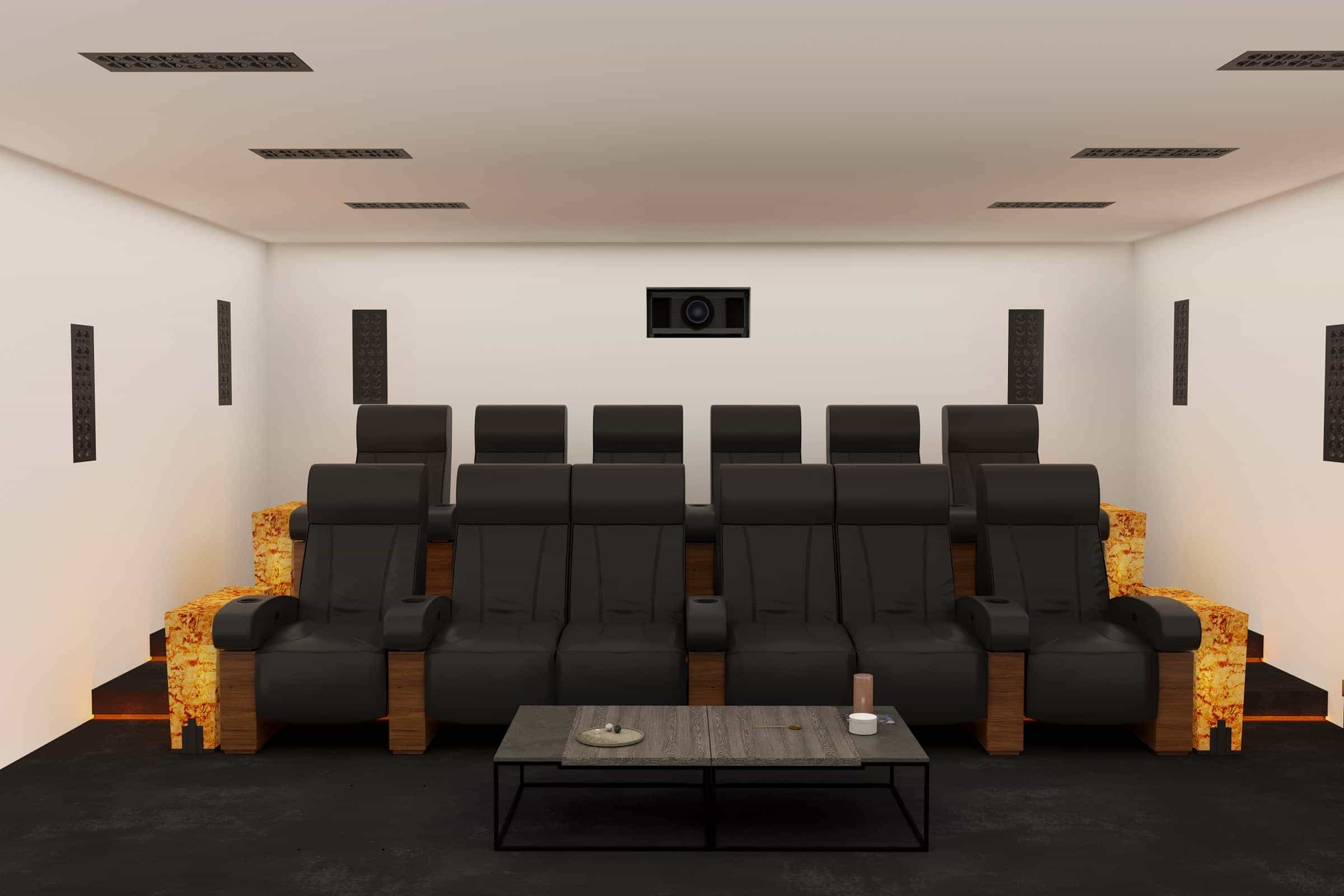
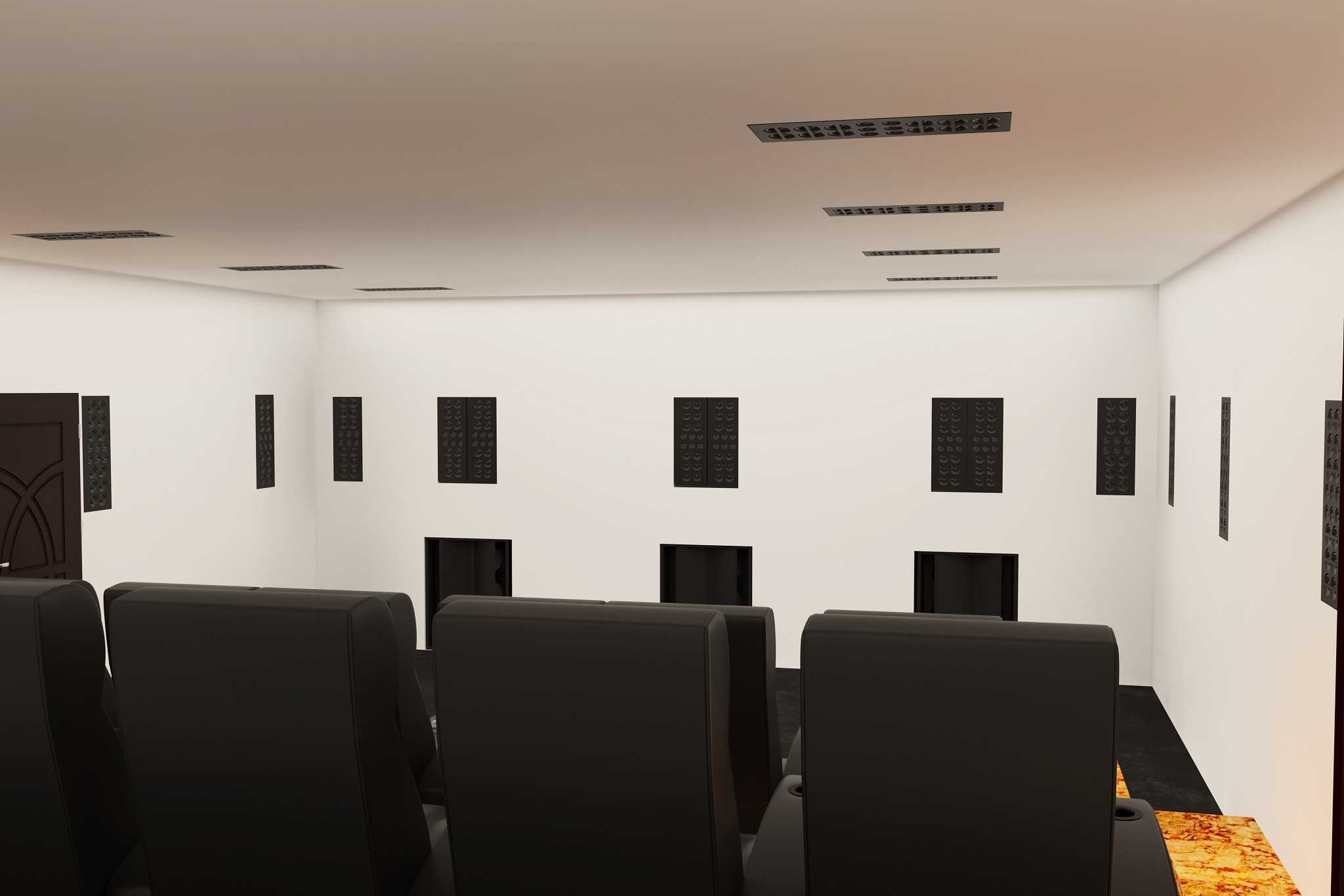
WaveForming requires a minimum of four subwoofers — and their placement is determined by the physics of the technology, not by convenience or aesthetic preference. The front subwoofers are placed at or near the front wall, as close as possible to the screen wall. The rear subwoofers are placed at or near the rear wall, directly opposite the front pair. The front-to-rear alignment is critical: the algorithm requires the subwoofers to be at known, fixed positions relative to the room boundaries so it can calculate the correct timing and level for the rear absorber channels.
This placement requirement is non-negotiable. A WaveForming installation where subwoofers have been placed for convenience or because the rear wall position was architecturally awkward will not deliver the full benefit of the technology. The room design must accommodate the subwoofer positions, not the other way round.
Sufficient Room Length
The planar wave that WaveForming generates requires a minimum distance of approximately 1 metre from the front of the subwoofers to form correctly. In practice, this means rooms shorter than approximately 4 metres face challenges implementing WaveForming in its full Propagation mode. Rooms from 5 metres onwards are well-suited. The longer the room, the more effectively WaveForming can develop the planar wave before it reaches the listening area.
WaveForming-Aware System Design from First Fix
The subwoofer cabling, power supply, rack layout and acoustic treatment specification all need to account for WaveForming from the beginning of the project. This is the most important practical implication for new builds: it cannot be meaningfully retrofitted into a room that was not designed around it. The subwoofer positions must be built into the room — structurally supported, cabled, and integrated with the equipment rack — before any finishing work is done.
We are one of a small number of UK installers with the training and project experience to design WaveForming systems from first fix. If you are at the planning stage of a serious cinema room and WaveForming is part of the specification, engaging us at the design stage — before any construction begins — is essential.
What WaveForming Actually Sounds Like
The first thing most people notice is what is absent. The boom — the one-note low-frequency resonance that characterises most home cinema rooms — is gone. In its place is bass that tracks the content precisely: a bass guitar that sounds like a bass guitar rather than a room resonance, a drum kick that has attack and decay rather than a sustained drone, a low-frequency film effect that is felt in the chest without blurring the detail of the music above it.
The second thing is consistency across seats. In a conventional cinema room, the best seat is where the bass sounds right. WaveForming makes every seat the best seat — the bass level and character that you hear in the primary listening position is the same as what everyone else hears, across every row.
The third thing — for rooms with Pressurization mode active alongside Propagation — is physical impact. The deep bass extension and the whole-body pressure sensation of very low frequencies handled by Pressurization deliver an experience that is qualitatively different from anything achievable by a conventional subwoofer arrangement.
WaveForming and Acoustic Treatment — Does It Replace Bass Traps?
WaveForming significantly reduces the need for passive bass treatment because it is addressing the room modes actively rather than trying to absorb them after they form. Trinnov has demonstrated WaveForming in rooms with minimal passive treatment and achieved results that rooms with extensive treatment and conventional processing cannot match.
This does not mean that all acoustic treatment becomes redundant. Mid and high-frequency treatment — for early reflections, reverberation control and diffusion — remains as important as it has always been. And some passive bass treatment at the front and rear walls can work complementarily with WaveForming. But the argument for investing tens of thousands of pounds in deep bass trap construction is considerably weakened when WaveForming is part of the specification.
Next Steps
If you are considering a cinema room and want WaveForming as part of the specification, the conversation needs to start at the design stage — before construction, before cabling, before any architectural decisions are made that cannot be reversed. The subwoofer placement, room dimensions, equipment specification and construction sequence all interact, and getting any of them wrong compromises the technology.
We are one of the few UK installers with the training and track record to implement WaveForming correctly. If you would like to discuss a WaveForming installation, contact us for a consultation.
Frequently Asked Questions — Trinnov WaveForming
What is the difference between WaveForming and conventional room correction EQ?
EQ cuts frequency peaks at the listening position after a room mode has already formed, correcting one seat at the expense of others. WaveForming uses subwoofer placement and active processing to prevent room modes from forming at all, so every seat gets consistent bass.
Can WaveForming be added to an existing Trinnov Altitude system?
Yes, as a free software update — but the room needs the correct subwoofer count and placement for the technology to deliver its full benefit, which usually means it cannot be retrofitted into a room that wasn’t designed for it.
How many subwoofers does WaveForming require?
A minimum of four, with front subwoofers placed near the screen wall and rear subwoofers placed near the back wall, directly opposite.
Does WaveForming remove the need for bass trap acoustic treatment?
It significantly reduces the need for passive bass treatment, since it addresses room modes actively rather than absorbing them after they form, though mid and high-frequency treatment remains just as important.
Read more about Trinnov Altitude → · Read more about our cinema design process → · Read more about home cinema calibration →