Do I Need Professional Home Cinema Calibration? The Honest Answer
The question comes up on almost every cinema project we discuss: does professional calibration actually make a difference, or is it something installers recommend because it adds to the bill? It is a fair question. The honest answer is that professional calibration is the single highest-return intervention available for any home cinema system — more so than almost any hardware upgrade at the same cost. But understanding why requires understanding what calibration actually does, and what happens to an uncalibrated system.
Our Home Cinema & Home Theater Services

Home Cinema

Home Theater

Media Rooms

Hi-Fi

Multi-Room AV
What an Uncalibrated System Actually Sounds and Looks Like
A home cinema system switched on and set to factory defaults — regardless of how much the hardware cost — is not performing anywhere near its potential. It is not performing correctly at all.
The room is the problem. Every room modifies the sound that enters it. The dimensions create standing waves at specific bass frequencies — resonances that cause certain notes to boom while others disappear, and that vary dramatically from seat to seat. Early reflections from walls, floor and ceiling arrive at the listening position milliseconds after the direct sound, blurring imaging and reducing dialogue clarity. Reverberation — the decay of sound after it stops — may be too long, making the room sound muddy, or too short in some frequencies, making it sound harsh.
A factory-default speaker level calibration — the kind that most AV receivers perform automatically using a supplied microphone — addresses some of these issues approximately. It does not perform the geometric speaker remapping that Trinnov’s Optimizer achieves. It does not apply the multi-position whole-room correction that RoomPerfect delivers. It does not calibrate bass management to the specific interaction between the subwoofers and the room’s modal behaviour. And it does not touch the video calibration at all.
What Professional Calibration Changes
Audio
Speaker levels. Every speaker in the array should arrive at the listening position at the same relative level, regardless of its distance or the room’s effect on its output. Professional calibration measures each channel at multiple positions and sets levels to a consistent reference, producing a balanced, enveloping sound field rather than a collection of individual speakers.
Speaker distances and time alignment. The processor delays each channel to ensure that sound from all speakers arrives at the listening position simultaneously. An error of 30 centimetres in a distance measurement introduces a time delay that degrades imaging and reduces the coherence of the surround field. Professional calibration measures these distances precisely using acoustic measurements rather than tape measures.
Crossover frequencies and bass management. The crossover frequency — the point at which each speaker hands off low-frequency content to the subwoofer — is one of the most consequential settings in any cinema system. The correct crossover for each speaker in a given room is determined by measurement — not by the nominal specification of the speaker and not by the system default.
Room EQ and frequency response correction. Professional room correction — whether Trinnov Optimizer, Dirac Live, Anthem ARC Genesis or Steinway Lyngdorf RoomPerfect — measures the frequency response at multiple positions and applies corrections that account for the room’s acoustic behaviour. The difference between an uncorrected room response and a professionally corrected one is typically 15–20dB at problem frequencies. That is not a subtle improvement; it is the difference between a room that sounds broken and one that sounds right.
Video
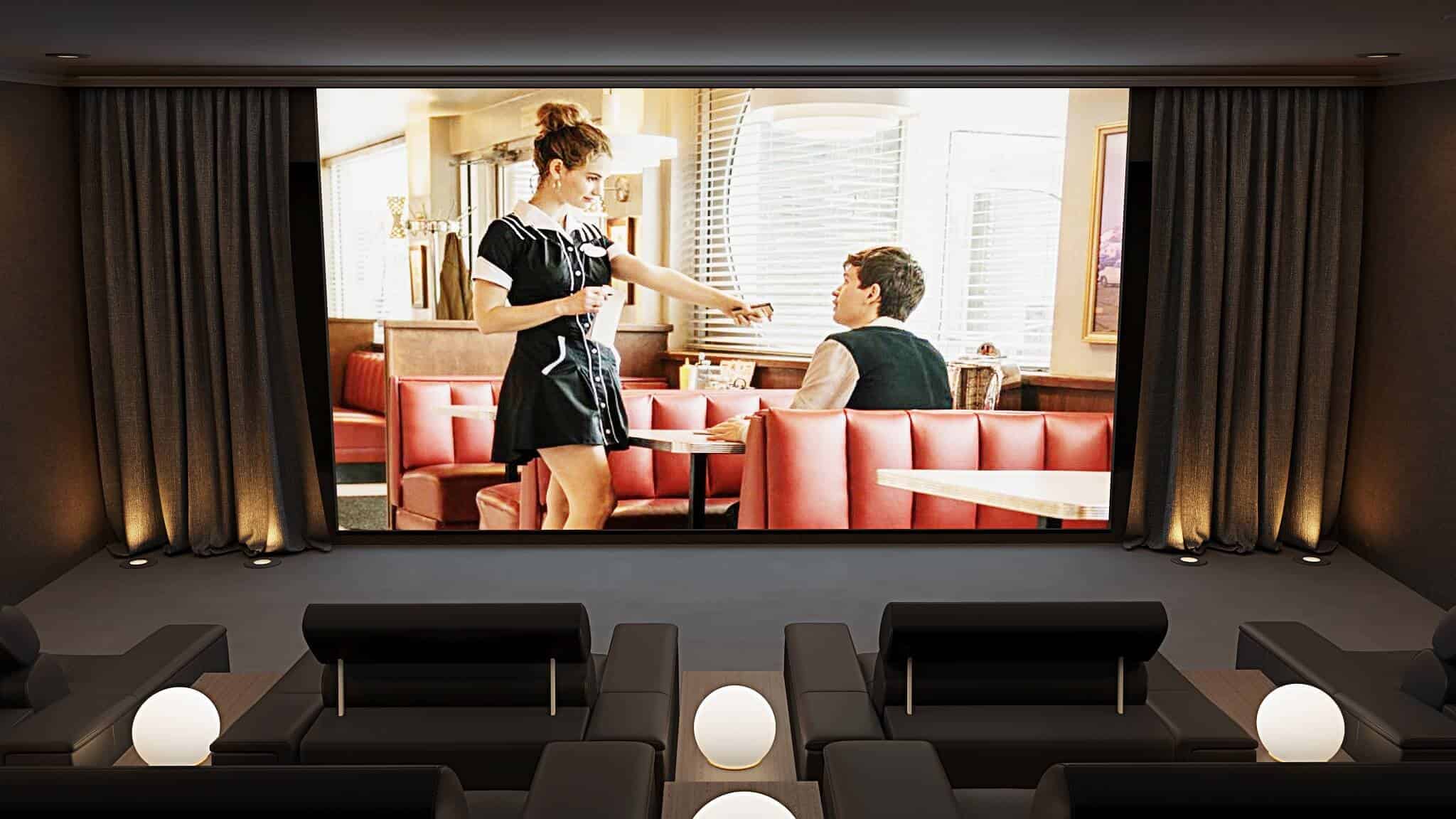
A projector or television leaving the factory is set for maximum brightness and visual impact under showroom conditions — not for accurate reproduction in a dark room. The colour temperature is typically too high, producing a harsh, bluish image that causes eye fatigue over a two-hour film.
ISF-standard video calibration corrects all of this using professional spectrophotometer measurements and CalMAN software. The display is set to the correct colour temperature (D65, 6500K), the colour gamut is adjusted to track accurately within the Rec.709 or DCI-P3 colour space, and the gamma is set to the appropriate curve for the room’s ambient light level.
Does It Make a Difference on Expensive Hardware?
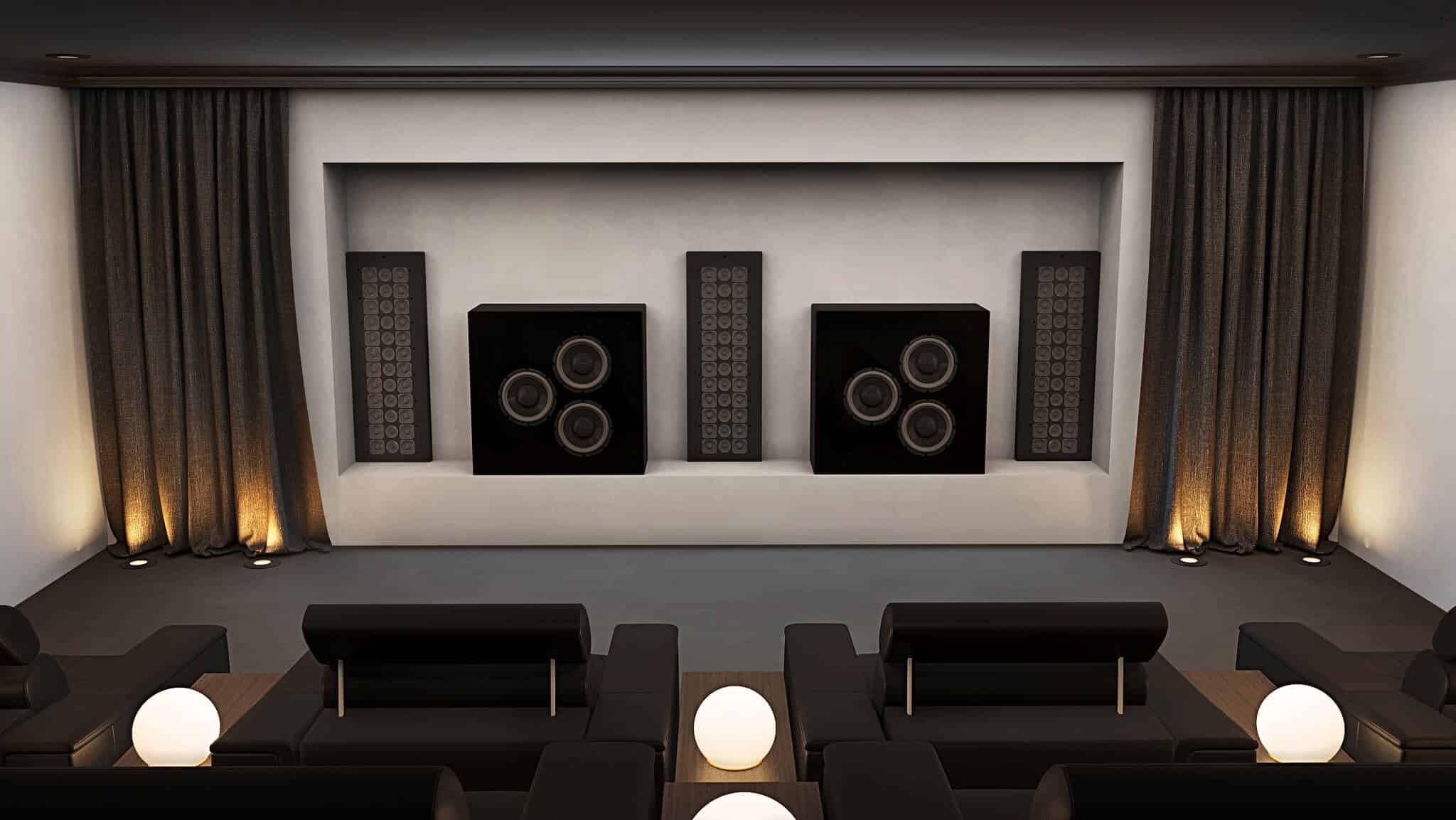
Yes — and the more expensive the hardware, the more it matters. A budget soundbar has a fixed DSP profile and no meaningful calibration capability. A high-end Artcoustic Dolby Atmos speaker system with a Trinnov Altitude 16 processor has calibration capability of extraordinary sophistication — but that capability is only realised if the calibration is performed correctly.
This is why we calibrate every system we install, regardless of the hardware level — and why we recommend professional calibration for existing systems that have never been properly set up.
How Long Does It Take and What Does It Cost?
A full audio and video calibration for a Dolby Atmos cinema system typically takes between four and eight hours, depending on the channel count and processor. A Trinnov Altitude calibration for a large system can take a full day. Video calibration adds two to three hours.
We include calibration in the cost of every cinema installation we complete. For existing systems we did not install, calibration is available as a standalone service.
How Do You Know If Your System Needs Calibration?
These are the most common symptoms of an uncalibrated or poorly calibrated cinema system:
- Dialogue is hard to hear clearly at normal listening levels
- Bass sounds boomy, one-note or indistinct
- The surround field does not envelop convincingly
- The image looks harsh, over-bright or artificially saturated
- You have never had the system professionally calibrated since it was installed
- The system has been modified — new speakers added, processor replaced, projector upgraded — without a full recalibration
If any of these describes your current system, contact us to arrange a calibration visit. We provide audio and video calibration for cinema systems across London, Cheshire, Surrey and the Home Counties — and for systems installed by any company, not only our own.
Frequently Asked Questions — Home Cinema Calibration
Does professional calibration make a real difference, or is it marketing?
A genuine, measurable difference — typically 15–20dB of correction at problem bass frequencies alone, alongside time alignment, level matching and video colour accuracy that factory defaults simply don’t address.
Does calibration matter on expensive equipment, or only budget systems?
It matters most on expensive equipment. A high-end speaker and processor system has calibration capability that’s only realised if the calibration is performed correctly — without it, you’re not getting what you paid for.
How long does a full cinema calibration take?
Typically four to eight hours for audio depending on channel count and processor, with video calibration adding two to three hours. A large Trinnov Altitude system can take a full day for audio alone.
What are the signs that an existing system needs recalibrating?
Unclear dialogue, boomy or indistinct bass, a surround field that doesn’t envelop convincingly, an overly harsh or saturated image, or any hardware change — new speakers, a new processor, a new projector — since the last calibration.
Read more about our calibration service → · Read more about Trinnov Altitude → · Read more about Steinway Lyngdorf RoomPerfect →