Inherited a Bad Crestron or Lutron Installation? Here’s How We Fix It
Every year, a significant share of our work has nothing to do with a new project. It is someone else’s old one. A Crestron system installed by a company that has since disappeared. A Lutron lighting system that half-works, configured by an engineer who is no longer contactable. A rack of equipment behind a cupboard door that nobody — including the homeowner — fully understands. A cinema room that sounded extraordinary on the day it was commissioned and has slowly drifted into mediocrity in the years since.
This is one of the most consequential and least glamorous parts of what we do, and it is also one of the things we do best. Twenty-five years of designing systems from scratch has taught us exactly what a well-built installation looks like — which means we can diagnose, with precision, exactly what is wrong with one that isn’t. This page sets out, in detail, what a Custom Controls system takeover actually involves.
Our Smart Home Services

Maintenance

Programming

Lighting Control

Calibration

Home Wifi
Why Smart Home and Cinema Systems Fail
A poorly performing Crestron or Lutron installation is almost never a failure of the technology. Crestron and Lutron hardware is engineered to run reliably for decades. When a system disappoints, the cause is consistently one of three things: a rushed or under-specified original installation, an installer who is no longer trading or no longer responsive, or a system that has been added to piecemeal over the years by different people with no coherent plan. We see all three constantly, and frequently all three on the same project.
The most common scenario by far is the first: an installer with neither the time nor the discipline to do the job properly. Racks built under time pressure. Programming copied from a template rather than written for the room. Cabling run without labelling, without strain relief, without any thought for the person who has to work on it next. None of this is visible to the client at handover. It becomes visible eighteen months later, when something stops working and nobody can work out why.
What a Custom Controls System Takeover Involves
We approach every takeover project the same way we approach a new installation — with a full assessment before any work begins. We do not arrive and start making changes on a hunch. We document the existing system, identify every issue, and present a clear plan before touching anything. From there, the scope of work typically draws from the following.
Rewiring and Rack Renovation
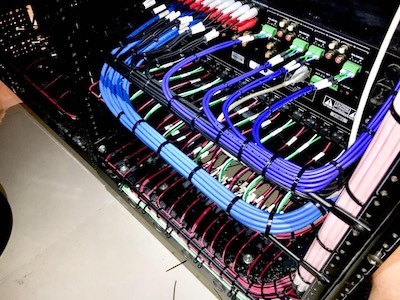
The equipment rack is the single most reliable indicator of how a system was originally installed, and it is usually the first thing we address. A rack built without proper planning accumulates problems that compound over time — cables crossed with no logic, no labelling, no spare capacity, power and signal cabling bundled together causing interference, and ventilation paths blocked by cable bulk. None of this causes an immediate fault. All of it makes every future fault harder to find and slower to fix.
We rebuild racks from the ground up where the existing infrastructure does not meet a standard we are willing to put our name to. Every cable is re-run, labelled at both ends, and routed with proper separation between power, network and signal runs. Equipment is re-mounted with correct ventilation clearance and serviceable access — meaning the next time something needs attention, whether by us or anyone else, it can be diagnosed in minutes rather than hours. We document the finished rack with a full as-built schematic, something the vast majority of the installations we take over have never had.
The difference this makes to long-term reliability is substantial. A tidy, properly labelled rack with planned cable management does not develop the intermittent faults that a chaotic one does — connectors are not under mechanical stress, equipment is not overheating, and a fault, when it does occur, can be isolated immediately rather than requiring an afternoon of tracing cables through a tangle.
Configuration and Programming — Crestron and Lutron
Hardware rarely fails. Programming is where most underperforming systems actually go wrong, and it is the area where the gap between a properly executed installation and a rushed one is most apparent to the people living with it every day.
On the Crestron side, we routinely take over systems running programming that was templated rather than written for the property — generic logic that technically functions but does not reflect how the rooms are actually used, scenes that do the wrong thing, touch panel layouts that make no sense to anyone who did not install them, and processors burdened with redundant code from features that were never actually commissioned. We rewrite Crestron programming from first principles where required: clean, documented, logical, and designed around how our client actually wants to use their home rather than a generic template. Where the existing programming is sound but incomplete, we work within it rather than ripping it out unnecessarily — our priority is the right outcome for the client, not the satisfaction of a clean slate.
On the Lutron side, the most common issue we encounter is a Homeworks QSX or RadioRA 3 system where scenes have been set up incorrectly, dimming curves were never properly configured for the specific lamp types installed, or keypad engraving and button assignments bear no relation to what they actually control. We reconfigure scene logic, correct dimming behaviour room by room, and where necessary completely reprogram a Lutron system to deliver the smooth, reliable, properly considered lighting experience that the hardware is capable of and that most existing installations never achieve.
Fault Finding and Rectification
This is the most immediately valuable part of a takeover for most clients, because it resolves the problems they have been living with — sometimes for years. The pattern is familiar: a previous installer who is unresponsive, slow, or simply no longer in business, leaving faults to accumulate because there has been nobody able or willing to fix them properly.
Lighting faults are the most frequent: circuits that flicker, dimmers that buzz audibly, zones that have stopped responding to scenes, modules that have failed entirely and been quietly bypassed rather than replaced. AV faults follow close behind: sources that have dropped out of a switching matrix, zones that lost audio months ago and were never restored, control system crashes that require periodic manual reboots that nobody has bothered to investigate. Failed or near-failed Crestron and Lutron modules are common in systems that have not been properly maintained — and replacing a failed module is straightforward once the surrounding documentation and rack organisation make it possible to identify which one it actually is.
We treat fault finding as a proper diagnostic process rather than a guessing exercise. Every fault we identify is traced to its actual cause, not patched at the symptom. A flickering light is frequently not a faulty bulb but an incorrectly configured dimming curve or a failing dimmer module; a dropped-out AV zone is frequently not a broken cable but a switching configuration that was never quite right in the first place. Fixing the actual cause means the fault does not return in six months.
Enhancements for New Sources, Formats and Control Interfaces
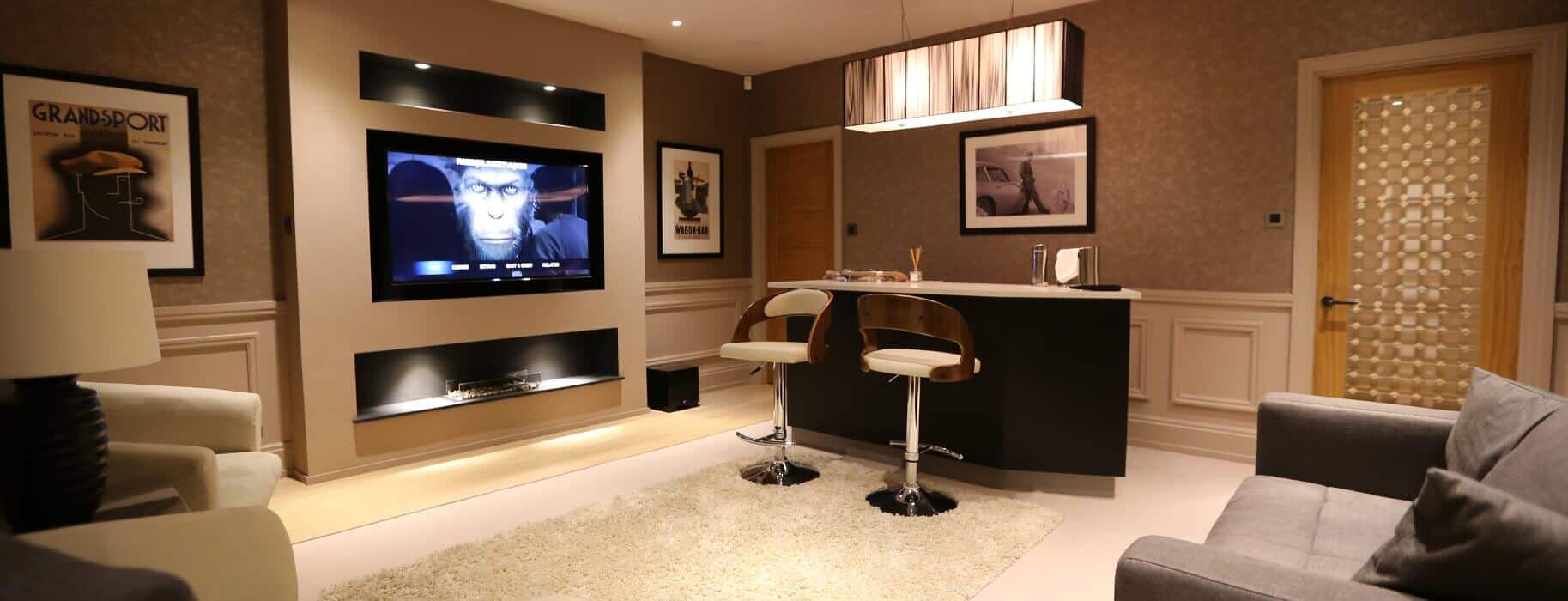
A system installed five or ten years ago was specified for the technology of that era. Source equipment has moved on. Video standards have moved on. Surround formats have moved on. Control interfaces have moved on considerably. We regularly upgrade existing installations to bring them up to current capability without requiring a full system replacement.
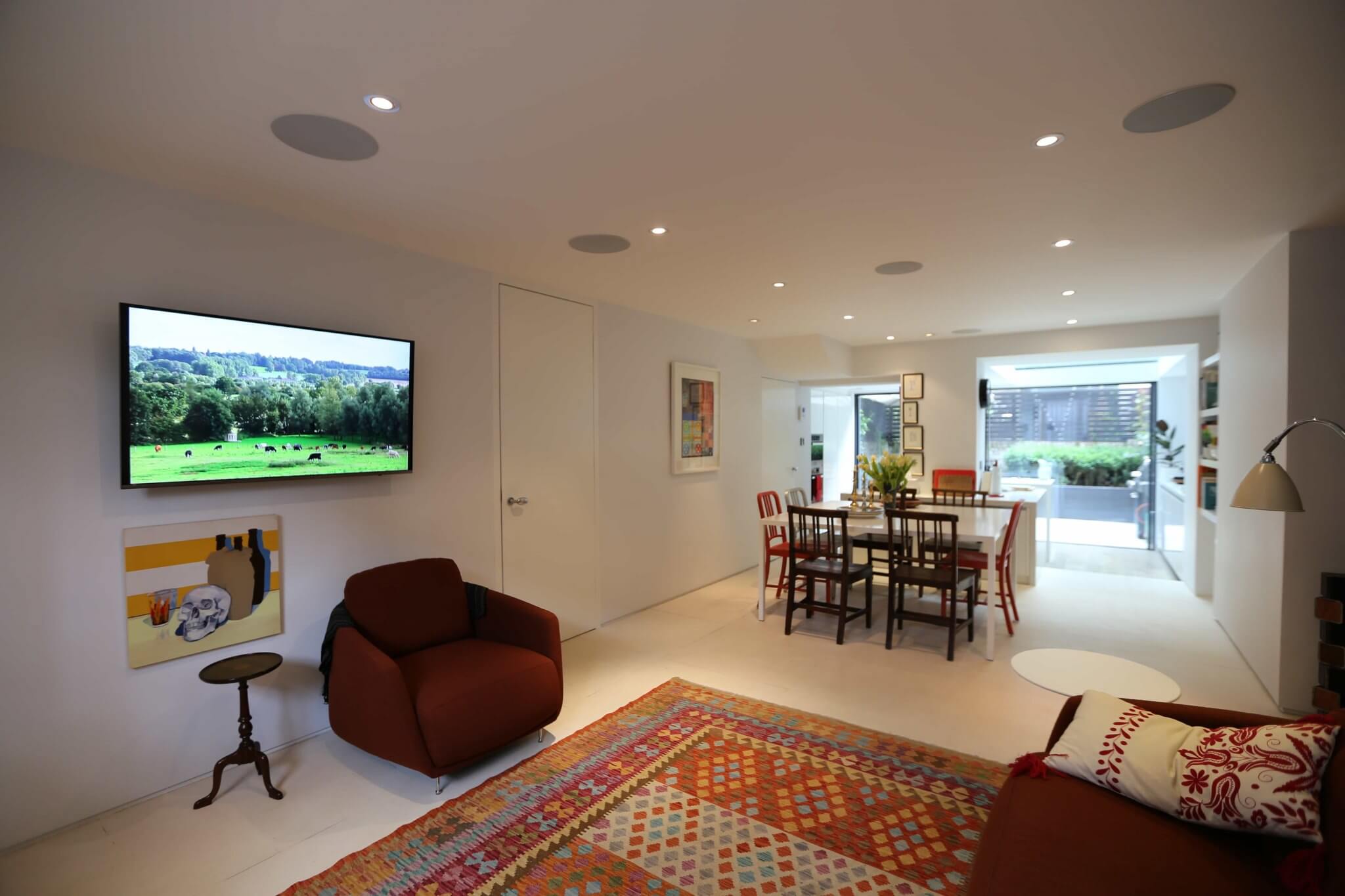
This includes upgrading video distribution to support full 4K HDR signal paths where the original infrastructure was specified for 1080p — frequently requiring new matrix switching, new cabling for HDMI 2.1 bandwidth, or a move to Crestron DM NVX network-based video distribution, which also solves scalability problems that older HDMI matrix systems run into. It includes adding modern source equipment — Apple TV, Kaleidescape, current streaming platforms — into an existing control system cleanly, with proper integration into the Crestron or Lutron logic rather than a clumsy bolt-on. And it includes replacing or supplementing ageing control interfaces: legacy touch panels that are slow, unsupported or simply ugly by current standards, swapped for current-generation Crestron touch panels, with the underlying programming carried forward intelligently rather than discarded.
Surround Sound and Object-Based Audio Upgrades
A cinema room or media room installed before Dolby Atmos became the standard is one of the most common and most rewarding upgrade projects we undertake. Moving an existing 5.1 or 7.1 system to a full object-based Dolby Atmos configuration — or upgrading an early Atmos installation to current channel counts and current processing — delivers a transformation in experience that is immediately obvious to anyone in the room, and is achievable in the great majority of cases without rebuilding the room itself.
This typically involves adding height channel speakers, upgrading the AV processor or receiver to current Dolby Atmos and DTS:X Pro decoding capability — frequently a move to Trinnov Altitude processing on the most ambitious rooms — and re-running the room’s calibration in full once the new channels are in place. We have written in detail about Lutron system specification and about the differences between Trinnov and Anthem processing for clients weighing up exactly this kind of upgrade decision.
Home Cinema Renovation and Re-Calibration
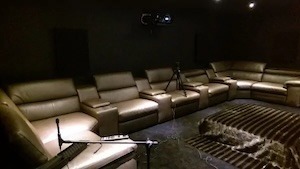
A cinema room does not stay calibrated forever, even if nothing in it has been touched. Speaker drivers age. Soft furnishings and carpets change the room’s acoustic absorption over time. Projector lamps or laser sources age and drift in colour temperature. Furniture gets moved. The room that was meticulously calibrated on installation day frequently does not sound or look the same five years later — and almost nobody notices the decline happening gradually, because it happens gradually.
Where we take over an existing cinema room, full recalibration is close to universal in our scope of work — covering both the acoustic and the visual side. On audio, this means a full room measurement and correction pass using whatever processing platform is installed, addressing speaker level, distance, crossover and the room’s actual acoustic behaviour as it exists today rather than as it existed on installation day. On video, it means a full ISF-standard calibration of colour temperature, gamut and gamma, correcting for the drift that all projection and display technology experiences over its lifetime. We have written previously and in detail on why professional calibration matters and on the specific acoustic principles involved in advanced room correction technology such as Trinnov WaveForming, for clients who want the full technical picture.
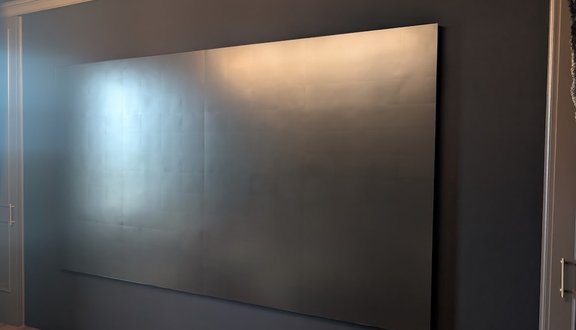
Where the room itself has acoustic shortcomings that were never addressed at the original build stage — untreated reflective surfaces, an acoustically inappropriate screen wall, poor bass behaviour caused by room dimensions — we also advise on and install the acoustic treatment required to bring the room up to a standard that the equipment inside it deserves.
Network and WiFi Infrastructure
An unreliable smart home is very often, underneath everything else, an unreliable network. Crestron, Lutron and every modern AV source rely on a network infrastructure that is stable, properly segmented and correctly configured — and a significant proportion of the “random” faults we are called in to investigate on a takeover project trace back to consumer-grade networking equipment installed as an afterthought rather than as a properly engineered part of the system.
We replace consumer routers and unmanaged switches with enterprise-grade networking — typically Ubiquiti UniFi — designed and configured specifically for the demands of a smart home: separate VLANs for control traffic, AV traffic and guest WiFi, Power over Ethernet for access points and cameras, and wired backhaul to every access point rather than relying on WiFi mesh to do a wired network’s job. For larger properties, this means a proper survey-based access point layout rather than a handful of consumer mesh units placed wherever was convenient. The result is a network that the rest of the smart home can actually depend on, rather than one that quietly causes the symptoms everyone assumes are a Crestron or Lutron problem.
Ongoing Maintenance and Remote Support — Why the Story Doesn’t End at Handover
A system takeover that ends the moment the immediate faults are fixed has not really solved the underlying problem. The reason most of these systems ended up in poor condition in the first place is that nobody was looking after them — there was no ongoing relationship with an installer who understood the system, no proactive monitoring, and no maintenance plan. We do not let that happen again.
Every system we take over is, by default, configured for remote monitoring as part of the completion of the work. Crestron and Lutron systems we manage report status, faults and performance data back to us automatically. This means that in the great majority of cases, we are aware of a developing issue — a module reporting errors, a network device dropping offline, a processor running outside its normal parameters — before the client has noticed anything at all. We have systems we have maintained this way for over a decade, and the experience for the people living with them is consistent: things simply continue to work, because problems are caught and resolved before they become visible.
Where a fault does require physical attention, remote monitoring means we typically already know what is wrong and what is needed before an engineer is dispatched — rather than starting the diagnostic process from zero on arrival, as is unavoidable for an installer with no prior visibility of the system. For clients who want a formal arrangement, we offer ongoing maintenance contracts that combine this remote monitoring with scheduled proactive visits, firmware and software updates, and priority response — the same standard of care we apply to every system we have ever installed ourselves, extended to a system we did not originally build.
This is, in the end, the real value of a Custom Controls takeover. It is not simply that we fix what is broken. It is that the system becomes properly looked after for the first time — and stays that way.
What a Takeover Project Looks Like in Practice
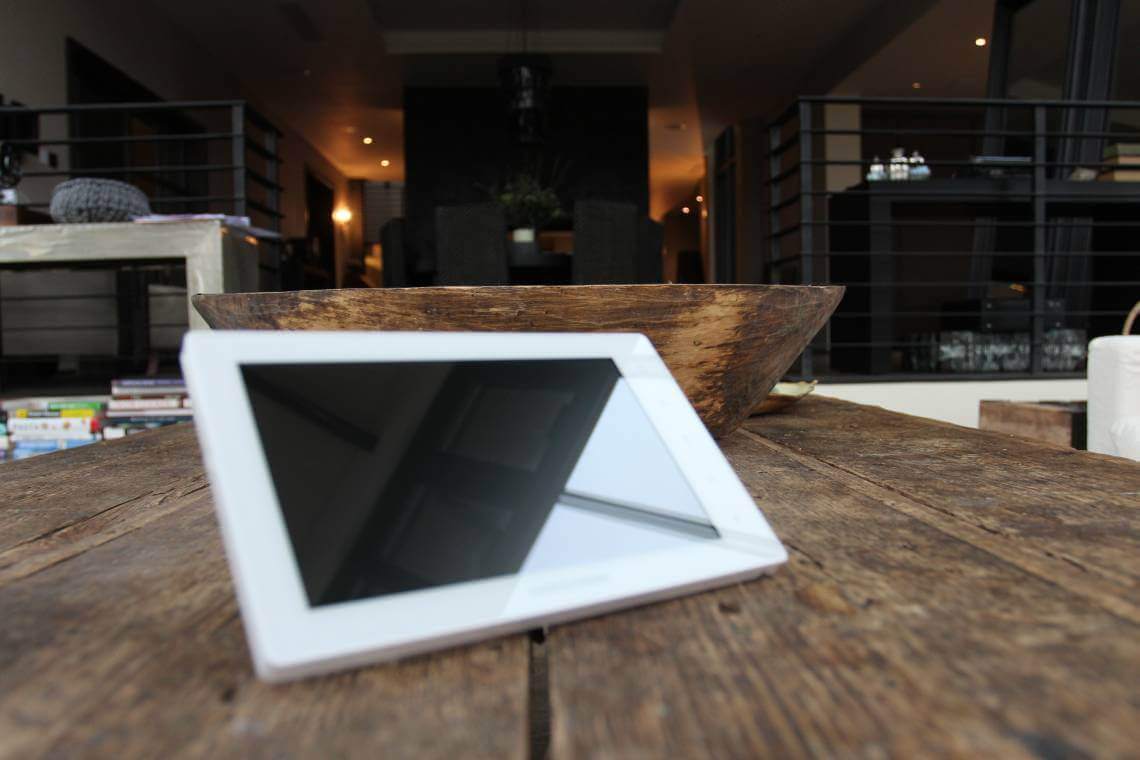
Every takeover begins with an honest, no-obligation assessment. We visit the property, review the existing system — rack, programming, documentation if any exists, and a conversation with the client about what is and isn’t working — and provide a clear written summary of what we find, along with a proposed scope of work. We do not recommend replacing anything that does not need replacing. Where the existing Crestron or Lutron hardware is sound, our work is rewiring, reprogramming, fault rectification and recalibration around what is already there. Where hardware genuinely is at the end of its useful life, we say so plainly and specify a sensible replacement path.
The scale of the work varies considerably. Some takeovers are a single visit to resolve a handful of specific faults and tidy a rack. Others are multi-week projects involving a full rack rebuild, a complete reprogramming of both Crestron and Lutron systems, network infrastructure replacement and a full cinema room recalibration. In every case, the project concludes with full documentation — something the client almost never had before — and a system enrolled in our remote monitoring from day one.
Frequently Asked Questions — Crestron and Lutron System Takeovers
Our original installer is no longer trading. Can you take over our system even though you didn’t build it?
Yes — this is one of the most common reasons clients come to us. We do not need to have installed a system originally to take responsibility for it. We assess what is there, document it properly, and bring it up to a standard we are happy to support going forward.
Will you need to rip out and replace our existing Crestron or Lutron system?
In most cases, no. Crestron and Lutron hardware rarely needs replacing — the issues are almost always in the programming, the wiring, the configuration or the absence of ongoing maintenance. We replace hardware only where it has genuinely failed or is no longer fit for purpose, and we are always transparent about which is which.
How long does a typical system takeover take?
This depends entirely on scope. A focused fault-finding and rack tidying visit can take a single day. A full reprogramming, network replacement and cinema recalibration project can run several weeks. We scope every project individually after the initial assessment and agree a clear timeline before work begins.
Can you take over a system that mixes Crestron, Lutron and other brands together?
Yes. We are experienced at working with mixed-brand installations and at consolidating fragmented systems — multiple control platforms installed over time by different companies — into a single, coherent, properly integrated system where that is the right outcome for the client.
Do you offer ongoing support after a takeover is complete?
Yes, and we recommend it in almost every case. Every system we take over is configured for remote monitoring as standard, and we offer ongoing maintenance contracts providing scheduled visits, software updates and priority response — the same level of care we provide for systems we installed ourselves from new.
Do you take over systems outside London and Cheshire?
Yes. We have completed takeover and renovation projects across the UK, in Dubai, in the French and Swiss Alps, and internationally. Distance is not a barrier to us doing this work properly.
If you are living with a Crestron or Lutron system that has never quite worked the way it should, or one that used to work and has gradually stopped, contact us for a free, no-obligation assessment. We will tell you honestly what we find and what it would take to put right.
Related Pages
- Crestron Home Automation
- Crestron Maintenance & Support
- Crestron Programming
- Lutron Lighting Control
- Lutron Homeworks QSX
- Lutron RadioRA 3
- Home Cinema Installation
- Home Cinema Calibration
- High-End Hi-Fi & Music Systems
- Home WiFi Installation
- Trinnov Home Cinema Processors
- Crestron Installer Dubai
- Crestron Installer London
- Crestron Installer Cheshire