Home Cinema System: Complete Guide to Professional Installation & Design
Everything You Need for a Luxury Home Theatre
A home cinema system is a lot more than a big screen in a dark room. Properly done, it’s a genuinely integrated set of components: projector, screen, processor, speakers, seating, lighting and control, all working together to get somewhere close to a commercial cinema experience in your own home. This guide walks through what actually separates a professional home cinema installation from a good TV setup, how the pieces fit together, and why the integration between them tends to matter more than any single spec on a datasheet.
Whether you’re starting from a blank room or upgrading something that already exists, understanding how these components relate to each other is the useful part. The individual products matter far less than most people assume.

Design

Installation

Calibration

Seating

Audio
What Actually Separates a Cinema System from a TV Room
A TV room has a television, a soundbar or a modest pair of speakers, and perhaps some basic lighting. That’s a perfectly reasonable setup for casual viewing, and there’s nothing wrong with it. A home cinema system is a different thing entirely, designed from the ground up to recreate a theatrical experience across every dimension that matters: the image, the sound, the room’s own acoustics, how comfortable the seating is, and how well the lighting supports rather than fights the picture.
The display is the clearest example. Professional systems are built around calibrated projectors and motorised screens rather than consumer televisions, because a projector throwing a three-metre-plus image genuinely fills your field of view the way a real cinema does. An 85-inch television, however good, still sits in the room as an object. A projector image becomes the room.
Sound follows the same logic. A soundbar is a convenient compromise, but it can’t create a proper soundfield. A cinema system uses discrete speakers, anything from 5.1 up to fifteen or more channels, positioned deliberately around the room so surround effects arrive from the sides, height channels place sound genuinely overhead, and dedicated subwoofers handle bass that’s been tuned specifically to that room’s dimensions.
Getting all of that to actually work together is the job of the processor. Machines from Trinnov, Anthem, Lyngdorf or Marantz apply room correction, decode Dolby Atmos, and calibrate every speaker’s level, delay and EQ with a precision no television’s internal processing comes close to matching. None of it counts for much, though, without acoustic treatment on the walls and bass traps in the corners: an untreated room creates reflections and standing waves that no amount of clever processing can fully undo.
Seating and control tend to get overlooked, but they’re just as much a part of what makes a system feel professional rather than domestic. Proper cinema seating means electric recliners with integrated footrests, positioned for sight lines and acoustic symmetry rather than just fitting the room. And the whole thing should sit inside your wider home automation, so pressing “Movie” dims the lights, closes the blinds, selects the right source and sets the correct picture mode without anyone having to think about it.
Put simply, a home cinema system isn’t an upgraded TV room. It’s a different category of thing altogether.
The Core Components
The projector and screen sit at the heart of any cinema system. Professional projectors use laser or lamp light sources with 4K resolution and HDR support, and the lens is chosen to suit the room’s throw distance. Screens are acoustically transparent, so speakers can sit directly behind them, and typically follow the 2.35:1 aspect ratio used for cinema releases. Screen size ranges from around 2.5m in a smaller room up to 4.5m or more in a dedicated space built for it.
Behind the screen sits the audio processor, which is really where all the calibration work happens. It decodes Dolby Atmos, measures the room and applies correction, and provides amplification across every channel — this is a dedicated cinema processor, not an AV receiver wearing a fancier badge. A full speaker package runs to at least seven speakers: left, centre and right across the front, a surround pair to the sides, and a further pair overhead for height. Higher-end rooms add more surrounds and height channels on top of that. Every speaker is matched in brand and driver quality, because mismatched speakers create an inconsistent tone as sound moves around the room.
Bass needs its own attention. Below about 80Hz, sound behaves very differently in a small room, which is why professional systems generally run two to four subwoofers positioned and tuned specifically for that space, rather than one sub pushed into a corner. Seating in a serious cinema room means electric recliners with footrests built in, arranged so a twelve-seat room, say, might use three rows of four offset from each other so nobody’s view is blocked by the row in front.
Lighting and blinds round out the picture. Motorised dimmers on every circuit, sometimes with bias lighting behind the screen to ease eye strain during dark scenes, let you programme proper scenes: lights down to 5% for the film itself, up to 50% during an interval, and full brightness for cleaning up afterwards. Motorised blinds from Lutron or Crestron give a projector room the complete blackout it needs, and tie into those same lighting scenes. Acoustic treatment — fabric-wrapped panels on the walls, bass traps in the corners, sometimes the ceiling too — controls reflections without deadening the room entirely.
Projector or Television: Which Suits Your Room
For a dedicated cinema room, a projector with a screen of three metres or more remains the industry standard, and for good reason. The image is large and genuinely immersive, contrast is excellent once the room is properly blacked out, and the whole experience feels theatrical in a way a television simply can’t match. The trade-off is that the room needs to go fully dark, there’s a bulb or laser to maintain over time, and the initial outlay tends to be higher.
Where a room needs to double as a living space, a high-end television between 65 and 85 inches is often the better call. Modern OLED and mini-LED panels produce genuinely excellent pictures and integrate perfectly well with a proper cinema sound system. You get a dual-purpose room with no blackout requirement and a simpler overall setup, at the cost of a smaller, less enveloping image and reduced brightness if the room gets much daylight.
For a dedicated room, we’d almost always recommend a projector. For a living room doing double duty, a good television usually makes more sense.
Room Correction and Calibration
A genuinely good speaker in an untreated room will often sound worse than a modest speaker in a room that’s been properly controlled acoustically, which is exactly why professional systems put so much weight on processors that measure and correct for the space they’re in.
The process starts with a calibrated microphone, used to measure frequency response, time delay and speaker level at several points around the room. That measurement reveals the room’s own acoustic problems: bass peaks and dead spots caused by the room’s dimensions, unwanted reflections, and any issues with where the speakers themselves are positioned. From there, the processor applies parametric EQ tailored to each individual speaker and each seating position, correcting for room modes and cabinet colouration far more precisely than any consumer EQ could manage. Every speaker also gets its own time delay, so sound from across the room arrives at your seat simultaneously rather than smearing together, and every channel is level-matched to 75dB at the listening position so surround placement and Atmos decoding both work as intended.
Done properly, this calibration holds up regardless of what you’re watching — streaming, Blu-ray, broadcast television all sound and look consistent, because the correction is applied to the room and the system, not to any one piece of content.
A Real Example: Steinway Lyngdorf in Practice
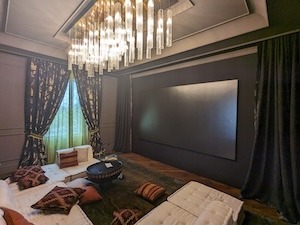
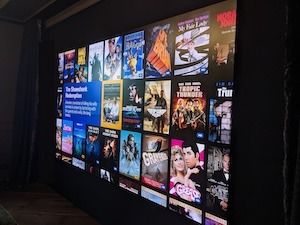
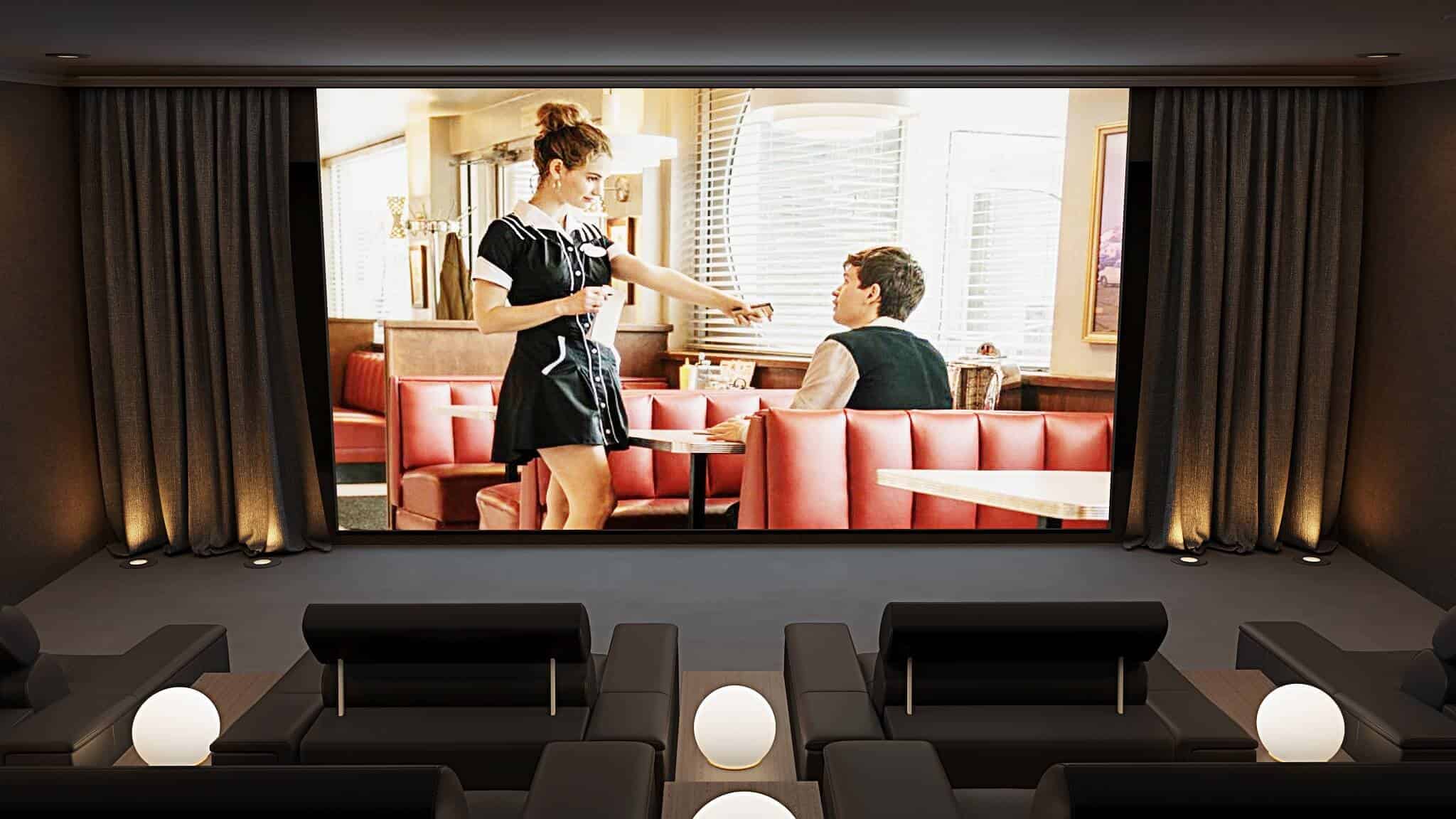
One of our own reference-level cinema rooms shows what a genuinely professional system actually looks like once it’s all assembled. Custom Controls designed and built this room around a Samsung The Wall direct-view LED display, a complete Steinway Lyngdorf speaker system with RoomPerfect calibration, several Steinway & Sons amplifiers, and Lutron and RTI for control.
The display itself is a 3m × 2m Samsung The Wall, a modular direct-view LED panel that delivers proper black levels, strong peak brightness and completely consistent performance regardless of ambient light in the room. A Lumagen Radiance Pro scaler sits ahead of it, handling video processing so every source reaches the screen at its best.
Sound comes from a full Steinway Lyngdorf installation: IW-66 front speakers behind the screen, a pair of IW-26H centre speakers above and below it, four LS bw boundary subwoofers, two freestanding Model O rear surrounds, and a pair of in-ceiling IW-16 height speakers. Four Steinway & Sons A2 amplifiers, fully digital Class D, drive the whole array. All of it runs through a Steinway & Sons P300 processor, which hosts RoomPerfect — a multi-point calibration system that optimises sound across the entire seating area rather than a single sweet spot, which is where it differs from more conventional single-point room correction.
Sources include a Kaleidescape movie server for lossless film, Sky Q for broadcast, Apple TV for streaming, and a Bluesound Node running Roon for lossless music throughout the rest of the house. The room itself was built from stud walls lined with Acoustiblok membrane and QuietFiber mineral wool and finished in acoustic fabric, giving it proper isolation from the spaces around it as well as good internal control for the speakers themselves. An RTI touchpanel runs every cinema function, with Lutron Homeworks QS handling the lighting scenes and motorised blinds.
The result is a system that performs at a reference level for both film and music, with nine speaker channels, four amplifiers and several source systems all sitting quietly behind a single button press.
How a Cinema Fits into the Wider Home
A cinema room rarely stands alone in a properly designed smart home. Lighting scenes handle the obvious part — dimmers on every circuit, with scenes for watching a film, an interval and cleaning up afterwards, triggered automatically or from a touchpanel. Motorised Lutron or Crestron blinds close together under a single “Movie” scene for full blackout, and a smart thermostat keeps the room comfortable even though a sealed cinema space can build up heat quickly during a long film.
All of this usually runs through a single interface, whether that’s Crestron Home or something similar, giving one touchscreen or app for source selection, volume, scenes, lighting, blinds and climate together. It means a guest can operate the room without knowing anything about what’s actually driving it, and for a cinema in a guest house or a property that’s empty for stretches of the year, the same system lets you manage climate and lighting remotely. Done well, the whole thing just feels like “movie night,” rather than a sequence of separate technical steps.
Dedicated Cinema or Multi-Purpose Room
A fully dedicated cinema — projector, motorised screen, complete blackout, seven or more speakers, a proper processor and purpose-built seating — delivers the best possible experience, but it does need its own room: a basement, a loft, or a spare bedroom given over entirely to the purpose.
A living room cinema takes a different approach: a high-end OLED or mini-LED television, discrete 5.1 or 7.1 surround sound, a professional processor and motorised blinds for evening use, all inside a space that still functions as a living room by day. There’s also a lighter option worth mentioning for smaller budgets: upgrading an existing television with a proper soundbar, motorised blinds and basic lighting control. It won’t match a dedicated system, but it’s a genuine improvement over what most people already have.
Which of these makes sense really comes down to budget, the space you have available, and how often the room will actually be used for film. A household that watches regularly will get real value from a dedicated system. Someone who wants the option occasionally is often better served by a living room cinema.
Why It’s Worth Having This Done Properly
A home cinema system touches acoustics, electrical work, networking and control all at once, and mistakes in one area tend to compound elsewhere: poor speaker placement creates imaging problems no amount of calibration can fully rescue, insufficient acoustic treatment limits what even the best processor can achieve, cheap cabling introduces noise, and amateur networking causes dropouts or lag exactly when you don’t want them.
A good installer understands how all of these pieces interact before a single component is ordered, and designs a system that solves problems rather than creating new ones further down the line. Just as importantly, the system should be able to take on new streaming services, equipment upgrades and even changes to the room itself without needing to be redesigned from scratch each time.
We’ve been designing and installing cinema systems at this level since 1998, hold five consecutive Crestron Integration Awards, and are certified dealers for every major processor brand. Every room we build is measured acoustically, designed to that measurement, and calibrated to a genuinely professional standard before we consider it finished.
Frequently Asked Questions — Home Cinema Systems
What’s the minimum room size for a projector-based cinema?
Around 3.5m deep and 4m wide is the practical minimum, which allows for a screen of roughly 2.5m, proper seating rows and correct speaker placement. Below that, a television-based system usually works better.
Can an existing room be retrofitted for a cinema system?
Yes, though it comes with caveats. Running conduit for cabling after the fact is disruptive, acoustic treatment options are more limited, and speaker placement is constrained by what’s already there. It’s considerably easier during a build or a major renovation, while the walls are still open.
Do I need a dedicated processor, or will an AV receiver do?
Consumer AV receivers handle basic surround sound and Dolby Atmos reasonably well, but they don’t offer anything close to the room correction and calibration precision of a dedicated processor like Trinnov, Anthem or Lyngdorf. For a mid-to-high-end system, we’d recommend the dedicated processor.
How many speakers do I actually need?
5.1 is the practical minimum: left, centre, right, a surround pair and a subwoofer. 7.1 adds a second surround pair and sounds noticeably better. 7.2.2 adds height channels for Dolby Atmos and is where we’d point most clients aiming for a genuinely immersive result. More speakers do improve imaging and envelopment, but each step up also means more cabling, more calibration work and more cost.
What is Dolby Atmos, and is it worth having?
Atmos adds height channels, overhead speakers that create genuinely three-dimensional sound. Where content supports it, whether Blu-ray or select streaming, it’s a real step up in immersion, and in our view worth the extra complexity it brings to the installation.
Will normal home WiFi cope with a cinema system?
Not for the control and automation side of things. A cinema system needs low-latency, reliable connectivity, so we’d always recommend hardwired Ethernet for the processor, control hub and lighting controller, with WiFi reserved for secondary devices like tablets and phones. Consumer mesh WiFi on its own generally isn’t up to the job.
What content shows a home cinema system at its best?
4K Blu-ray, professional streaming such as Netflix in 4K or Disney+ with Atmos, and cinema releases generally. A properly built system delivers consistent quality across everything you throw at it, but content with Dolby Vision and Atmos is where it really shows what it can do.