Home Cinema: Complete Design, Installation & Equipment Guide
Home Cinema Design and Installation Guide
A home cinema system is fundamentally different from a TV on a wall. It’s an integrated collection of components—display, processor, speakers, seating, lighting, control—working together to deliver a theatrical experience. This guide covers what defines a professional system, how components work together, the decision framework for your space, and why professional design matters.
What Defines a Home Cinema System
A TV room has a television, soundbar, and basic lighting. It works for casual viewing. A home cinema system is engineered across multiple disciplines to replicate theatrical performance: calibrated display, room-corrected audio, acoustic treatment, dedicated seating, and control integration.
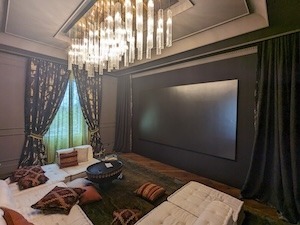
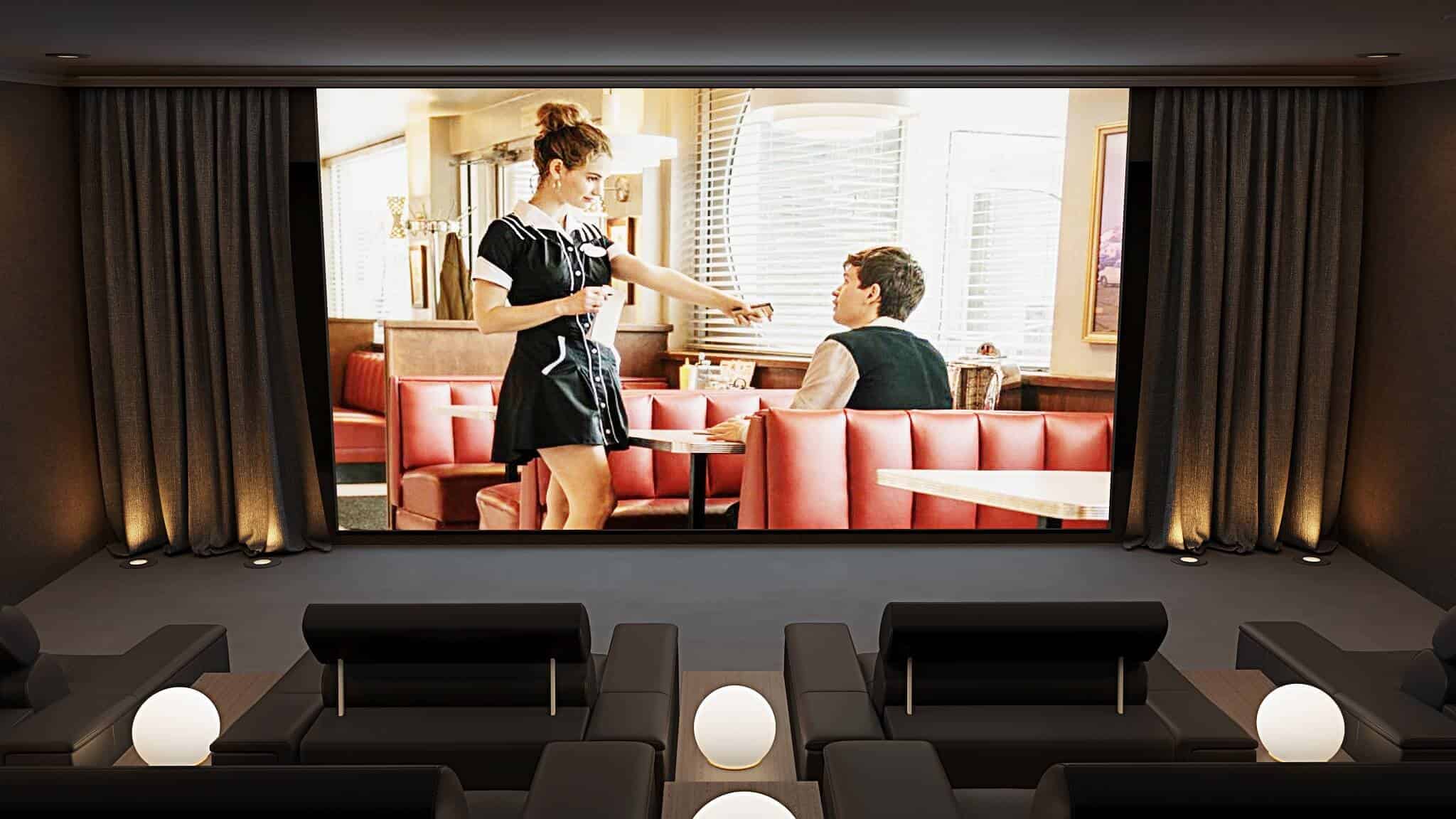
Display: Professional projectors with motorized screens or high-end direct-view displays, not consumer TVs. A 3m screen fills your visual field the way a cinema does.
Sound architecture: Discrete speaker arrays (5.1 to 15+ channels) positioned around the room, not a soundbar. Surround channels create spatial immersion. Dedicated subwoofers handle bass tuned to the room’s acoustics.
Processing & calibration: Professional processors (Trinnov, Anthem, Lyngdorf) measure the room acoustically and apply room correction. A consumer TV’s internal processor cannot match this.
Acoustic treatment: Treated walls, bass traps, absorption panels. An untreated room creates problems no speaker can overcome.
Seating: Electric recliners positioned for optimal sight lines and acoustic symmetry, not sofas.
Control integration: One button starts the system—display powers on, processor selects source, lighting dims, blinds close. Complexity is hidden behind automation.
Room Design Fundamentals
The room itself is the foundation. Poor room design means no processor or speaker can fix the problems.
Size and dimensions: Minimum practical size is roughly 3.5m deep and 4m wide for a projector-based system. Larger rooms (6m+ deep) allow more seating and better speaker positioning. Room shape matters—rectangular rooms are easier to treat acoustically than irregular spaces. Avoid dimensions where length, width, and height are identical; this creates standing wave problems.
Acoustic treatment: Reflective rooms (concrete, tile, glass) sound harsh and lose spatial precision. Professional systems use fabric-wrapped absorption panels on walls, bass traps in corners, sometimes ceiling treatment. The goal is controlled absorption—not a dead room, but one where early reflections are minimized and standing waves controlled.
Isolation: A dedicated cinema room in a basement or converted garage is isolated from adjacent spaces, allowing higher volumes without disturbing other rooms. Living room systems in multi-purpose spaces require careful speaker positioning and acoustic planning.
Speaker placement: Front speakers sit behind an acoustically transparent screen, ideally at ear level for seated viewers. Surrounds are positioned at the sides and slightly elevated. Height speakers mount in the ceiling for Dolby Atmos content. Subwoofers benefit from corner or boundary placement where room modes amplify their output.
Core Equipment: Display Technology
Projector-based systems: Industry standard for dedicated cinemas. Professional models use laser or lamp illumination, 4K resolution, HDR, and lens options for different throw distances. A 3m+ screen fills the visual field. Advantages: large immersive screen, theatrical feel, superior contrast in dark rooms. Disadvantages: requires blackout, needs maintenance, higher initial cost.
TV-based systems: For dual-purpose spaces. Modern OLED and mini-LED TVs deliver exceptional picture quality. Advantages: works in any light, no blackout needed, simpler setup. Disadvantages: smaller screen, less immersive than projectors, peak brightness limited in daylit rooms.

Home Cinema

Cinema Design

Calibration

Acoustics

Seating
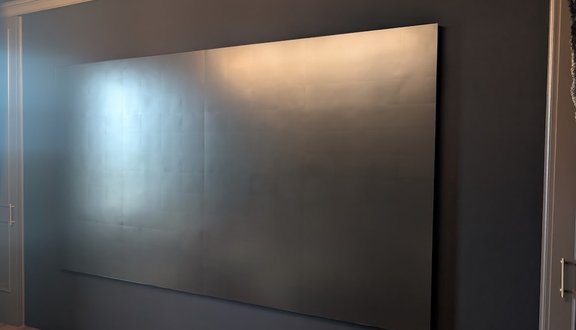
Screens: Acoustically transparent screens allow speakers to sit behind, maintaining image-sound alignment. Fixed screens are superior to motorized ones; motorized adds mechanical complexity. Screen size ranges from 2.5m (small rooms) to 4.5m+ (large dedicated cinemas). Aspect ratio: 2.35:1 matches cinema releases.
Core Equipment: Audio System
Processor: This is where calibration happens. Professional processors (Trinnov Altitude, Anthem MRX, Lyngdorf P300, Marantz Cinema) decode Dolby Atmos and DTS:X, apply room correction by measuring the room acoustically, and adjust each speaker’s level, delay, and EQ. A processor is essential for high-end systems; consumer AVRs lack the calibration precision.
Speakers: Minimum is 5.1 (left, center, right, two surrounds, one sub). Better is 7.1 (adds another surround pair). Excellent is 7.2.2 (adds height channels for Atmos). All speakers should be from the same manufacturer to ensure tonal consistency. Mixing brands introduces coloration that room correction cannot fully eliminate.
Subwoofers: Bass benefits from multiple subs positioned strategically. A single subwoofer creates standing wave problems. Professional systems use 2–4 subwoofers tuned to the room’s dimensions and treated acoustically to avoid boom or null zones.
Room correction: The processor measures the room at multiple positions, models its acoustic behavior, and calculates corrections for each speaker. This differs from single-point room correction. A properly corrected system sounds as if the room’s acoustic problems have been physically solved, not electronically patched.
Core Equipment: Seating & Lighting
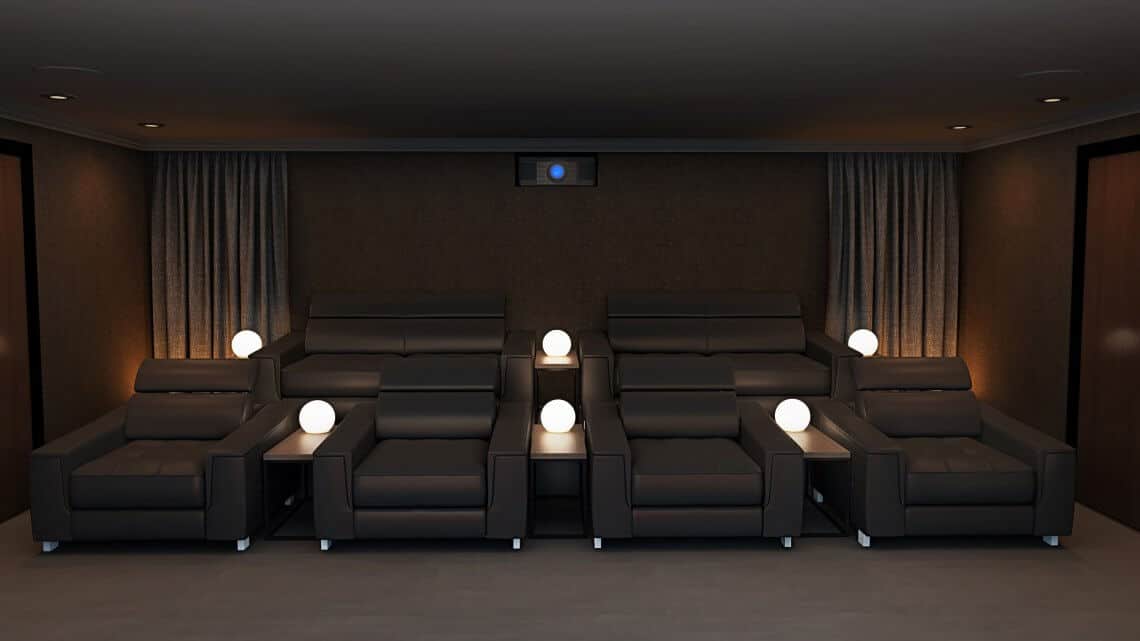
Seating: Electric recliners with integrated footrests, positioned in rows for optimal sight lines and acoustic symmetry. A 12-seat system might arrange seats in three rows of four in an offset pattern so no one sits directly behind someone else.
Lighting control: Motorized dimmers on all lights; scenes programmed for different uses. Movie scene: lights at 5%, warm color. Intermission: 50%. Cleanup: 100%. Scenes recall automatically or via touchpanel. Some systems add bias lighting behind the screen to reduce eye strain during dark scenes.
Motorized blinds: Essential for projector systems requiring complete blackout. Lutron or Crestron motorized blinds integrate with lighting scenes, activating automatically.
Lighting Design Inside the Cinema Room
Lighting in a dedicated cinema is designed as a sequence, not a single “lights down” command. In our Surrey cinema, four individually controllable circuits — cove uplighting, seat spotlights, stair riser LEDs and entrance downlights — are programmed into five scenes: pre-show, film, interval, exit and cleaning. Each scene is recalled from a Crestron keypad at the entrance and from the Crestron touchpanel at the seating position, and the film scene dims every circuit to its calibrated level in a fifteen-second ramp that becomes part of the experience. Stair riser lighting keeps the room safe to move around with the film running, while seat spotlights allow drinks and menus to be found without lifting the whole room.
The same lighting control system ties into the cinema start-up: one button press starts the projector, selects the source and sets the correct lighting scene, so no-one has to remember an order of operations.
Hiding the Technology: Fabric Walls and Concealed Speakers
Acoustic treatment does not have to look like acoustic treatment. In the Surrey room, walls and ceiling are finished in an acoustic fabric system applied over fleece wrap, absorbing and diffusing sound at every room boundary without visible panels. The same finish hides the four surround speakers in the side and rear walls, so only the screen, the seating and the lighting are visible. Read more about fabric walling →
In a multi-purpose room the approach changes but the principle holds. In a Kensington mews basement, every Artcoustic speaker is colour-matched to its surrounding surface, custom acoustic absorber panels printed with bespoke artwork address the rear-wall reflection above the sofa, and even a bean bag under the staircase serves as a bass trap at a critical room boundary. When the system is off, it reads as a reception room.
Calibration: Where the Room Is Finished
Calibration is the last stage, and its quality depends on everything before it. Once a room is complete, a professional measurement microphone is used to measure the frequency response across the seating positions, and the processor corrects it. Where a full acoustic model was built at design stage, the room reaches calibration in good condition, so the correction refines the result rather than fighting the room. Read more about home cinema calibration →
Installation & Setup
Professional cinema installation involves multiple phases. The design phase identifies room acoustics, equipment placement, screen size, and cabling strategy. Construction and cabling runs speaker wires, Ethernet, power, and conduit; acoustic treatment is installed. Equipment installation mounts the projector, screen, speakers, processor, and control system. Calibration measures the room, applies EQ and delays, tests all channels, and programs control scenes.
The process demands expertise across acoustics, electrical, networking, and control. Mistakes compound: poor speaker placement creates imaging problems calibration cannot fix; inadequate acoustic treatment limits processor effectiveness; amateur networking causes dropout or latency.
Integration with Home Automation
A cinema integrates with the broader smart home for seamless operation. Lighting scenes trigger automatically when cinema mode is selected. Motorized blinds close simultaneously. Climate control manages temperature in sealed rooms. Control via a single interface—Crestron Home, RTI, or similar—provides touchscreen or mobile app access. One button press activates the entire cinema; a second powers everything down. Guests operate it intuitively without technical knowledge.
Why Professional Design Matters
A home cinema system integrates across multiple disciplines—acoustics, electrical, networking, control. Professional installers understand how these interact and design systems that solve problems rather than create them. We measure rooms acoustically, model acoustic behavior during design, select equipment that works together, and calibrate to professional standards rather than guessing. We also ensure systems evolve: new sources, equipment upgrades, and room changes should not require redesign.
At Custom Controls, we’ve designed and installed professional cinema systems since 1998. We hold 5 consecutive Crestron Integration Awards and are certified dealers for every major processor brand.
Frequently Asked Questions — Home Cinema Systems
What is the minimum room size for a projector cinema?
About 3.5m deep and 4m wide. This allows a ~2.5m screen, seating rows, and proper speaker placement. Smaller rooms work better with TV-based systems.
Can I retrofit a cinema into an existing room?
Yes, but cabling is harder and acoustic treatment may be limited. Easier during construction or renovation when walls are open.
Do I need a dedicated processor or can an AVR work?
Consumer AVRs handle basic surround and Dolby Atmos but lack the room correction precision of professional processors. For mid-to-high-end systems, a dedicated processor is recommended.
How many speakers do I actually need?
Minimum is 5.1. Better is 7.1. Excellent is 7.2.2 (adds height for Atmos). More speakers create better imaging and surround envelopment but require more cabling, calibration, and investment.
What is Dolby Atmos?
Height channels (overhead speakers) that create three-dimensional sound. If content is available (Blu-ray, select streaming), it’s immersive and worth including.
Can I use standard home WiFi?
Not for control and automation. Cinema systems require low-latency, reliable connectivity. Hardwired Ethernet is essential for critical components (processor, control hub). Consumer mesh WiFi is insufficient.
Home Cinema Installation → · Home Cinema Design & Planning → · The Ultimate Home Cinema Design Guide → · Top 5 Home Cinema Ideas → · Building a Steinway Lyngdorf Home Cinema → · Seating Comparison: Five Premium Brands → · Crestron Home Automation →