The Ultimate Guide to Home Cinema Seating
Home Cinema Seating Ideas, Layout and Planning
This article covers every aspect of home cinema seating — how to position it correctly within the room, then how to actually select the seats and design themselves, with plenty of real examples from our own projects to help with inspiration. For a brand-by-brand comparison of the seats themselves, see our guide to the best home cinema seats.
What Is the Correct Distance from the Screen for Home Cinema Seating?
When designing a home cinema room, the distance from screen to seating is crucial to a genuinely good viewing experience. A number of variables come into play — room size, screen size and the specific clients’ needs. The human eye resolves real detail within roughly a 30-degree arc; beyond that, we mostly perceive colour rather than detail. Sit too close to the screen and watching a film becomes tiring, as the head has to move side to side to pick up detail. Sit too far away — well beyond that 30-degree arc — and the screen starts to feel small regardless of its actual size.
- Room size. Obviously this factors directly into the design. A small room with a large screen often suits a single large row of seating better than two or more rows. Our Dubai home cinema sits in a fairly narrow room and uses two rows of four seats, whereas our Derby home cinema is wide but shallow, so uses a single long row wrapped around the room. Both rooms are very different in shape but fit their respective spaces well and are genuinely good to use.
- Screen size. The larger the screen, the further back a client should generally sit — although with 4K projectors, the distance doesn’t need to be as great as with older HD projectors, since 4K’s higher resolution carries more detail and allows sitting closer without any visible blockiness. The table below is a useful guide based on our experience, roughly equivalent to watching from the middle seats of a commercial cinema:
- 75″ screen — first row at around 3m
- 100″ screen — first row at around 3.8m
- 150″ screen — first row at about 5.7m
Updated to reflect 4K resolutions. The guidance above was correct when we first wrote it, but things have moved on considerably since 4K became standard. With older 1080p projectors, sitting too close to the screen risked visible pixels and viewing fatigue. 4K has four times the pixel density of 1080p in the same screen area, letting clients sit considerably closer without any of those unwanted effects. We used to work to a viewing angle of roughly 31 degrees; with 4K systems, we can comfortably extend that closer to 45 degrees, meaning the front row can sit as close as the screen is wide — a 3m wide screen can have seats as close as 3m away. This is the closest we’re genuinely comfortable recommending, and our usual working range is as follows:
For a 3m wide projector screen:
- Minimum distance to screen, 1:1 ratio — 3m
- Maximum distance to screen, 1:1.7 ratio — 5.2m
Ideally every seat sits somewhere between 3m and 5.2m from the screen, with the genuine sweet spot somewhere in the middle. For a single row of seating, this gives plenty of flexibility to account for room characteristics and client needs — we also factor in the age of the clients and whether they wear glasses, among other things. For two rows, we can generally fit both comfortably within those measurements. For three rows, the screen is usually larger as well, which gives more range to work with.
What About the Second Row of Cinema Seating?
The second row is considerably more straightforward to plan than the first — a good rule of thumb is to leave around 50cm between rows. This provides a comfortable walkway, although the specific seating style needs to be factored in: reclining chairs with extending footrests need that space to accommodate the footrest when fully reclined.
Screen distance, row spacing and seat choice are never decided in isolation. They are worked out together with the screen, the acoustic treatment, the calibration and the control system, and these are the services that shape the seating on every cinema we design.

Cinema Design

Calibration

Acoustics

Seating

Home Cinema
What Are the Different Types of Cinema Seating Available?
There’s a genuinely wide range of options when it comes to home cinema seating, and the only real “rule” is that it should be comfortable for the specific family using it. The section below covers how we work through the selection process — but first, the options themselves:
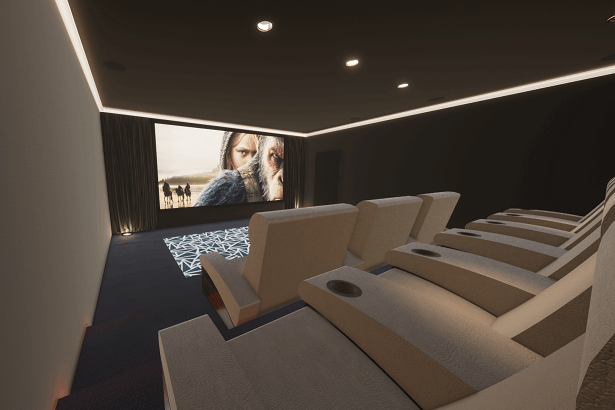
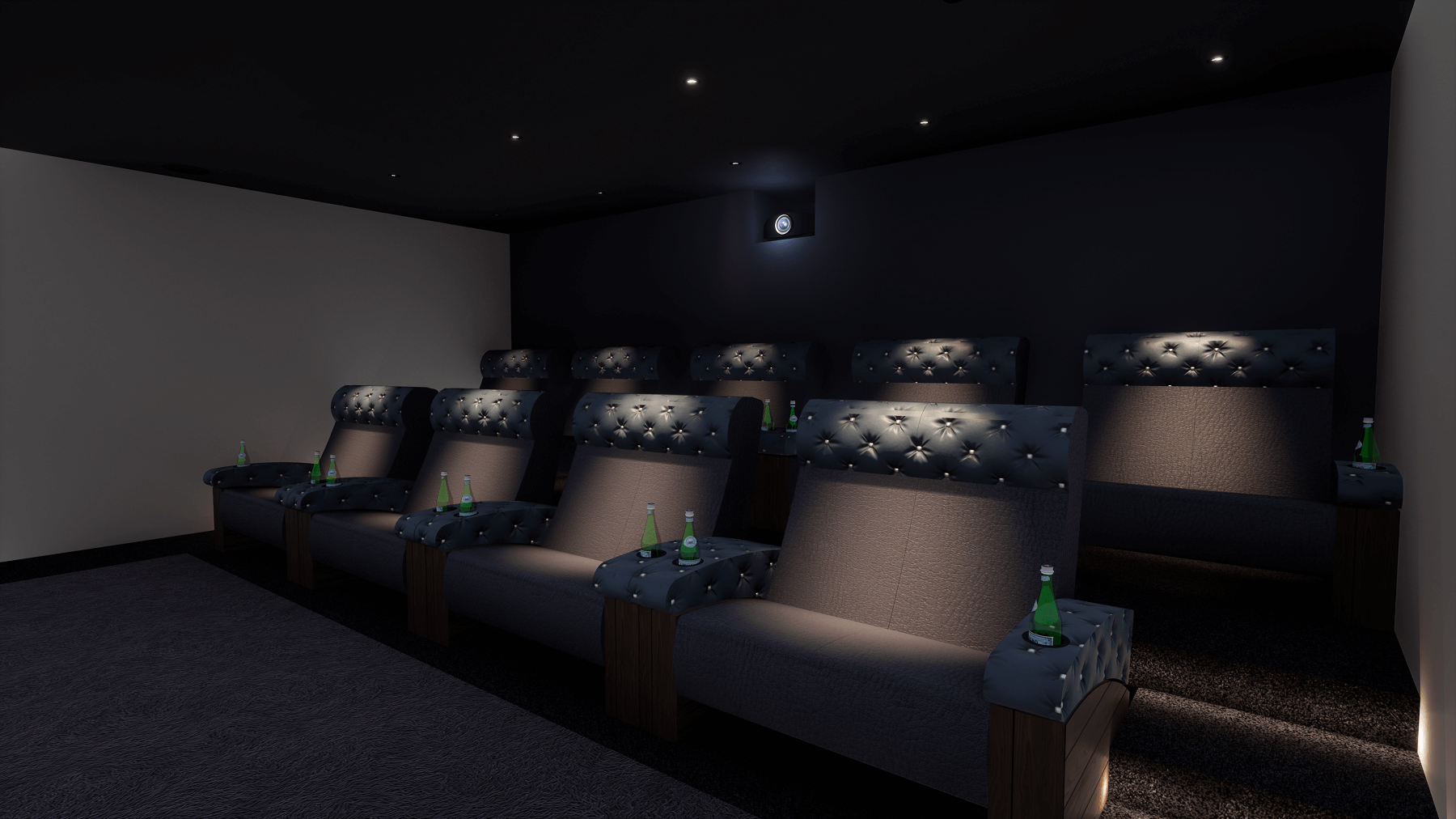
- Individual home cinema seats — as good as it gets. Individual chairs finished in the client’s choice of fabric, electrically operated and custom designed specifically to match the room and the family’s requirements.
- Home cinema sofas / love seats — what better way to watch a film than alongside someone else? A variation on the individual seat above, made to order for the specific project, and equally comfortable for one person on their own.
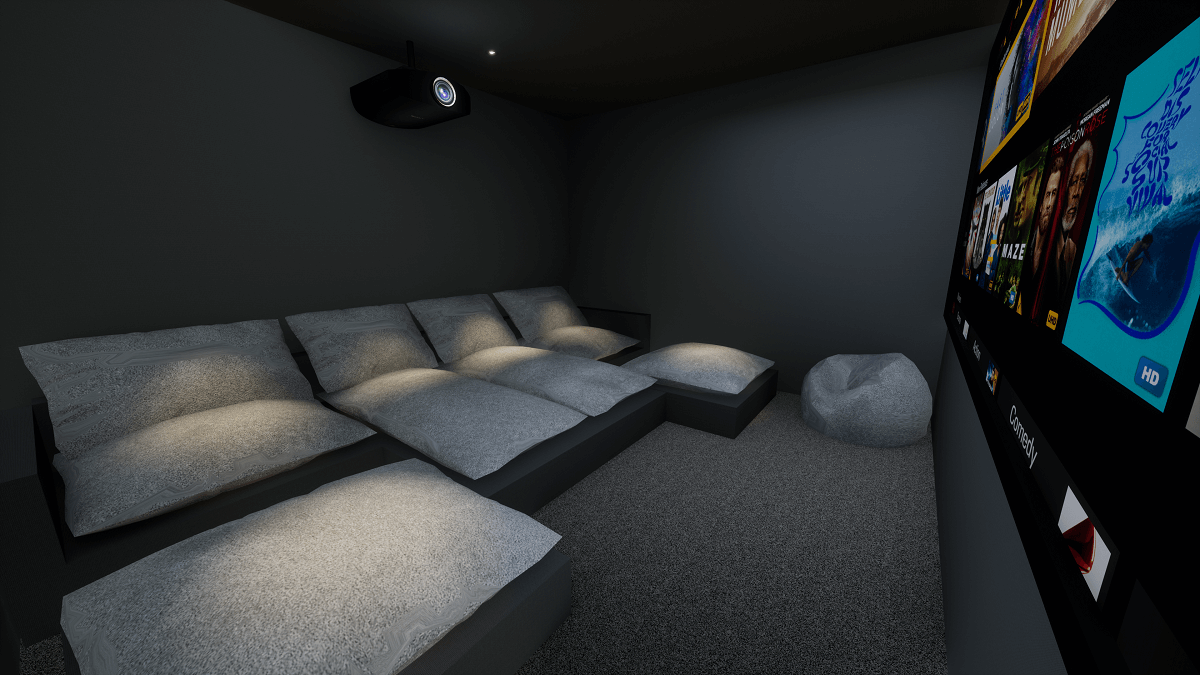
- The chaise longue / day bed — well suited to less formal cinema rooms and families with younger children, allowing kids to settle in, fidget or fall asleep in a way a formal cinema chair doesn’t accommodate. A genuinely comfortable way to spend a few hours on a film marathon.
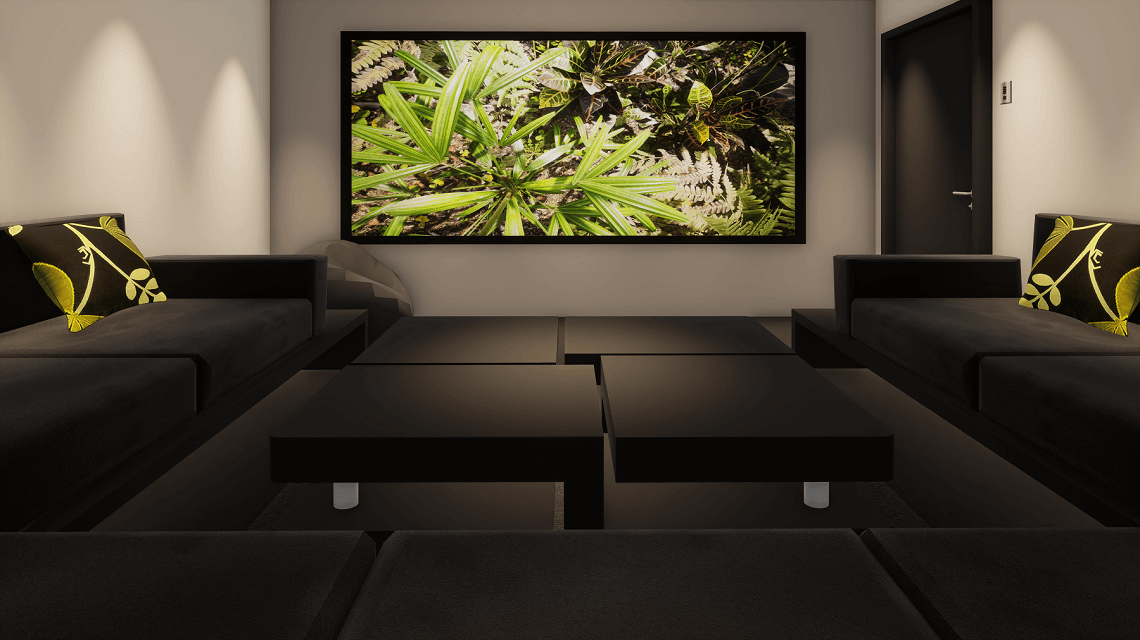
- The modular sofa — a modular sofa from one of the major manufacturers can work perfectly in a cinema room without a huge budget. In new-build rooms, it’s even possible to match the width of the room to the sofa exactly, giving a custom-built look at no extra cost.
- The bean bag — our secret weapon. The humble bean bag finds its way into most of our family-orientated cinema rooms, providing useful occasional seating and a splash of colour into the bargain.
How to Choose a Specific Type of Home Cinema Seating
Home cinema seating is one of the most important elements of a successful home cinema installation — clients spend long periods in one position watching a film or a box set, so comfort genuinely matters. Get the seating choice wrong and the room as a whole won’t succeed, regardless of how good the equipment is.
We weigh up a number of factors:
- The makeup and age of the family. This might seem an odd question to ask first, but we specify different seating for different ages of children. If a room mainly hosts adults and older children, more formal cinema seating works perfectly well; for younger children, day-bed style seating lets them lie down — and occasionally fall asleep, if you’re lucky. Our standard approach for families with younger children is day-bed seating at the front with more formal seating behind, giving the best of both. The relaxed front row also means viewers in the second row can see over the top without needing a particularly large step up, which can otherwise be necessary if every row uses identical seating.
- Individual seats, or a mix with sofas? One of the main appeals of a home cinema room is enjoying films together as a family, so a sofa arrangement for the main seating area is sometimes preferable to individual chairs. Even our more formal seating options can be specified without arms, giving a hybrid between formal seating and a sofa.
- Which fabrics? Cinema seating is traditionally leather, largely because it’s perceived as luxurious and hard-wearing. In our more bespoke rooms, fabric upholstery can actually be more comfortable, warmer and more personal. As part of the full room design, we make sure fabrics complement the room’s aesthetic, and different rows can use different types, finishes and colours. There’s also a modest acoustic benefit to fabric seating over leather. Where leather is chosen, specify full grain or top grain — never bonded leather, which peels with regular use.
- Electric or manual recliners? Most of our seating includes motorised backrests and footrests, and we can program seats to move to a client’s exact preferred position — and recline angle — the moment a film starts, in coordination with the lighting dimming at the same time. A motorised articulating headrest and power lumbar support are worth specifying on full recliners, so viewers can watch comfortably at full recline.
- Cup holders, chillers, chargers and mini fridges. Home cinema seating sits firmly at the luxury end of the market — cup holders that once seemed extravagant can now be chilled, wireless charging built into the armrests keeps phones and the room’s control iPad topped up, and tactile transducers can even be built into the seats so bass is genuinely felt as well as heard.
The bespoke nature of our home cinema seating means almost any request can be accommodated — from materials and stitching through to electronics integration and overall size.
What Cinema Seating Brands Do You Offer?
This list isn’t exhaustive — we select cinema seating from a range of manufacturers, since every project is genuinely bespoke. If a sofa from one of the major sofa manufacturers fits the scheme better, we’re equally happy to specify that instead. For a detailed comparison of each brand, see Best Home Cinema Seats: Luxury Brands Compared.
- Cineak — our preferred brand
- Home Cinema Modules
- Elite Home Cinema Seats
- Cineca
- Moovia
- Vismara Design
- B&B Italia Tufty Time
What Options Do I Have for Seating Styles?
With the technical groundwork covered, here are real examples from our portfolio. Click any image to view the full case study.
-
St Georges Hill Home Cinema Room
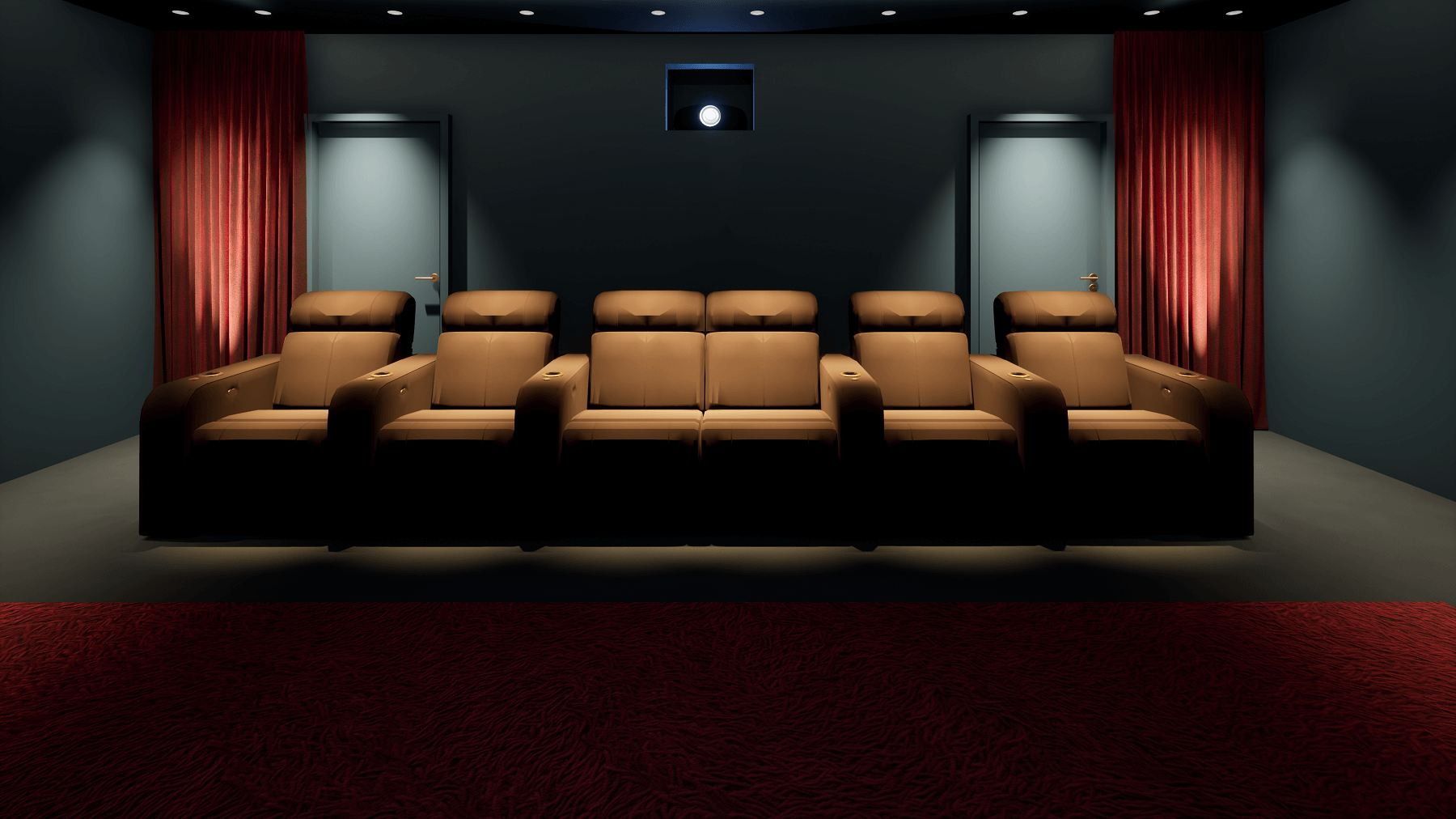
St Georges Hill Home Cinema Room This project really shows the custom nature of high-end home cinema seating. The controls and cup holders are finished in gold, matching the door handles throughout the room.
-
Luxury Garage Cinema — Cheshire
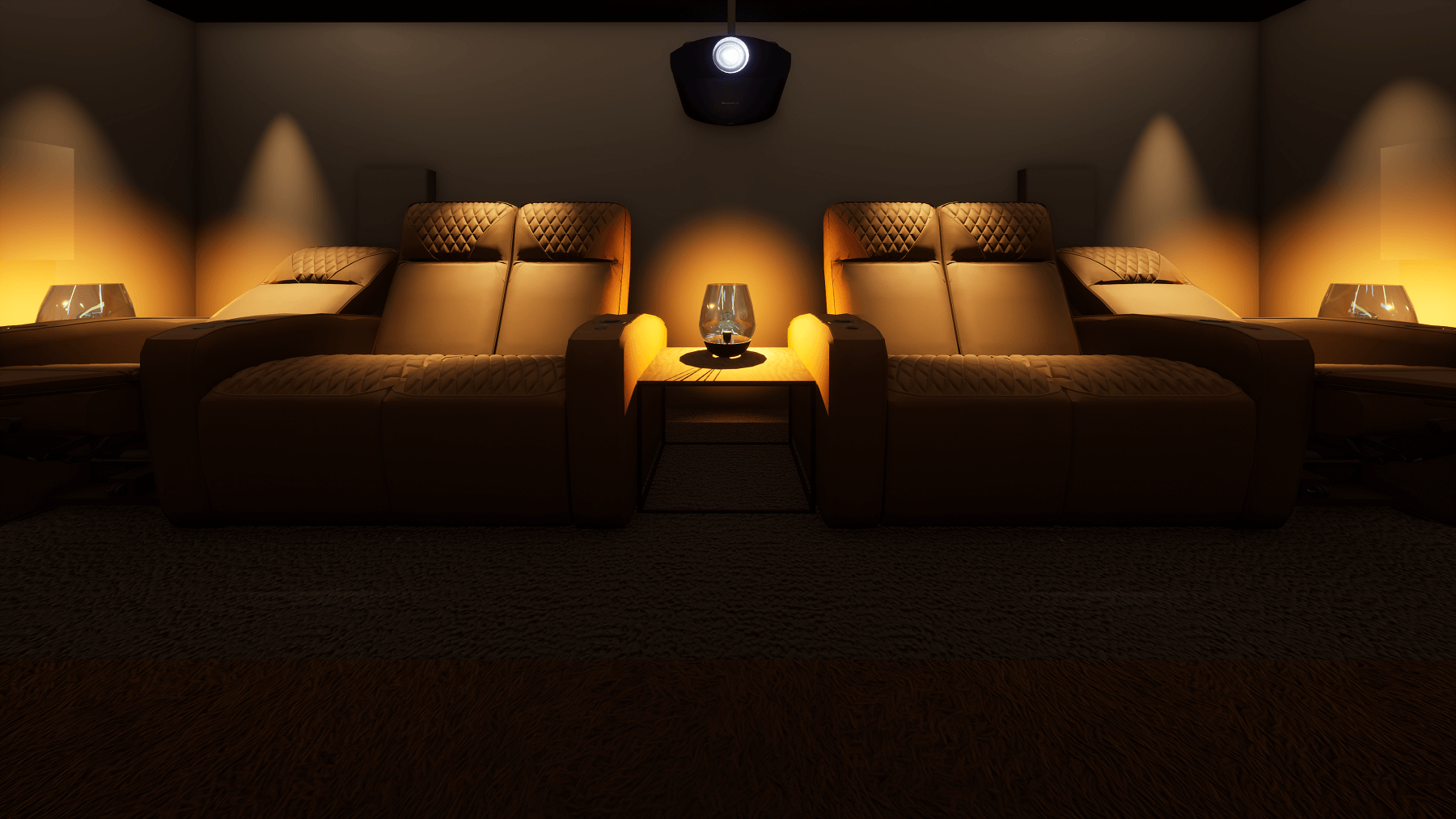
Luxury Garage Cinema – Cheshire Seating for six arranged as two double sofas flanked by individual chairs — by Home Cinema Modules, to our custom design.
-
Basement Home Cinema — Berkshire
Cineak Chaise Longue and Chairs We use this seating design frequently because it’s genuinely flexible — the chaise longues allow a fully relaxed experience, and the chairs can offer upright seating or have their footstool pushed closer to form an improvised day bed.
-
Home Cinema Room — Greater Manchester
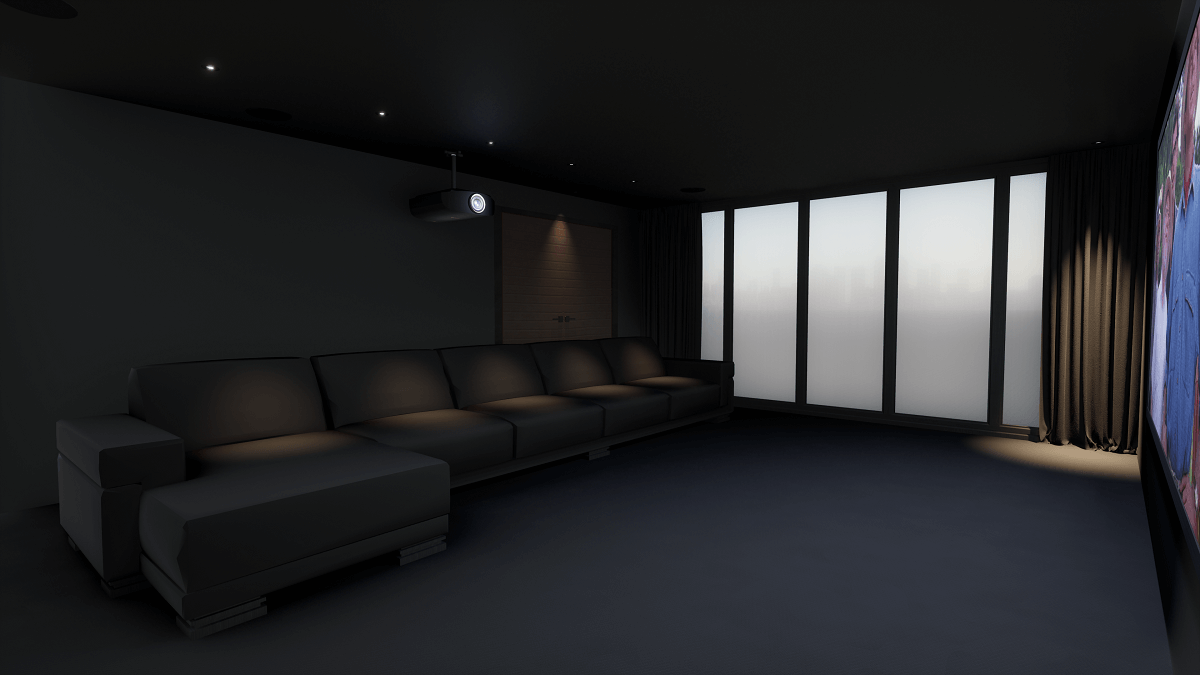
Home Cinema Room – Greater Manchester Our cinema designs don’t always need expensive bespoke seating — sometimes an off-the-shelf sofa from a major manufacturer fits the brief perfectly.
-
Home Cinema Room — Midlands, UK
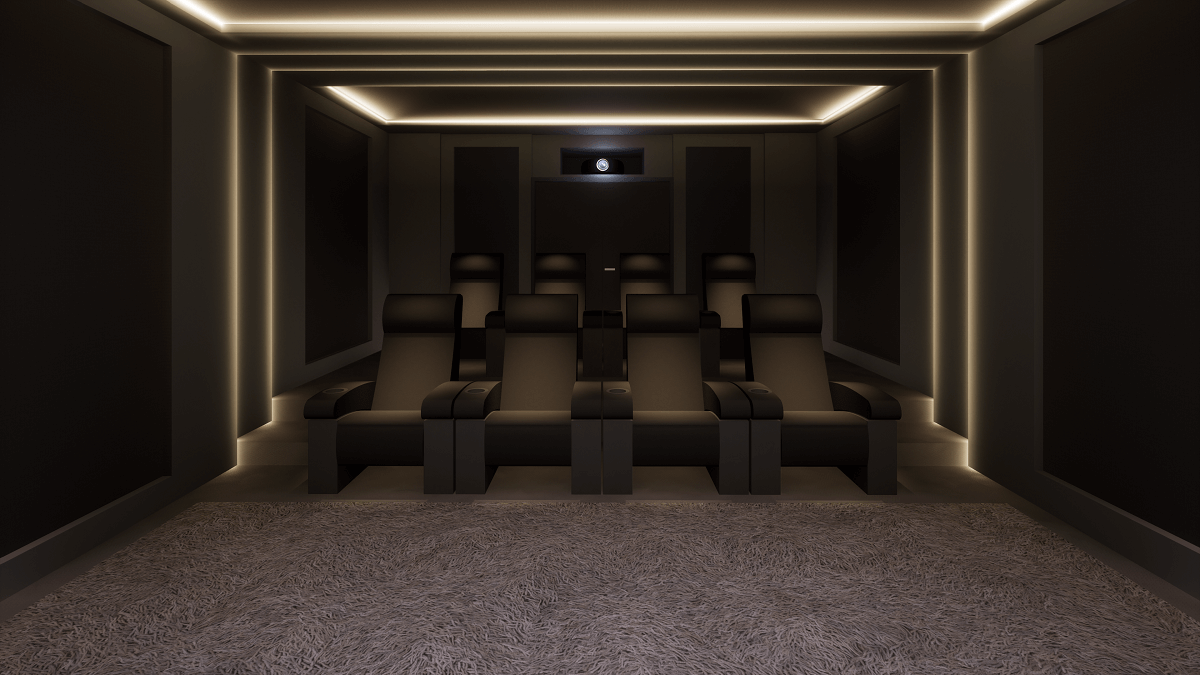
Eight Cinema Seats Installed in a Cinema Room A proper cinema deserves proper chairs. Custom-built to the client’s exact requirements, with full electric adjustment, fitting the room precisely.
-
Luxury Home Cinema — Abuja, Nigeria
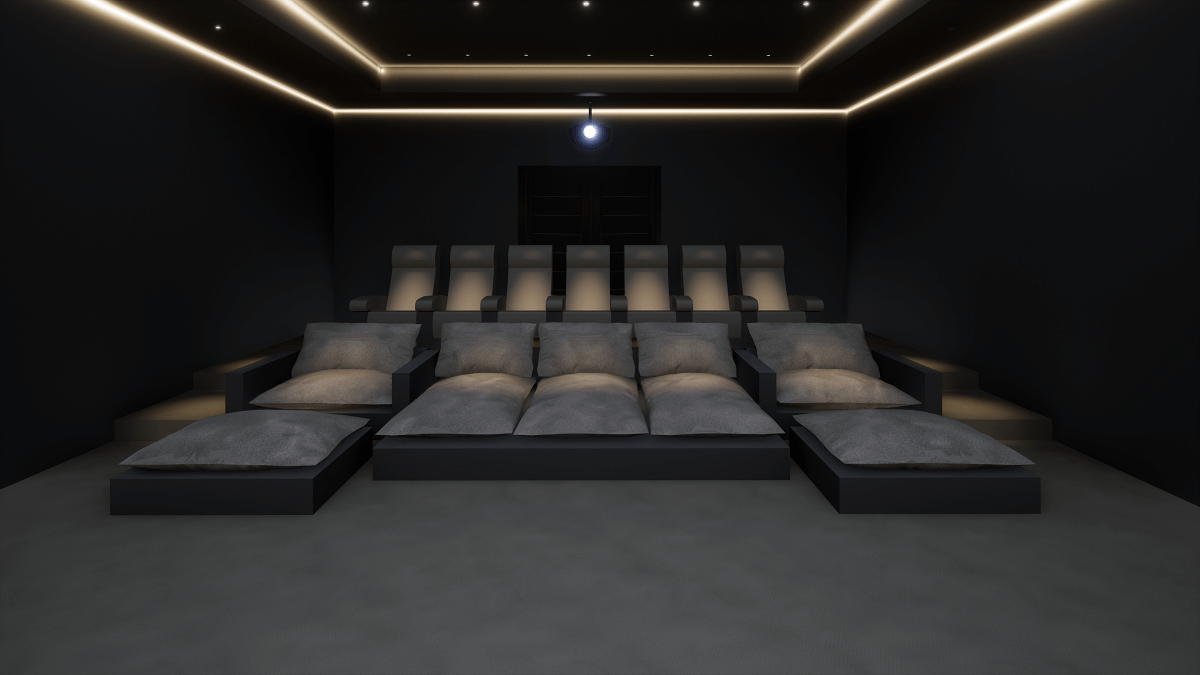
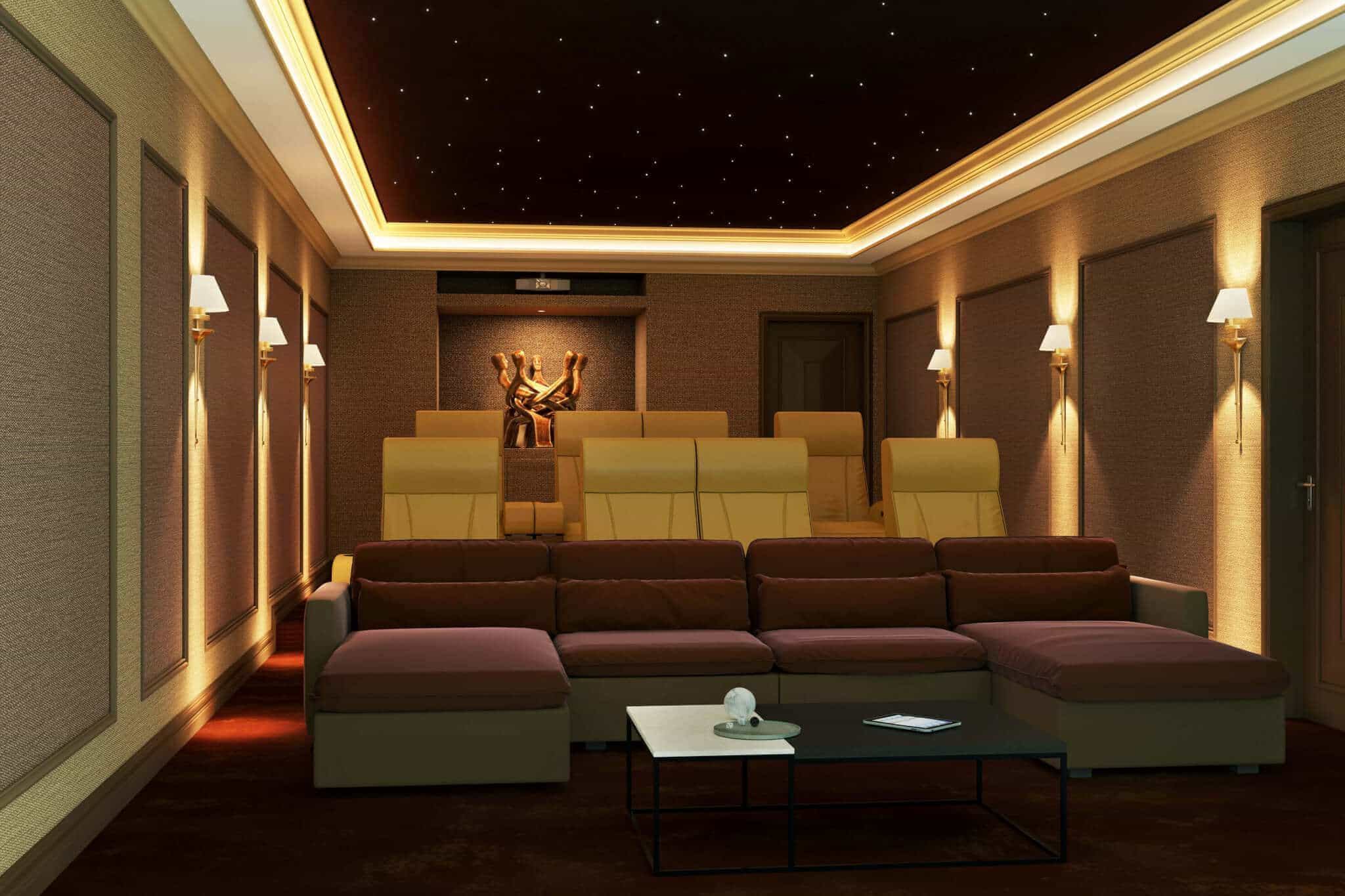
Luxury Cinema Seating for a Cinema Room For clients who want the best of both worlds, two seating styles in one room makes genuine sense — a formal row at the rear, and a relaxed row for movie marathons, which also happens to suit younger viewers perfectly.
-
Family Movie Room, Dubai
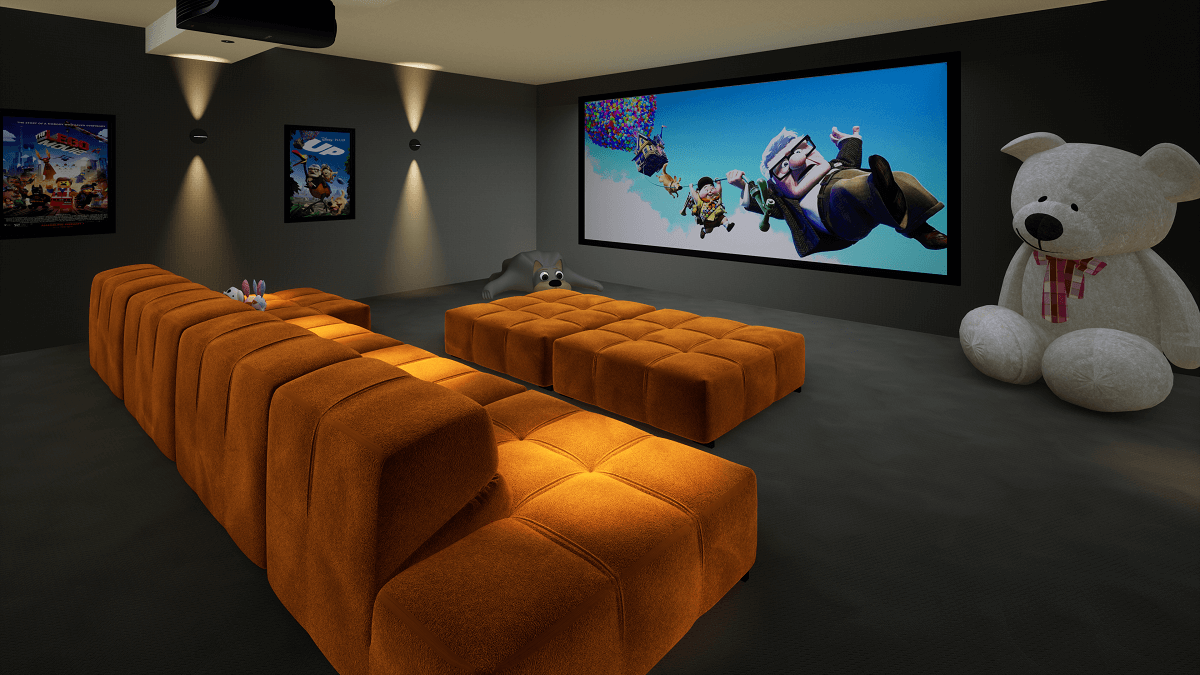
Less formal cinema seating One of our favourite rooms. A B&B Italia Tufty Time sofa makes the perfect seating solution for a space like this — comfortable, informal, and exactly right for a family with young children.
-
Kensington Basement Home Cinema
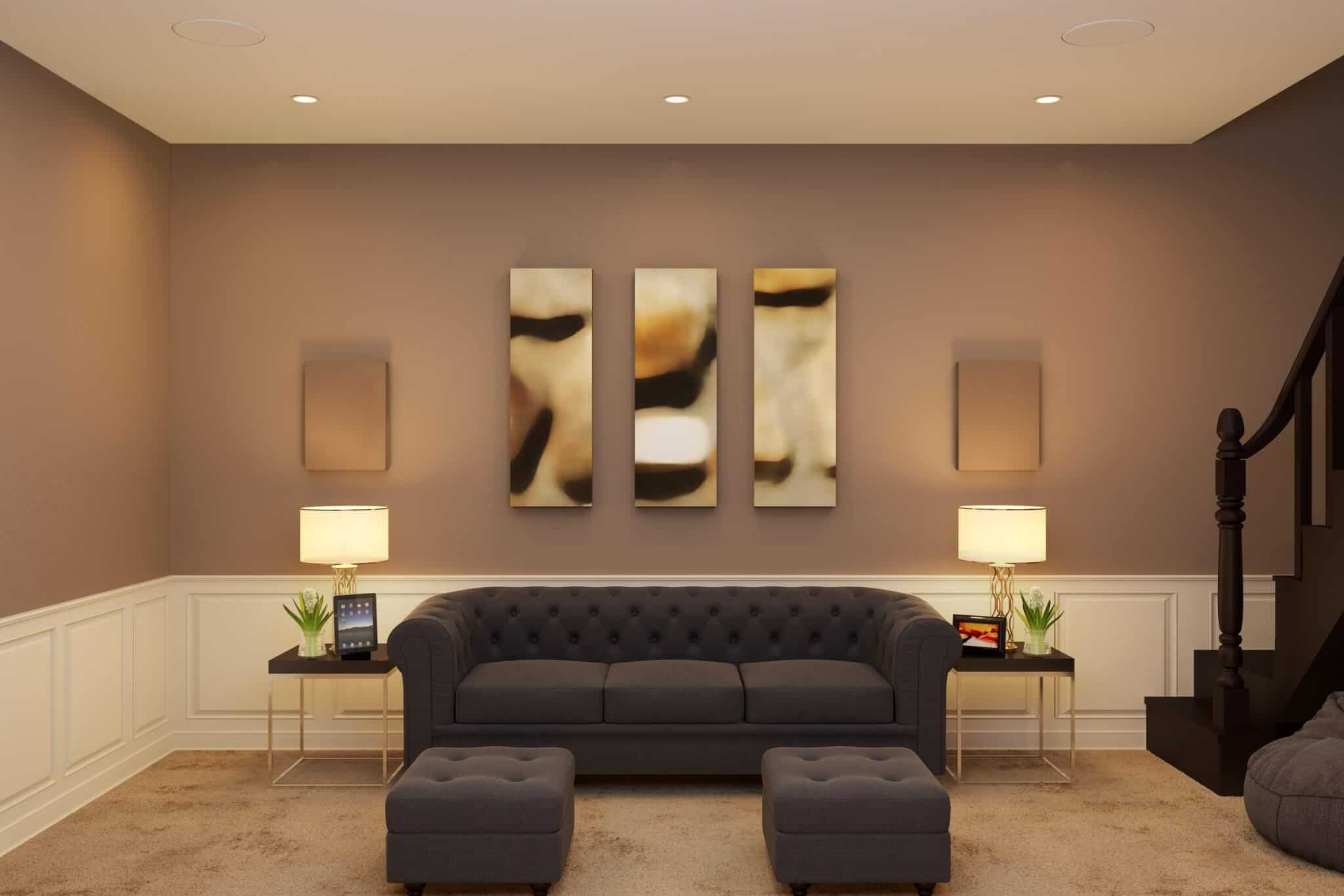
This basement cinema shares a similar approach to the first case study above. The footstools add genuine flexibility — pushed toward the seating, clients can lounge on an improvised day bed; pushed away, they double as tables for drinks and snacks. As is now tradition, we added a bean bag in matching fabric for occasional younger viewers. -
Home Cinema Room — Derby
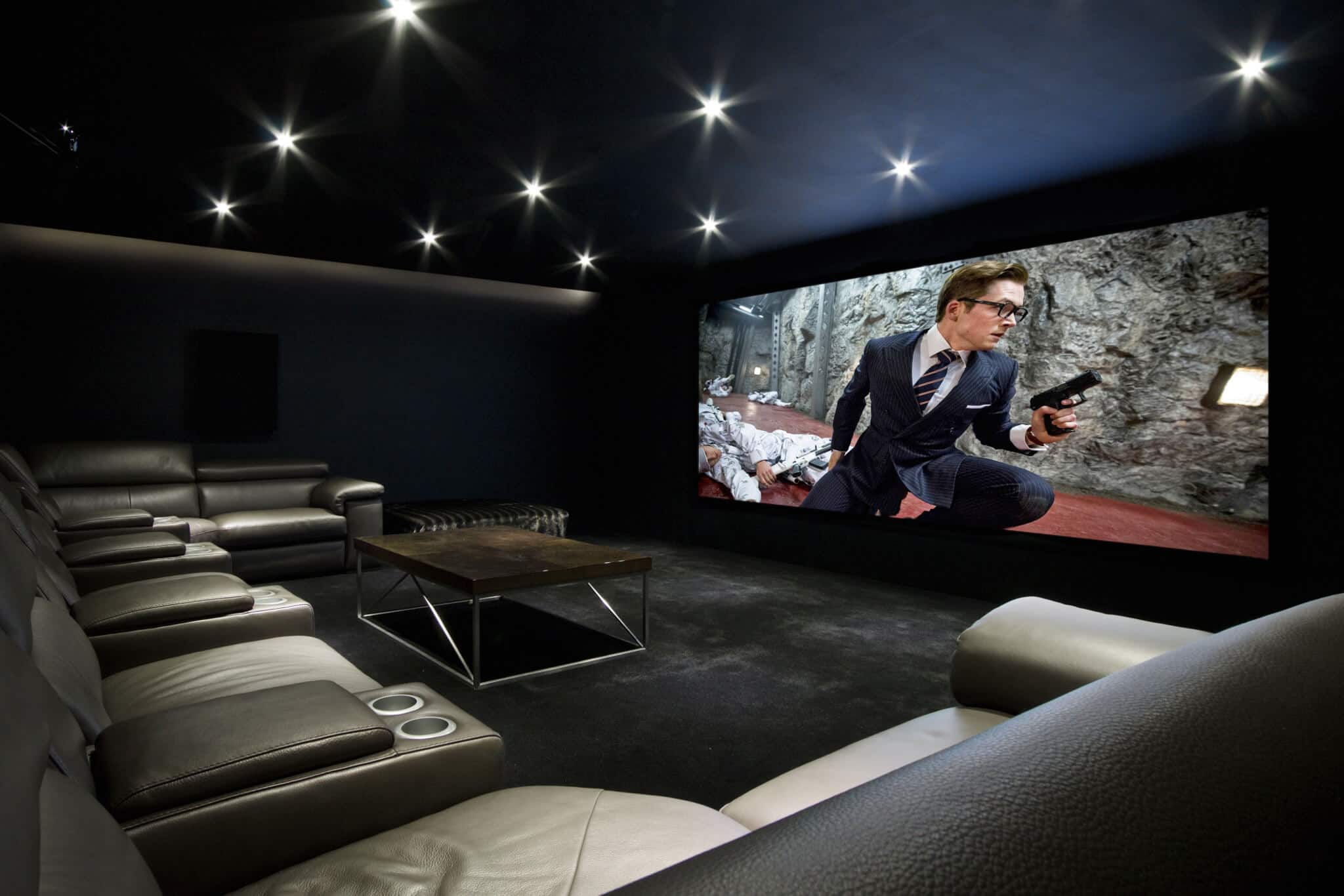
Our clients love this room, and it’s easily the most shared on our social media channels too. The wrap-around sofa creates a genuinely social space, with the screen and sound system delivering a great experience from every seat in the room.
Row Spacing, Risers and Sightlines
Once the distance to the screen is set, the space between rows decides how many seats the room will actually hold. The useful measurement is row pitch — the distance from the back of one row to the back of the next — and it depends almost entirely on the seat. A fixed or lightly reclining sofa needs far less depth than a full power recliner, which can grow by the best part of a metre when the footrest extends and the back drops.
As a working guide, allow the seat’s fully reclined depth plus a clear walkway of around 50cm in front of it. For full recliners that typically lands row pitch at around 2m or a little more; for upright or lightly reclining seating it can come down considerably. Wall-hugger mechanisms, which slide forward as they recline, let the back row sit much closer to the rear wall — often the difference between fitting a second row or not.
A second row also needs to be raised on a riser so heads in the front row don’t cut into the bottom of the image. The height is calculated from the screen height, the viewing distance of each row and a seated eye height, rather than picked from a table; in most residential rooms it works out at roughly 30–45cm. The riser is also an opportunity: built as a sealed, damped platform it becomes part of the room’s acoustic design, and it can house step lights, cable routes and a low-level lighting circuit.
All of this is worked through at cinema design stage, alongside the room’s dimensions, screen size and speaker layout, so the seating is specified to fit the room rather than the other way round.
Frequently Asked Questions — Home Cinema Seating
How far should cinema seating be from the screen?
With a 4K projector, the front row can sit as close as the screen is wide — a 3m screen suits seats from roughly 3m to 5.2m back, with the genuine sweet spot somewhere in the middle.
How much space should there be between rows of cinema seating?
A good rule of thumb is around 50cm, which gives a comfortable walkway while still allowing for an extended footrest on reclining chairs when fully reclined.
What’s the best cinema seating style for families with young children?
A day-bed or chaise longue style at the front, with more formal seating behind, gives younger children somewhere to settle in or fall asleep while still keeping a proper cinema feel for the rest of the room.
How much space do reclining cinema seats need between rows?
Work from the seat’s fully reclined depth plus a walkway of around 50cm. For full power recliners that usually means a row pitch of around 2m or slightly more, measured from the back of one row to the back of the next; wall-hugger mechanisms help the back row sit closer to the rear wall.
How high should a cinema seating riser be?
High enough that the front row’s heads clear the bottom of the image from the second row. It’s calculated from the screen height, viewing distances and seated eye height, and in most residential rooms comes out at roughly 30–45cm.
Which cinema seating brand is best?
Cineak is our preferred brand for dedicated cinema rooms, for its breadth of range, build quality and control integration. Moovia, Vismara Design, Cineca and Home Cinema Modules each suit particular briefs, and our brand comparison guide covers them in detail.
Custom Controls specify and install home cinema seating as part of every cinema room project — ensuring correct sightlines, appropriate row spacing and the right seating style for the room. We are Cineak preferred suppliers.