Smart Homes London — Luxury Automation for Discerning Homeowners
Crestron and Lutron Smart Homes in London
Published July 2026 · Custom Controls · Smart Home Automation
Most of the smart home systems we are asked to replace in London were not badly chosen. They were assembled. A lighting app from one manufacturer, a heating app from another, a voice assistant on top and a handful of routines that only the person who built them understands. Each piece works on its own, but nothing coordinates them, so the house never behaves as a single system.
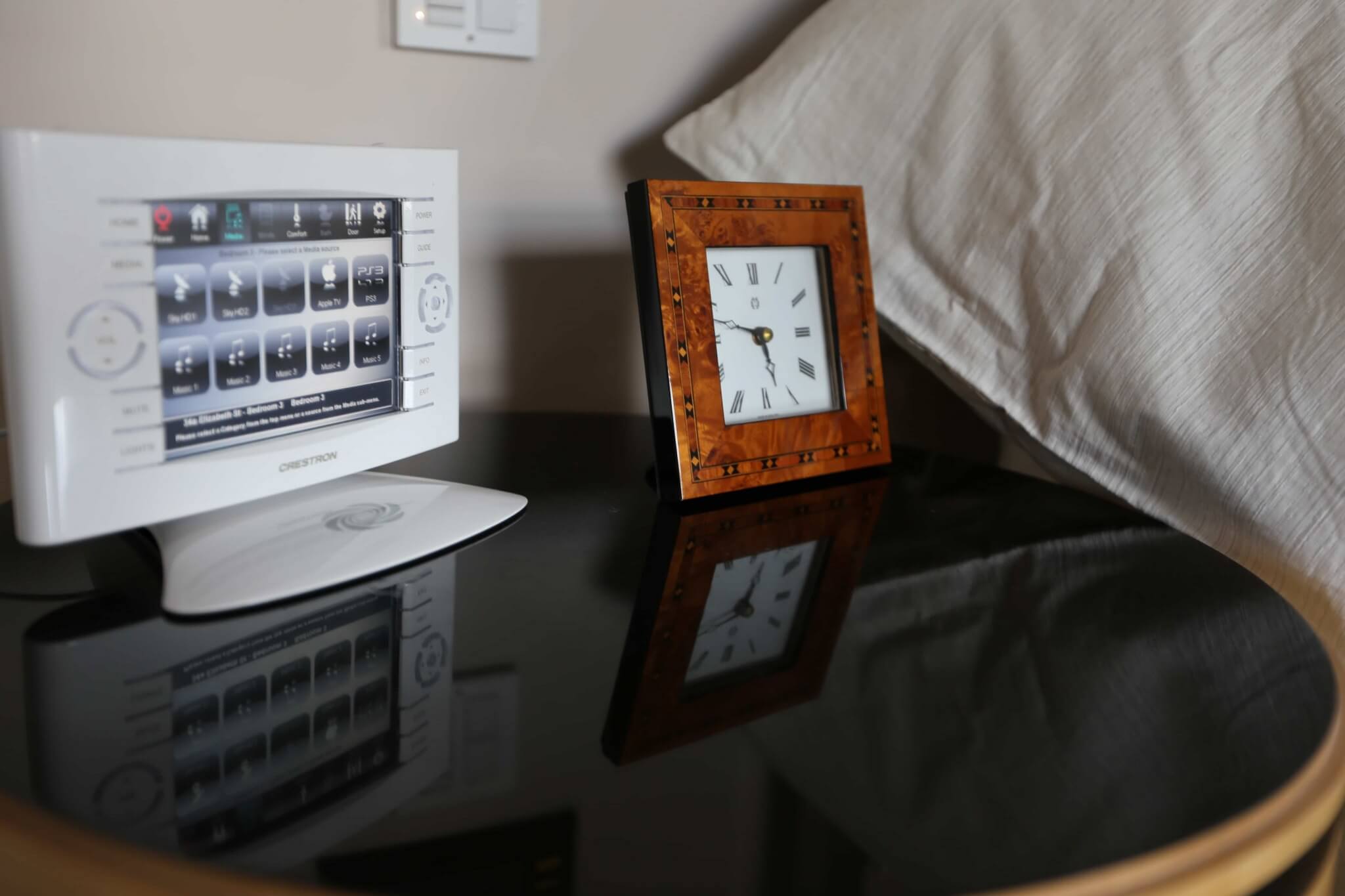
An integrated home puts one control platform at the centre, usually Crestron, with lighting, climate, shading, audio, video, security and access all reporting to it. The owner uses a keypad, a touchpanel or a phone, and the same scenes and logic apply in every room. It is the work we do across Belgravia, Mayfair, Knightsbridge, Chelsea, Kensington and Hampstead, where the buildings are often listed or historic and the standard of finish leaves no room for visible compromise.
This guide explains how we design and install smart homes in London: what the control platform does, how infrastructure is hidden in period buildings, how security and networking are handled, and which factors drive the scope of a project.
What Separates a Luxury Smart Home From a Connected One
A connected home responds when you tell it to. You open an app, choose a scene or ask a speaker to turn something off. A luxury installation is designed so that most of those decisions are already made. The entrance lighting comes up to a set level when the front door opens, the drawing room is already at temperature, and the alarm is disarmed by the same action that unlocks the door. Nothing in that sequence needs a command, because the system was programmed around how the household actually lives.
That depends on four things that a retrofit of consumer products rarely delivers. The first is a unified control architecture. Rather than joining brands together through cloud services and hoping they stay compatible, a single processor, typically Crestron or Control4, talks to every subsystem directly. A “Leaving Home” scene then does everything at once: lights off, thermostats set back, the alarm armed, garage doors closed, exterior lighting on and the entertainment equipment powered down.
The second is architectural integration. Touchpanels are recessed into joinery or finished to match the wall, speakers sit flush in the plaster, and cabling is routed through the building so that the occupants never see it. The third is commissioning. A system is not finished when the last device is connected: lighting levels are adjusted on site, scenes are refined once the household has lived with them, and climate zones are balanced against real use. The fourth is expansion. When a wing is renovated or a basement is converted, new zones join the existing system without rebuilding it, provided the original design allowed for growth.
Why We Specify Crestron for London Homes
Crestron suits large London houses because it was built to run many systems from one platform. A single control system can handle Lutron RadioRA 3 or HomeWorks QSX lighting, climate zones, motorised shading, security, access control, whole-home WiFi and audio video distribution, and present all of it through the same touchpanels, keypads and mobile apps. Energy monitoring and remote access sit on the same platform, which means there is one system to maintain rather than six.
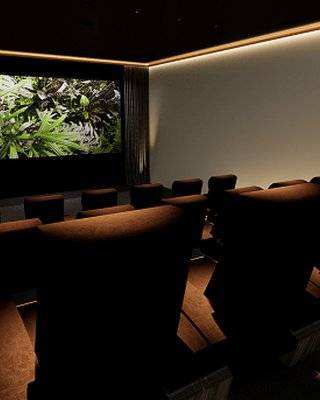
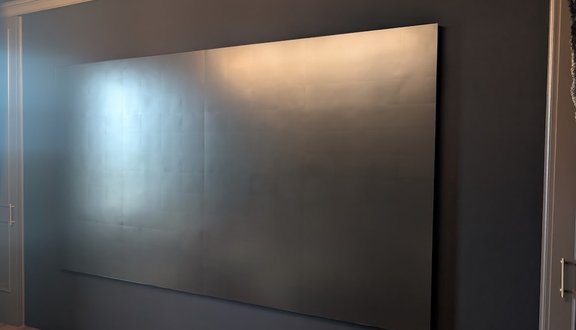
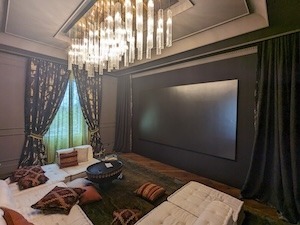
In a house with a cinema, the same processor coordinates the Kaleidescape media server, the projector and screen, and the motorised seating. A person walking into the room does not need to know that a dozen devices from different manufacturers are involved. They press one button and the room is ready, and that reliability comes from the control programming rather than from any individual product.

Crestron

Lutron

Multi-Room Audio

Security

WiFi & Networks
Control4 has a place in smaller projects and in homes where the brief is simpler, and we are certified for it alongside RTI, AVA and Savant. For the larger London houses we work on, with many zones, extensive lighting and a cinema, Crestron is the platform we recommend most often because of how far it scales and how deeply it can be programmed to suit a household.
Retrofitting a Mews House Without Opening the Walls
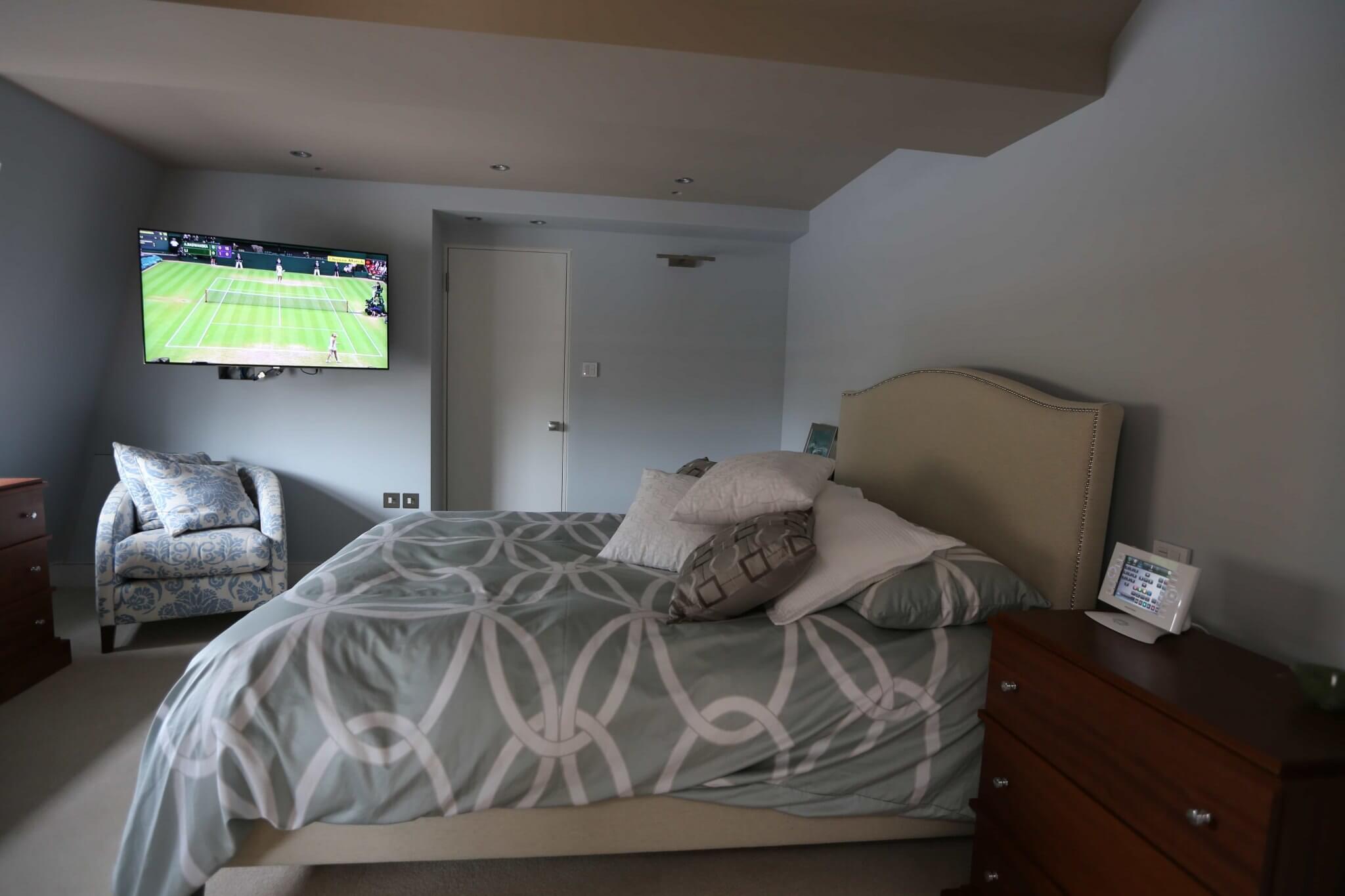
Not every London project allows new cabling. Our Kensington Mews installation was a Crestron retrofit in an occupied house, and the owners did not want walls opened. We used Crestron wireless lighting control throughout, so every light could be dimmed and scened without rewiring. The house also gained multi-room audio video, control from an iPad, a Crestron MLX-3 handheld and wall keypads, AV input plates for games consoles, a digital music server, whole-home WiFi and a full security integration including the alarm.
Wireless lighting control is a practical answer to period buildings and finished interiors, but it needs careful design. Device locations, signal paths and the number of devices on each wireless network all have to be planned during the survey, not discovered afterwards. Where new cabling can be run, for example when a basement is being excavated or a floor is being renovated, we recommend a wired backbone as the more robust choice, and we use the retrofit approach where the building or the programme rules that out.
Smart Homes by London Postcode
Knightsbridge and Belgravia. Many of the terraces here are listed, and planning limits what can be changed on a façade or inside a protected interior. We plan cable routes before any work starts, locate equipment in basements or lower floors, and use recessed touchpanels and keypads finished to the interior design so that nothing needs consent that it would not otherwise need.
Mayfair and St James’s. Period properties where clients expect discretion. Systems are commissioned so that lighting follows time of day and activity, climate follows occupancy, and entertainment is integrated into the architecture. Guests often do not realise how much of the house is automated.
Chelsea and South Kensington. Townhouses and conversions where the architecture allows more visible integration. Statement keypads, feature lighting and integrated audio can be treated as part of the design, while the control logic stays as simple as in a concealed system.
Notting Hill and Bayswater. A mix of period and modern homes, often arranged for entertaining. Scenes tend to matter most here, with one press changing the lighting, temperature and audio for dining, a party or an evening in the cinema.
Hampstead and Highgate. Larger detached houses and estates where the system extends to grounds and outbuildings. Multi-zone climate, security across the whole site, separate control for annexes and guest accommodation, and outdoor lighting tied into the interior scenes are the common requirements.
Security, Privacy and Network Design
Owners of high-value London properties are right to ask where their data goes. We design the control system to run on a hardwired, local network rather than depending on cloud services. The security system, climate control and lighting all operate over dedicated cabling and local processing, and remote access is through an encrypted, professional-grade connection rather than a consumer cloud account.
This has a practical benefit as well as a privacy one. A local system keeps working when the internet connection fails, when a manufacturer changes its cloud service or when a third-party platform has a security problem. The network underneath it is designed as part of the project, with managed switching, separate networks for AV and control, and WiFi coverage planned room by room.
For the same reasons we do not recommend consumer voice platforms such as Amazon Alexa or Google Home as the core of a luxury or high-security residence. They are convenient for individual tasks, but they send data to corporate servers and are not a sound basis for controlling security and access.
Home Cinema and Audio on the Same System
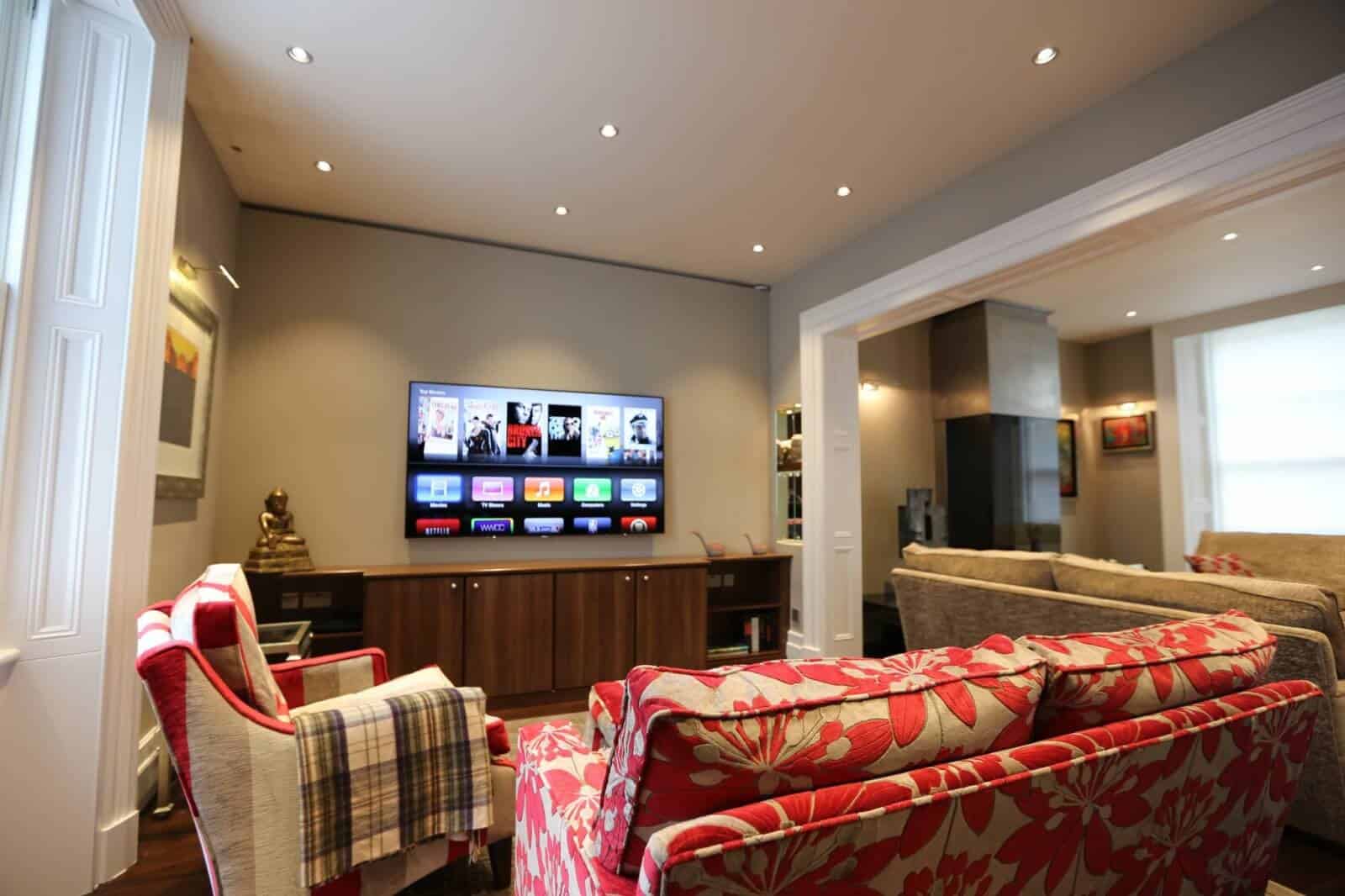
In a well-designed house the cinema is not a separate installation. When someone enters the home cinema, the lighting drops to viewing level. Starting a film from the Kaleidescape server powers the projector, lowers the screen, fades the ambient lighting and sets the audio processor, and climate can be adjusted at the same time so the room is comfortable and quiet.
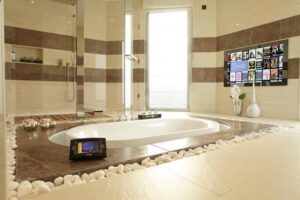
Whole-home audio follows the same principle. Systems such as Bluesound or higher-end Lyngdorf solutions are controlled from the central platform, so music can follow a person from room to room or run independently in each zone. Each room is controlled in the same way, so the household learns one interface, not several.
Motorised Shading and Lighting Scenes
Motorised Lutron shading combined with dimmed lighting changes how a house feels through the day. In the morning, blinds can open gradually while lighting rises to a working level. In the afternoon they close to cut glare on screens and artwork. In the evening the lighting softens and the blinds close for privacy and insulation, and overnight low-level pathway lighting can come on if movement is detected.
The programming matters as much as the hardware. Lutron motors and dimmers are reliable products, but scenes that suit a household take time to refine, and we adjust them with the owners after they have moved in. In a London townhouse with large windows on the street side, shade positions often need to differ between floors and orientations, and we set these individually.
What Affects the Cost of a London Smart Home
The cost of a comprehensive system covering Crestron control, Lutron lighting, climate integration, security coordination, whole-home audio and motorised shading depends on the size of the property, the number of rooms and zones, the tier of equipment specified, the integration required and the architectural constraints. We provide a free, detailed quotation once we understand the property and the brief.
Installation complexity is usually the largest variable. A newly built penthouse with accessible risers is far simpler to wire than a Grade II listed townhouse where every cable must be concealed and every change must respect the building. The main elements that shape a budget are:
- Control system and processors (Crestron processing, number of control zones)
- Lighting control infrastructure (Lutron modules, wiring, commissioning, number of circuits)
- Climate and HVAC integration (zone control, sensors, commissioning)
- Security and access integration (intercom, cameras, gate control)
- Audio and video distribution (Kaleidescape, processors, amplification, number of rooms)
- Installation labour and commissioning (a significant share of any project, particularly in period properties)
The most common mistake we see is budgeting for equipment alone. The same system can need considerably more labour, planning compliance and coordination in a listed building than in a modern apartment, which is why we scope every project individually.
Why Professional Integration Matters
A DIY retrofit of Philips Hue lights, IFTTT routines and Alexa commands can be good fun, but it has limits. It depends on cloud services, it has no single point of control, and every extra device adds another app and another thing to maintain. A professional integration is designed as one system, tested as one system and supported as one system.
That takes several skills working together: designers who understand the building, programmers who can turn how a household lives into control logic, electricians who can route infrastructure without disturbing the interior, and commissioning engineers who tune the result on site. We have been doing this since 1998, and we are five-time Crestron Integration Award winners, which is unique in EMEA.
Starting a Project in London
The first step is a consultation at the property, or from the architect’s drawings if the building work has not started. We work with architects, interior designers and homeowners, and we specialise in listed buildings, period properties and high-security residences where the constraints call for careful design. Our London team can survey the house, discuss the brief and explain the options.
Frequently Asked Questions — Smart Homes in London
What is the difference between a smart home and a luxury smart home?
A smart home usually means several separate products, each with its own app. A luxury smart home runs on one control platform, typically Crestron or Control4, which coordinates lighting, climate, shading, security, audio and video so that the whole house follows the same scenes. The infrastructure is built into the architecture, the system is commissioned and tuned after installation, and it can be extended as the house changes.
Why do you specify Crestron for London homes?
Crestron lets us run lighting, climate, shading, audio video, security and access from a single platform with one set of touchpanels, keypads and apps. It integrates with Lutron lighting, Kaleidescape, Trinnov and the other premium brands we use, and it supports both local control and secure remote access. That suits large townhouses and estates where many systems have to behave as one.
Can smart home systems be installed in listed buildings?
Yes, though the work takes more planning. Cable routes have to be agreed so that no historic fabric is damaged, touchpanels and keypads are recessed into joinery or finished to match, and wireless lighting control is often used where opening walls is not acceptable. We have retrofitted Crestron into a Kensington mews house using wireless lighting control with no rewiring.
Should a luxury home use Alexa or Google Home?
We do not recommend consumer voice platforms as the core of a luxury or high-security home. They depend on cloud services and send data to third-party servers. A professional Crestron system processes locally on hardwired networks, with remote access over an encrypted connection, so it keeps working if an internet service or a manufacturer’s cloud has a problem.
How does smart home control work with a home cinema?
The cinema is a room on the same control system as the rest of the house. Starting a film from a keypad or touchpanel can dim the lighting, close the shading, power up the projector or display, select the source and set the audio processor, all as one scene. Seating, climate and Kaleidescape playback can be included in the same sequence.
What affects the cost of a smart home in London?
The main factors are the size of the property, the number of rooms and control zones, the tier of equipment specified and how complicated the installation is. Listed and period buildings add planning and cabling work. We provide a free, detailed quotation once we understand the property and the brief.
Crestron Dealer & Integrator → · Lutron Lighting Control Systems → · Smart Home Security Integration → · Smart Home Installer London → · Crestron Installer London → · Lutron Installer London → · Smart Home Automation Guide → · Contact our London office →