Luxury Home Cinema — Design, Equipment & What Separates the Best from the Rest
When a home cinema becomes more than a room: how premium properties across London are redefining private entertainment
A luxury home cinema is not a television in a dark room. It’s not a projector bolted to the ceiling with some surround speakers and a motorized screen. It’s not even a professionally designed space that happens to show films very well.
A true luxury home cinema is an architectural and technical achievement that transforms a room into a dedicated instrument for cinema — one that can reproduce what directors and cinematographers intended, integrates seamlessly with the home’s architecture and automation, and feels like a naturally essential part of how you live rather than a novelty addition.
The difference between an amateur installation and a luxury one is measured in details that most people never consciously notice but absolutely perceive. The ease with which the room transforms from bright entertaining space to immersive cinema environment. The absolute control over light leakage and reflections. The clarity and spatial precision of the audio. The refinement of the seating. The quality of the materials. The invisibility of the infrastructure.
Across London’s prime residential postcodes — Knightsbridge, Belgravia, Mayfair, Chelsea, Notting Hill, Hampstead — the finest home cinemas share these principles: they’re invisible until you use them, they prioritize cinema accuracy over flashy design, they integrate with the home’s architecture rather than dominating it, and they’re built to last decades rather than become obsolete in five years.
The Architecture of a Luxury Cinema Room
Before equipment is ever specified, before a single cable is run, a luxury home cinema requires architectural thinking.
Room dimensions matter profoundly. A cinema room should ideally be rectangular with dimensions that avoid problematic room modes — standing wave frequencies that cause bass to boom in certain spots. The optimal ratio is roughly 1.6:1 (length to width). A 6.3m × 4m × 2.7m room is fundamentally superior to an 8m × 8m × 2.4m square, even if both spaces feel large.
Acoustic treatment isn’t optional. It’s foundational. A luxury cinema embeds acoustic infrastructure into its structure: Acoustiblok barrier material on walls and ceiling to contain low-frequency energy and prevent sound from traveling to adjacent spaces. QuietFiber absorption panels positioned strategically to control reflections. Bass traps in corners where low frequencies accumulate. Acoustic doors that seal completely. All of this is typically concealed within wall cavities or behind architectural treatments — you never see it, but you experience its effects every time you watch.
Electrical infrastructure must be obsessively planned. The AV equipment requires dedicated electrical circuits isolated from general household power. AC power carries interference that degrades audio. A luxury installation uses isolated ground circuits and, in many cases, an isolated subpanel. This is expensive and invisible, but the difference in audio quality is measurable and profound.
Ventilation and climate control must handle sustained occupancy and equipment heat. A room full of people plus projection and amplification equipment generates significant heat. A luxury cinema has dedicated HVAC zoning that maintains comfort without introducing audible noise. This is far more complex than standard air conditioning.

Architecture

Equipment

Seating

Acoustics

Installation
Luxury Home Cinema Equipment: Where Quality Begins
Equipment choice defines a luxury cinema. Not by brand prestige alone, but by engineering and coherence.
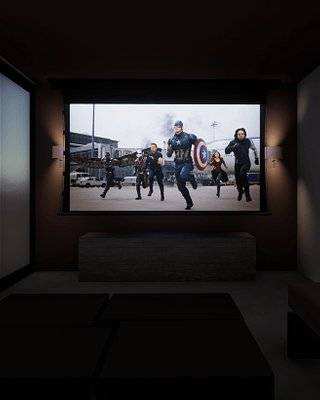
Projection: A luxury cinema typically uses either a high-lumen native 4K projector (for environments with some ambient light) or a high-contrast 1080p DLP projector (for absolutely dark, dedicated rooms). The best choices for London properties are projectors that deliver cinema-standard brightness (around 2,000 lumens for a dedicated dark room) without resorting to excessive lamp power, which generates heat and shortens lifespan. We typically specify JVC, Panasonic, or Sony cinema-grade projectors — not consumer brands.
Screen: A luxury cinema screen isn’t just a surface to project onto. It’s engineered to preserve the image quality the projector produces. High-end fixed screens (such as Da-Lite or Screen Innovations) preserve brightness and color accuracy. Motorized screens for spaces that serve dual purposes (entertaining and cinema) must be acoustically transparent if front speakers are behind the screen. This is a precision-engineered component in its own right, not a generic motorized screen from a department store.
Audio: The overlooked pillar of luxury cinema. Most people focus on the projector and neglect the speakers. This is backwards. Film sound design is as intentional as cinematography, and reproducing it accurately requires serious engineering.
A luxury cinema typically uses:
- Screen channel speakers (left, center, right) — these carry dialogue and most of the film’s critical content. They must be coherent across the frequency spectrum and phase-aligned so dialogue stays in perfect focus on the screen. Cineak theater-grade speakers or equivalents (Genelec, Trinnov, Meyer Sound) are standard in luxury installs.
- Surround speakers — positioned at ear level, slightly behind the seating area, they create immersive space and directional effects. In a 5.1 or 7.1 system, these are critical to cinema immersion.
- Atmos ceiling speakers — in a 7.1.4 or 7.1.6 Dolby Atmos system, ceiling channels reproduce height information and create three-dimensional soundscapes. This is where cinema has evolved in the last decade. A luxury cinema should include Atmos.
- Subwoofers — multiple subs (usually 2–4 in a luxury install) positioned strategically around the room to distribute bass evenly and eliminate dead zones. A single subwoofer in the corner is amateur. Properly positioned multiple subs create controlled, room-filling bass.
Audio processing and calibration: The equipment matters, but the calibration matters more. A professionally calibrated system using measurement equipment (Trinnov Altitude or Lumagen Radiance) can transform mediocre speakers into exceptional ones by adjusting levels, delay times, equalization, and room correction. This is where amateur and professional installations truly diverge.
Media servers: How you deliver content matters. A Kaleidescape cinema server stores your film library in a curated, legally secure format and delivers it at pristine quality. This isn’t streaming — it’s ownership. For serious cinephiles in London, Kaleidescape is the standard because it respects both the films and the infrastructure you’ve built to display them.
Seating: The Overlooked Component of Luxury Cinema
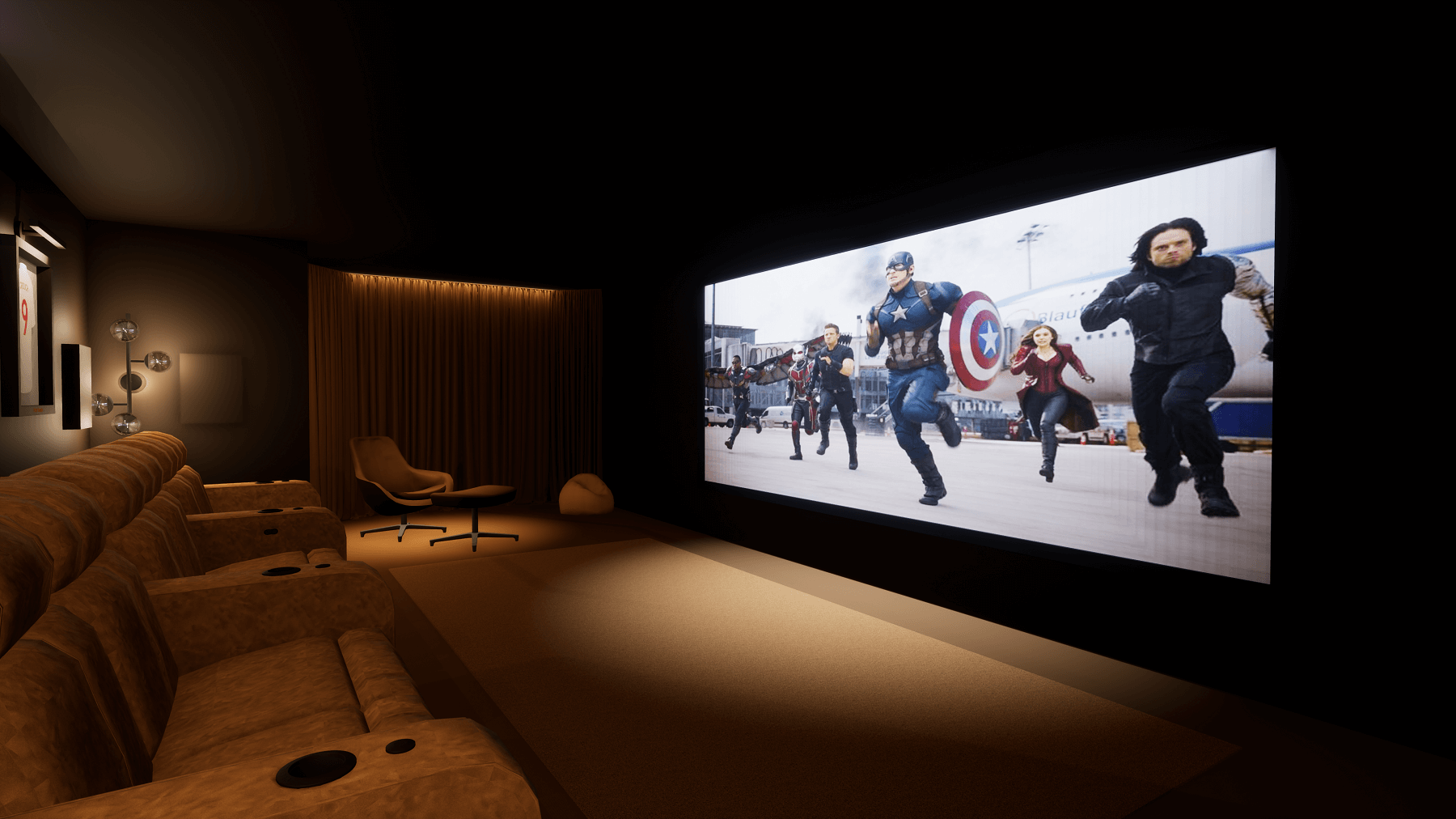
Luxury home cinemas in properties across Chelsea, Belgravia, and Mayfair increasingly feature motorized, reclinable seating — and this choice matters far more than most people realize.
Cineak seats (available in various configurations and materials) offer individual motorized recline, heated and cooled cushions, cup holders, and adjustable headrests. But the real value is positioning: each seat can be precisely positioned so the viewer’s eyes are at the optimal distance from the screen and at the precise angle the cinematographer intended.
In a luxury cinema, you don’t watch from a random distance and angle. Every seat is engineered. The front row sits at a specific distance (typically 1.5x screen width). The back row sits at a distance where the entire screen fills your peripheral vision without requiring head movement. Each row is slightly elevated so no one is blocked by heads in front.
This precision is invisible until you sit down, and then you realize you’re watching the film the way it was meant to be watched.
Integration with Smart Home Automation
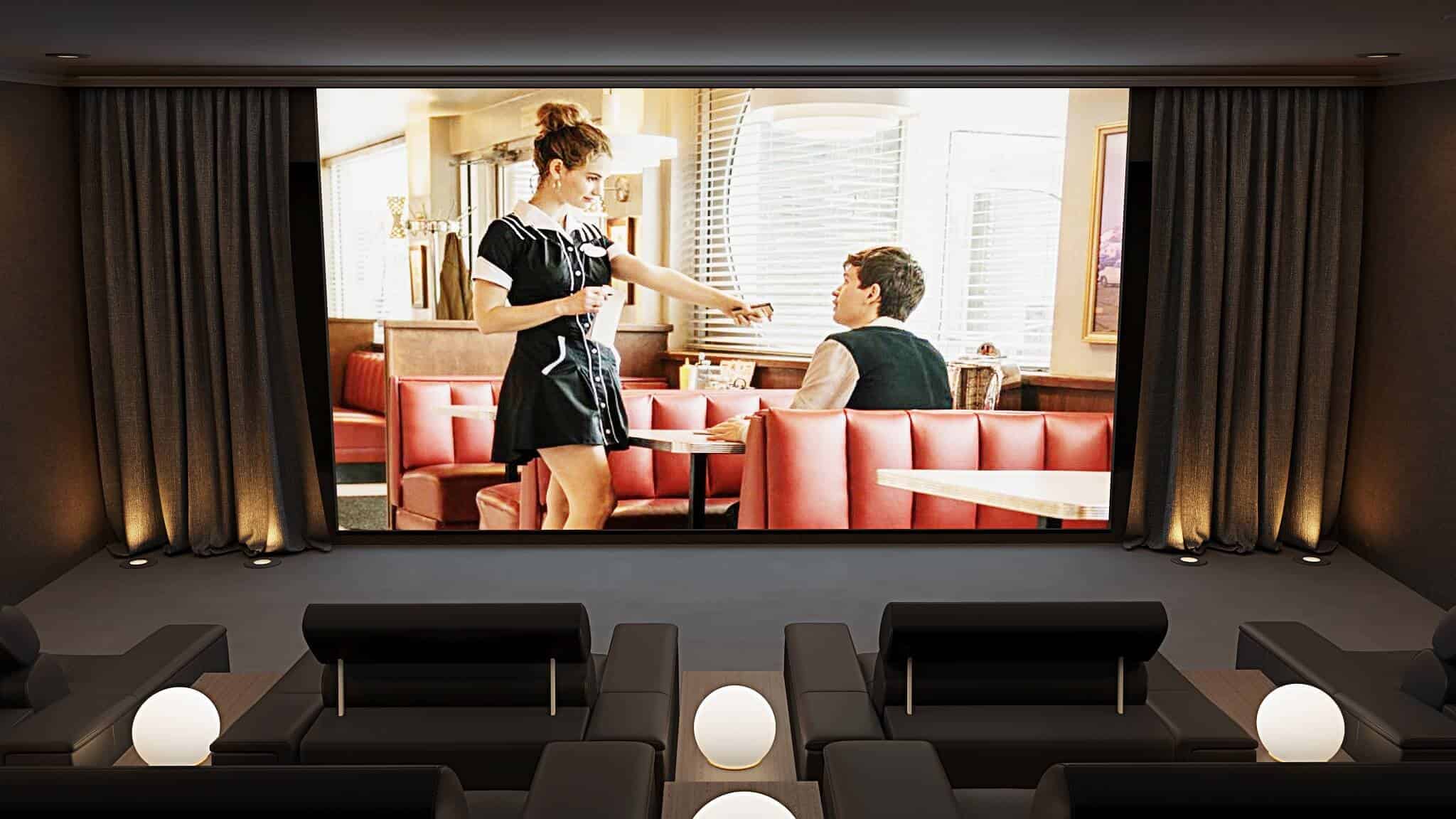
In a truly luxury home, the cinema doesn’t operate in isolation. It’s orchestrated by your central Crestron control system.
When you press “Cinema” on your control panel:
- Lights dim in sequence (ambient first, then accent lighting, then task lighting)
- Motorized Lutron shading closes completely to eliminate light leakage
- The AV processor powers up
- The projector comes online and focuses
- The motorized screen descends
- Seating moves to optimal positions if motorized
- The room’s climate adjusts to cinema-appropriate temperature
- The door locks and audio gate closes to prevent sound escape
All of this happens seamlessly, in sequence, without conscious thought. This is luxury — not complexity, but the absence of it from your perspective.
Luxury Home Cinema by Postcode: Design Considerations Across London
Knightsbridge & Belgravia: Listed townhouses and mansion flats with strict architectural constraints. Cinemas here are often built into cellars or basement levels, which offers excellent acoustic isolation but requires careful moisture management and mechanical ventilation. Decor is understated, with luxury expressed through equipment quality rather than design flash.
Mayfair & St James’s: Formal, classical properties where the cinema must complement period architecture. These are often private rooms designed to feel like an extension of the home’s interior design language rather than a separate “media room.” Materials (leather, natural wood, stone) and lighting design reflect the home’s aesthetic.
Chelsea & South Kensington: Modern townhouses with more architectural freedom. Cinemas here can be larger, more elaborate, sometimes occupying entire floors. Design is often contemporary, with the cinema celebrating rather than hiding its technology.
Notting Hill & Westbourne Grove: Mix of period and contemporary properties. Cinemas here often serve dual purposes — entertaining and cinema — requiring motorized screens and flexible lighting design. The challenge is creating a space that transforms from bright, welcoming entertainment room to immersive cinema environment at the touch of a button.
Hampstead & Highgate: Large detached homes with dedicated cinema space. These often feature the most ambitious designs — large screens, multi-row seating, premium materials, and elaborate acoustic treatment. Space is less constrained, allowing for optimal proportions and architectural expression.
What Affects the Cost of a Luxury Home Cinema
The cost of a luxury home cinema in London depends on the size of the room, the number of seating rows, the tier of projection and audio equipment, and the extent of the architectural and acoustic work required. Every project is different, so we provide a free, detailed quotation based on your property and brief.
The budget typically breaks down as:
- Room architecture and acoustic treatment (30–40%): structural work, acoustic materials, HVAC, electrical infrastructure
- Projection system (10–15%): projector, lens, screen, motorized mechanisms
- Audio system (20–30%): speakers, subwoofers, processors, amplifiers, calibration
- Seating (15–25%): motorized recliners, positioning, materials
- Integration and control (5–10%): Crestron control, automation, lighting integration
- Installation and commissioning labor (15–25%)
The most common mistake is underbudgeting for acoustic treatment and room architecture. Skimping here results in a room that sounds mediocre, no matter how good the equipment. A luxury cinema budget must prioritize the room before the equipment.
Why Luxury Home Cinemas Require Professional Design
A luxury home cinema is a complex system where every component affects every other. Equipment choice constrains room dimensions. Room dimensions determine acoustic treatment strategy. Acoustic treatment influences seating positions. Seating positions determine optimal screen size and projector choice. All of this must integrate with home automation.
This requires integrators who understand cinema design at a fundamental level — not just installers who can plug in equipment. It requires working with acousticians, architects, and interior designers who understand how all these systems interact.
When done properly, the result feels inevitable — like the room was always meant to be a cinema. When done poorly, it feels like a home theater someone bolted onto a house.
Next Steps: Creating Your Luxury Home Cinema
If you’re considering a home cinema in a London property — whether a Belgravia townhouse, Mayfair apartment, Chelsea conversion, or country estate — the first step is a consultation with an integrator who understands both cinema and luxury residential architecture.
We design and build home cinemas for properties across London’s prime postcodes. We work with architects and interior designers to create spaces that are both acoustically optimized and architecturally beautiful. We specify equipment based on your room and your needs, not based on manufacturer relationships. We commission and calibrate every system to exacting standards.
Home Cinema Installation London → · The Complete Home Cinema Design Guide → · Cineak Home Cinema Seating → · Professional Home Cinema Calibration → · Home Cinema Installer London → · Contact our London office →