
What Are the Benefits of a Smart Home System?
Eight Ways a Smart Home Improves Daily Life
Smart home systems have moved well beyond novelty status — they are now a standard specification on serious residential projects. Here are the eight benefits that matter most to the clients we work with.
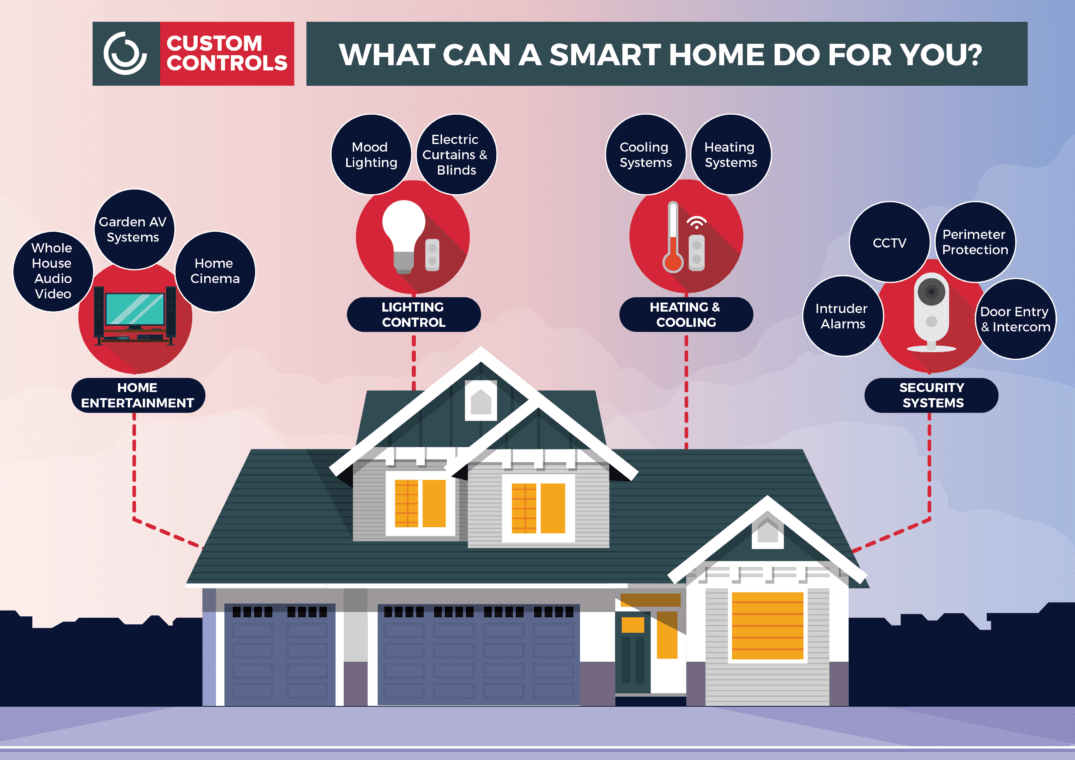
A smart home brings lighting, heating, music, video, security and blinds together under one system, so instead of a house full of separate remotes, apps and switches, everything responds to a single command — a wall panel, an app, a voice, or a scene that runs itself at the right moment. The benefits below come from that integration rather than from any single gadget, which is why they compound as more of the property is brought under the same control.
1 — Convenience. A smart home automates the functions that would otherwise require manual attention every single day — exterior lighting coming on at dusk, precise heating control adjustable remotely from a phone or tablet. The result is a property that’s always exactly as you want it, from temperature to lighting level, without anyone having to think about it.
2 — Energy savings. Heating control delivers some of the largest savings available. Heating a property only when it’s occupied, and heating individual rooms only as required — rather than the whole house on a single blanket schedule — has a real impact on energy bills. Most people spend limited time in bedrooms during the day, so there’s little reason to heat them as though someone were there.
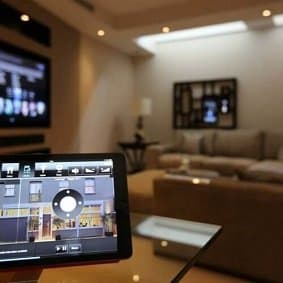
3 — Showing your home at its best. Lighting matters more than almost anything else in how a space is perceived — a badly lit room rarely looks good regardless of how it’s decorated. A proper lighting control system recalls preset scenes instantly, so a room is lit perfectly every time rather than relying on someone adjusting individual switches. Digital dimming also saves energy directly, and intelligent switching means lights are only ever on when genuinely needed.
4 — Security. Empty houses attract attention; occupied-looking ones don’t. Lighting control can replay a household’s recent activity pattern automatically while everyone is away, giving the strong impression of occupancy — a considerably more convincing approach than a single light on a basic timer.
5 — Safety. Modern smart smoke detection can distinguish between burning toast and a genuine fire, issuing the appropriate level of alert rather than a single undifferentiated siren. Linking detectors together across the property allows specific, useful alerts — “fire in the kitchen” is far more actionable in the middle of the night than a generic alarm — and the same system can light exit routes automatically the moment an alert is triggered.
Integration also changes how a security system behaves. Arming the alarm switches off all non-essential lighting and AV; a floor-plan view on any touchpanel shows the live status of every door contact, motion sensor and alarm zone; and a perimeter event can train CCTV cameras on the detected area, bring on external lighting and notify the client’s phone at the same moment. The alarm can be monitored by a professional monitoring centre, managed by the client, or both.

Smart Home

Lighting Control

Security

Climate Control

Multi-Room Audio
6 — Access control. Handing out physical keys to contractors and staff requires a level of trust that isn’t always appropriate. A smart home system allows access to be granted to specific individuals, either once or on a recurring schedule, with the homeowner able to view and approve a visitor remotely before allowing entry. Delivery drivers and couriers can be screened at the gate and directed to a designated safe drop-off point without anyone needing to be home.
Access codes can carry time-of-day restrictions — cleaning staff during daytime hours, grounds staff to external buildings only, contractors with temporary codes that expire automatically — and the system records who accessed the property and when. A visitor at the gate can be seen and spoken to from any touchpanel in the home, including the bedroom and the cinema.
7 — Energy management. A smart home system gives a clear, immediate picture of where energy is actually being used — which lights are on, which rooms are running hotter heating setpoints than necessary. Centralising AV sources also means power-hungry equipment is only powered up when actually needed, rather than sitting in standby and quietly consuming energy around the clock.
With energy monitoring modules, a Crestron system shows real-time and historical consumption for every circuit, from the app or any touchscreen. Lutron daylight sensors adjust artificial lighting to compensate for natural light, vacancy sensing switches off lights left on in empty rooms, and motorised blinds close against summer solar gain to reduce cooling demand, then open fully in winter to maximise passive solar gain. For properties with solar generation, surplus can be directed to immersion heaters, underfloor heating or EV charging before it is exported. Read our guide to energy management and smart home automation →
8 — Audio and video. Of all the benefits a smart home delivers, AV integration is one of the most immediately enjoyable day to day — any media source available in any room of the house. Radio in the bathroom while getting ready, a Spotify playlist in the kitchen while cooking, picking up a recorded programme in the bath exactly where it was left off in the living room.
Properly specified smart home technology should feel reliable and seamless — enhancing daily life without ever drawing attention to itself. Taken together, these eight benefits aren’t simply a collection of conveniences; they genuinely change how a property feels to live in, day to day, while reducing the energy it takes to run.
Benefits for Holiday Homes and Second Properties
The benefits are most pronounced in properties that spend long periods unoccupied: an Alpine chalet, a country house used at weekends, or a London flat used only during the working week. When the owners leave, the system manages the property into an efficient unoccupied mode, keeping the building fabric protected from frost and damp without holding it at full comfort temperature. A geofencing trigger on the owner’s phone then starts the welcome-home sequence on approach, so that by the time they arrive every room is at the right temperature, the lighting is set and the security system is disarmed.
A ski property in Morzine or Les Gets may be occupied for ten weeks of the year, so the gap between occupied and unoccupied settings is a large and avoidable cost. Remote access adds reassurance in between visits: cameras, alarm status and heating can all be checked and adjusted from anywhere, and our remote monitoring means most faults are identified and resolved before the owner has noticed anything was wrong.
Accessibility and Independent Living
For clients with reduced mobility, limited vision or hearing loss, a smart home can increase independence and reduce day-to-day reliance on a carer. Curtains can close automatically at nightfall with lighting brought up to a preferred level at the same time; internal and entrance doors can be automated; and alarms can be linked to lighting circuits to give a clear visual signal alongside an audible one. Interfaces are designed around the person they are for, with buttons sized for the range of movement a client actually has and high-contrast text where vision is limited. Read more about Crestron systems for clients with disabilities →
Lighting That Supports Wellbeing
Tunable lighting takes the “showing your home at its best” benefit a step further. Lutron’s Ketra full-spectrum system covers 1,400K to 10,000K, and its Natural Show feature tracks the actual position of the sun at the property’s GPS coordinates, shifting colour temperature and intensity through the day to mirror natural daylight — cool and energising in the morning, warming progressively through the afternoon. In existing homes that will never be rewired, Lutron RadioRA 3 supports Lumaris tunable white lighting over the existing wiring, giving a genuine route to circadian-style lighting control without chasing walls.
Why the Benefits Depend on the Installation
Every one of these benefits relies on the system working reliably years after handover. A poorly designed network is the single most common cause of smart home unreliability, which is why we design the home network alongside the control system: wired Ethernet backhaul to every access point, enterprise-grade equipment, and separate network segments for personal devices, guests, smart home controllers and IP cameras. Every system is programmed from scratch for the property and the people living in it, rather than configured from a generic template.
The earlier the conversation starts, the more of these benefits can be designed in. For new builds and major renovations, we work with architects and interior designers during planning to integrate control points, wiring routes, equipment locations and user interfaces into the building design. For existing homes, wireless systems such as Lutron RadioRA 3 and Crestron wireless dimmers deliver full scene control without a single wall being opened. Every installation includes training, full documentation and ongoing support.

Frequently Asked Questions — Smart Home Benefits
What is the single biggest benefit of a smart home system?
It depends on the property, but energy savings from intelligent heating control and the convenience of automated lighting and AV are typically the two benefits clients notice most in daily life, alongside the genuine security advantage of a system that can convincingly simulate occupancy.
Can a smart home system improve home security?
Yes. Beyond conventional alarm and camera integration, lighting control can replay recent household activity automatically while the property is unoccupied, and access control allows specific visitors to be screened and granted entry remotely, without keys ever needing to be handed out.
Do smart home systems actually save energy?
Yes, significantly. Heating only the rooms in use, dimming lighting rather than running everything at full brightness, and ensuring AV equipment isn’t left drawing power in standby all contribute measurable savings across a property, particularly a larger one.
Is a smart home worthwhile for a holiday home?
Often more so than for a main residence. The system keeps the property protected from frost and damp between visits without heating it to full comfort, lets the owner check cameras, alarm and heating remotely, and brings the house to temperature ahead of arrival.
Can a smart home be installed in an existing property without rewiring?
Yes. Wireless systems such as Lutron RadioRA 3 and Crestron wireless dimmers install over the existing wiring, giving full scene control without chasing walls. For new builds and major renovations, a wired design specified at planning stage remains the approach we recommend.
Custom Controls have been designing and installing smart home systems since 1998. Contact us for an honest, no-obligation consultation.
Home Automation → · Lighting Control → · Home Security → · Smart Home vs Home Automation → · Energy Management & Smart Home Automation →